




Research on Secure and Covert Transmission for UAV-assisted Visible Light Communication Systems
-
摘要: 无人机(UAV)因自身的机动性和按需覆盖能力,可作为空中基站实现空地之间的可见光通信(VLC)。然而,空地之间的通信链路暴露在开放环境中,这使得VLC容易受到数据窃听和恶意检测。针对此问题,从物理层安全和隐蔽通信的角度提出了面向UAV的VLC系统中的安全隐蔽传输策略。该策略在考虑隐蔽通信要求、照明目标要求、UAV发射功率和悬停高度限制的基础上,对UAV发射功率和部署高度进行了联合优化以最大化系统的保密容量。由于所构建的优化问题高度非凸,因此设计了基于粒子群优化的双层优化算法对该问题进行求解。仿真结果表明,所提算法能够较快收敛,并且相较于基准方案能够提高系统的保密性能。Abstract:
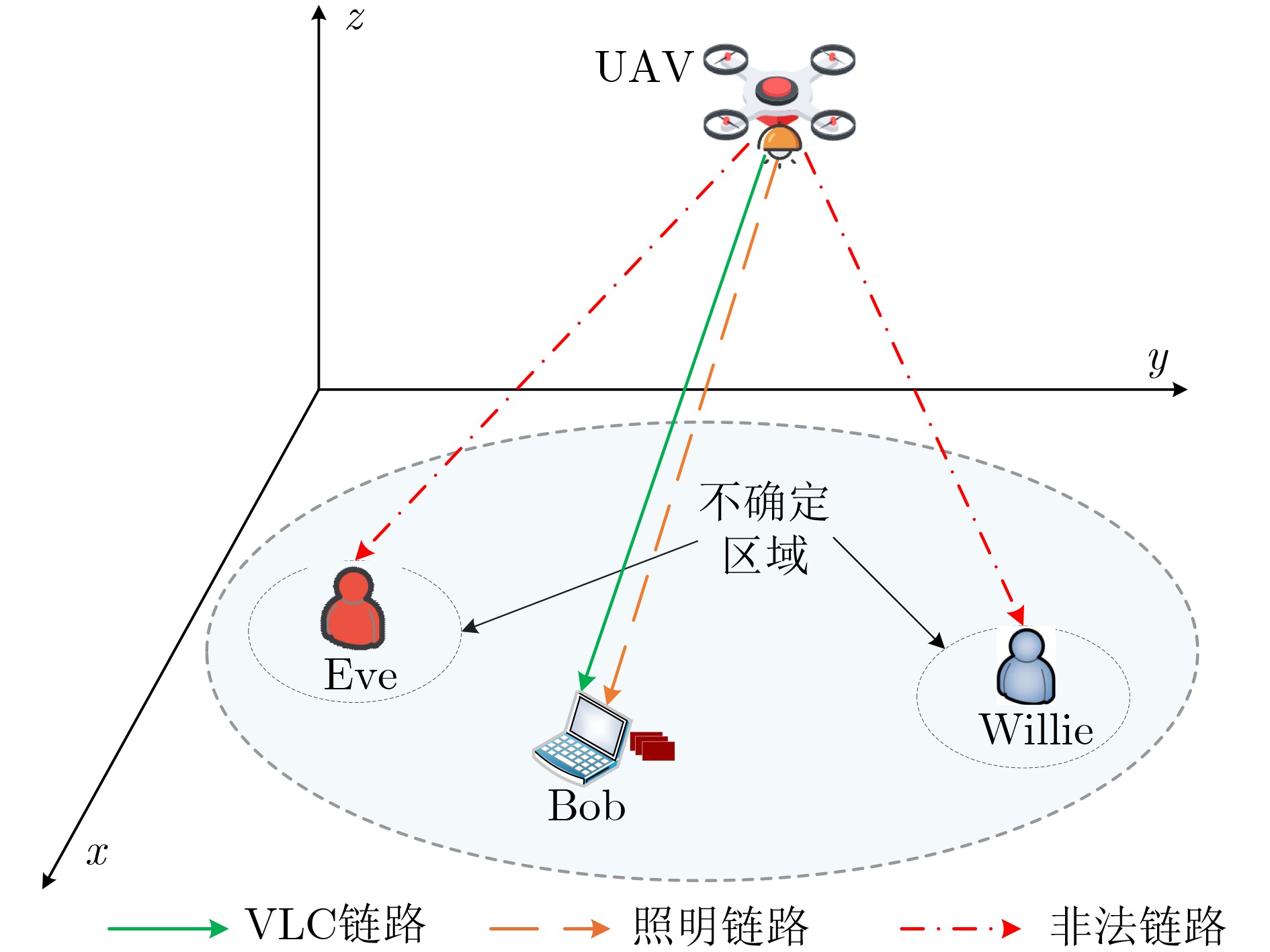
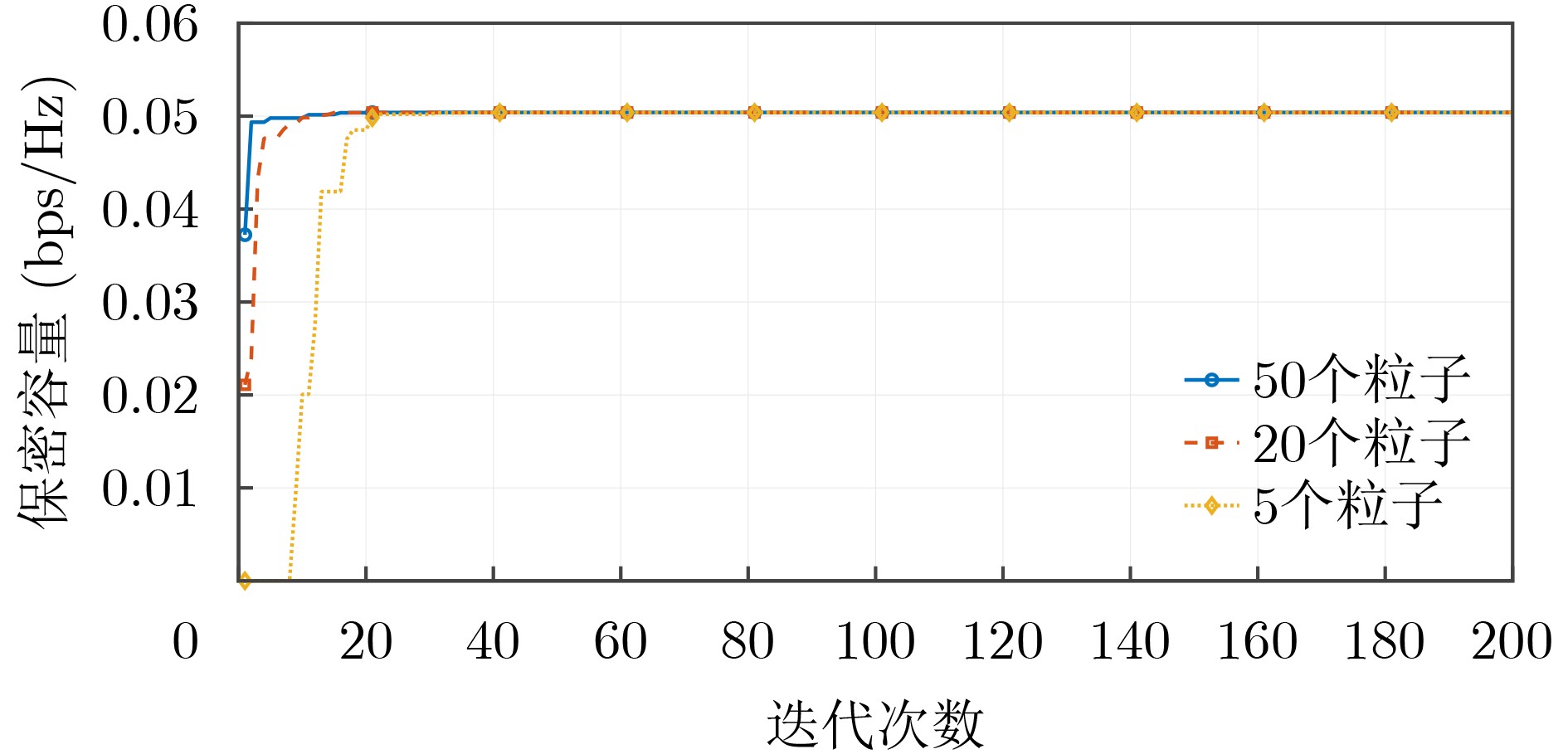
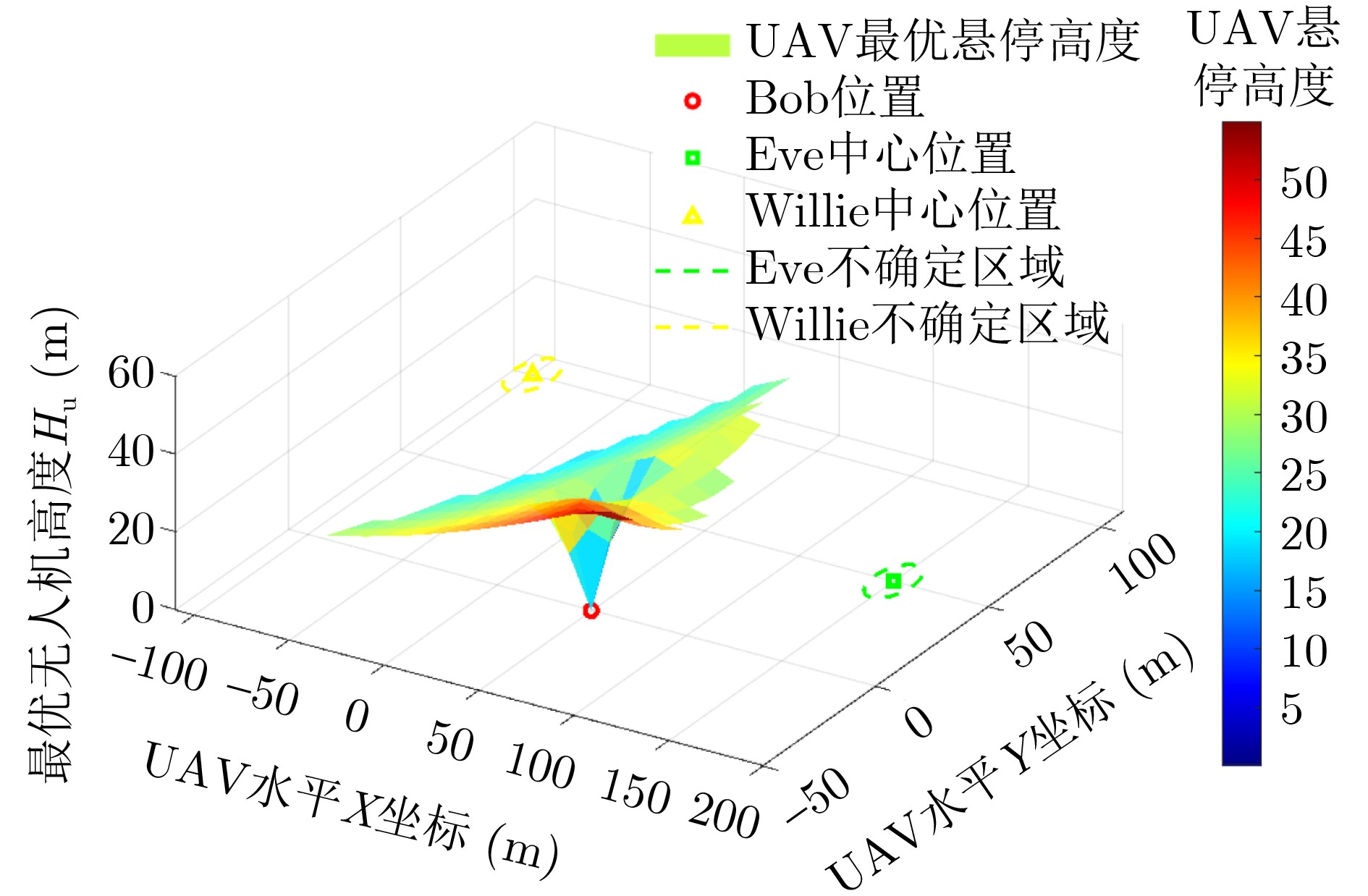
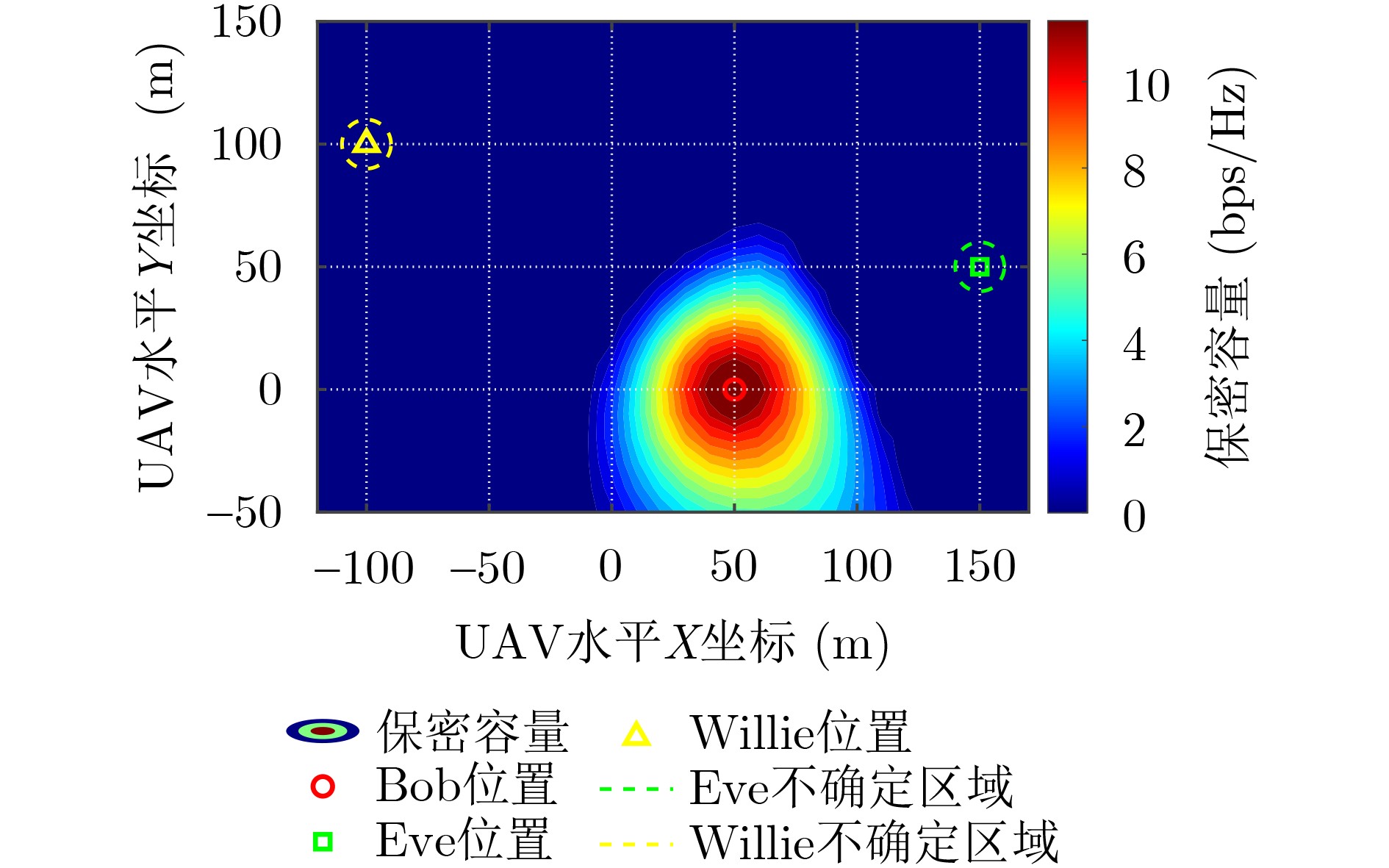
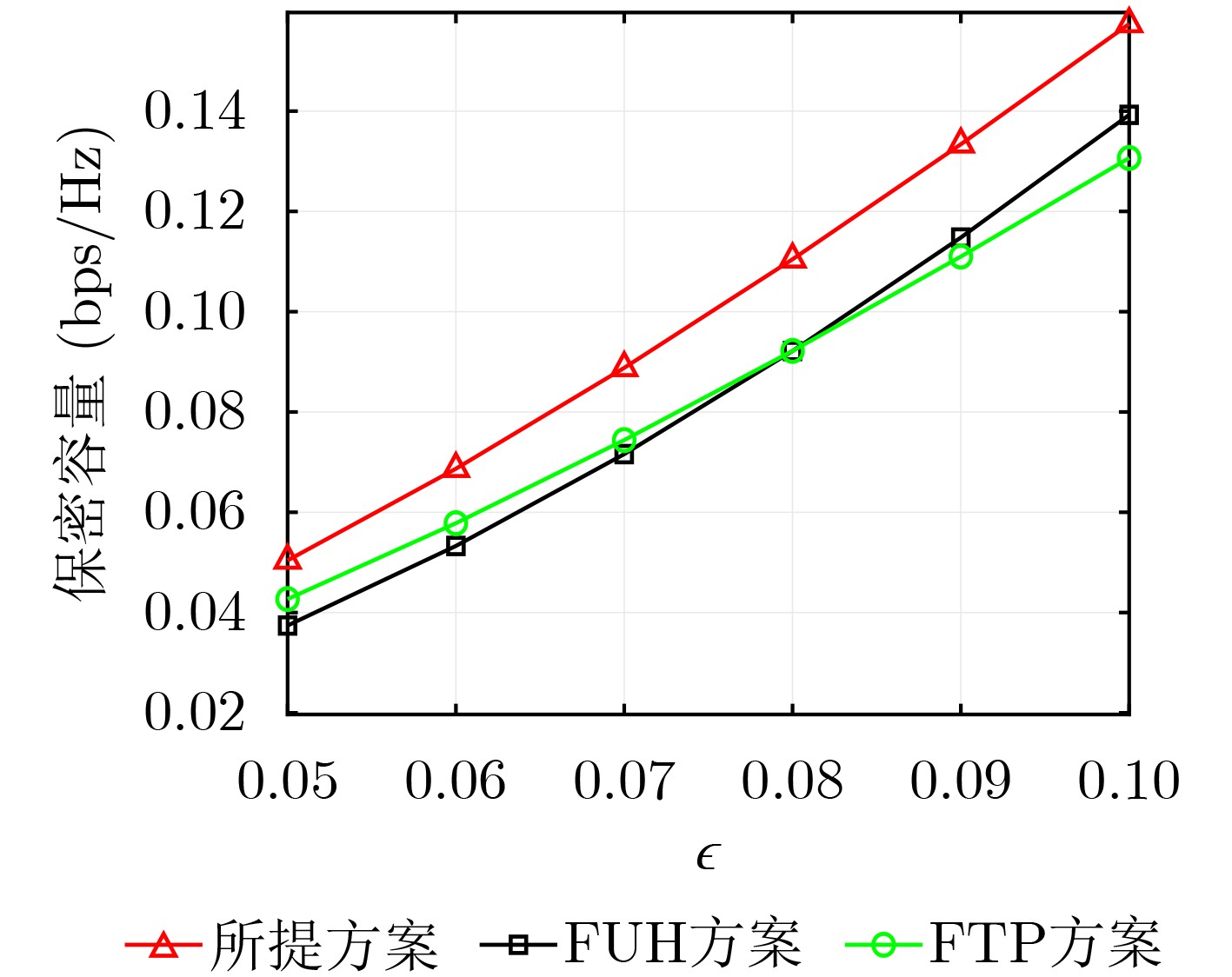
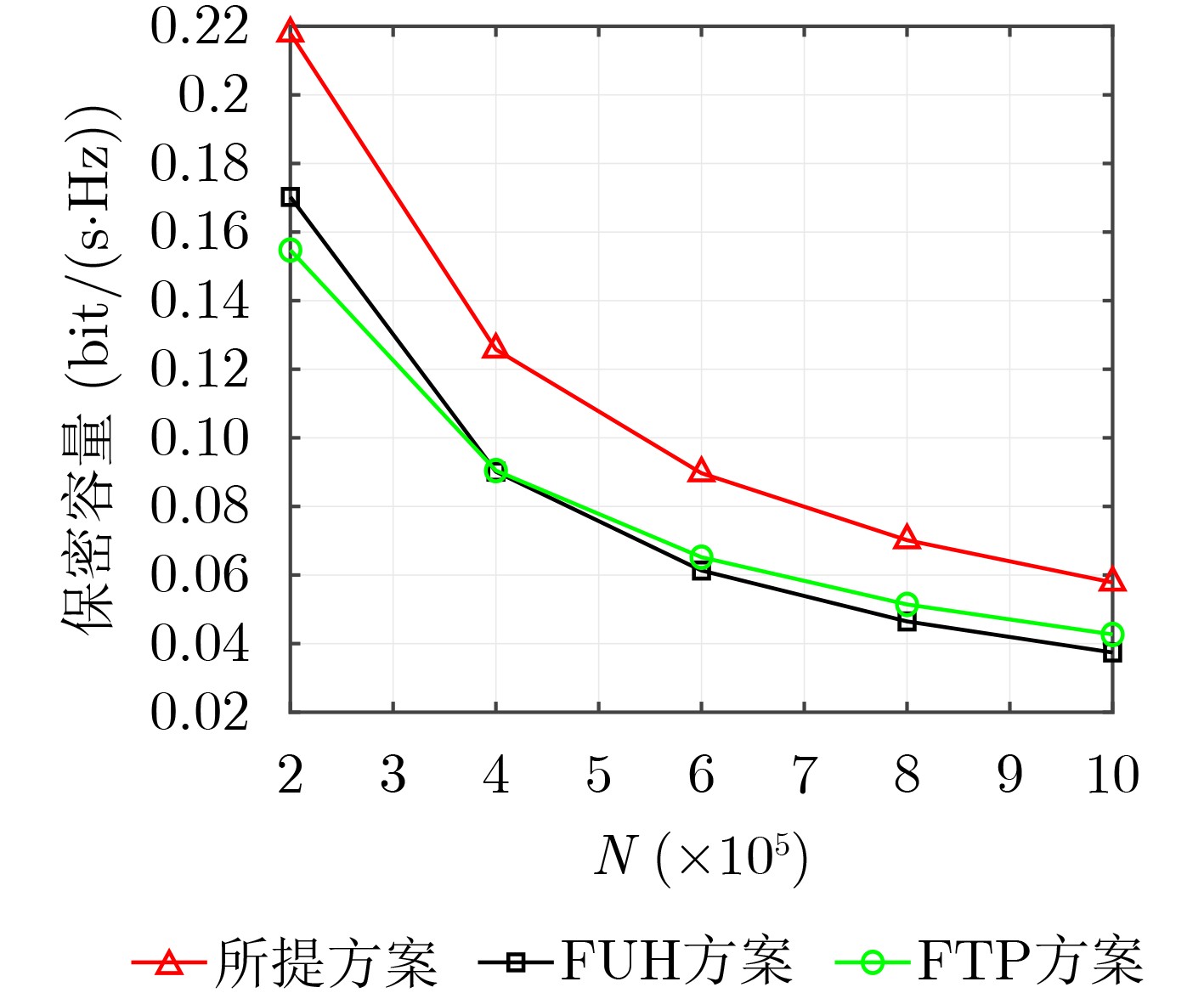
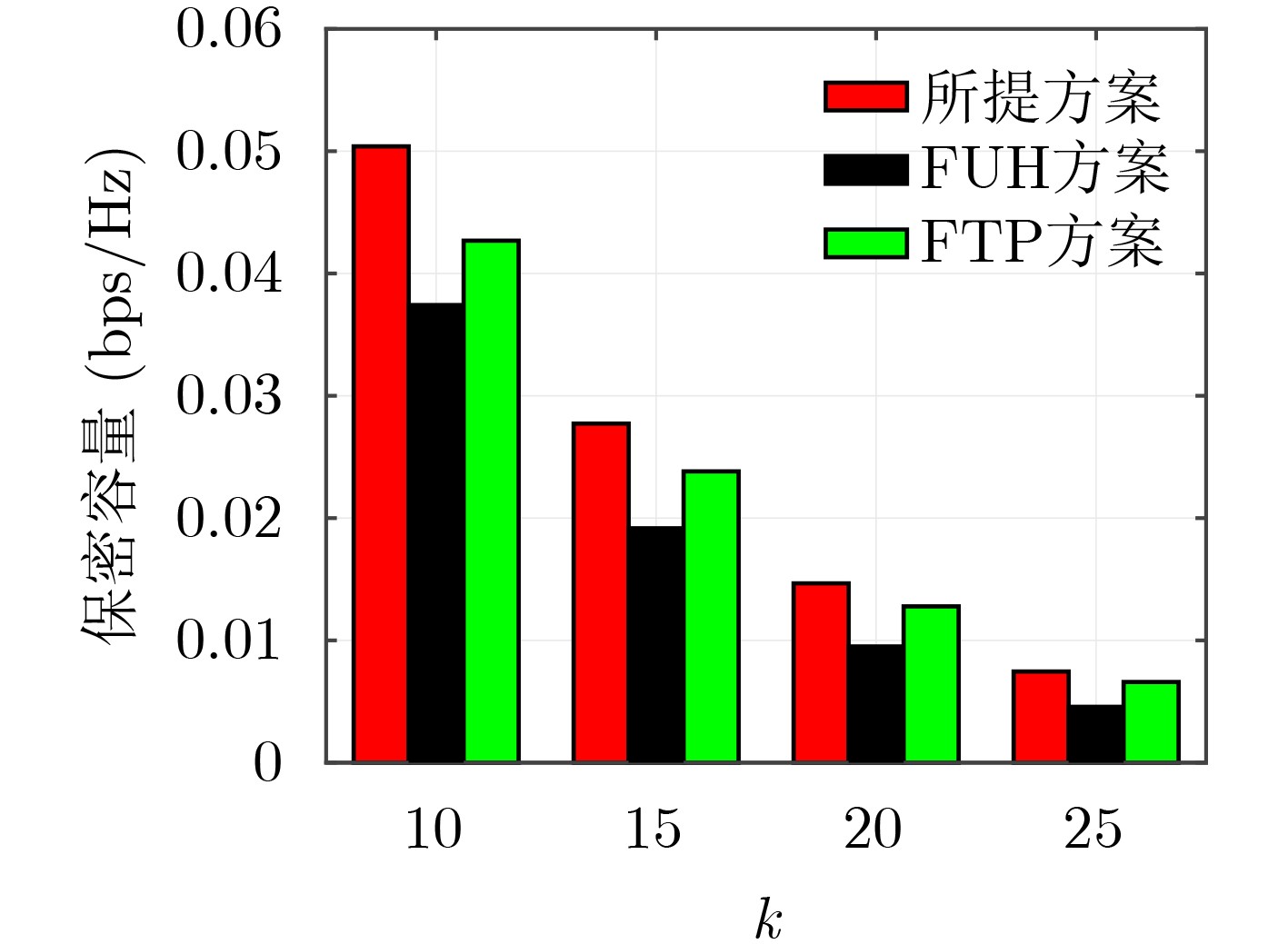
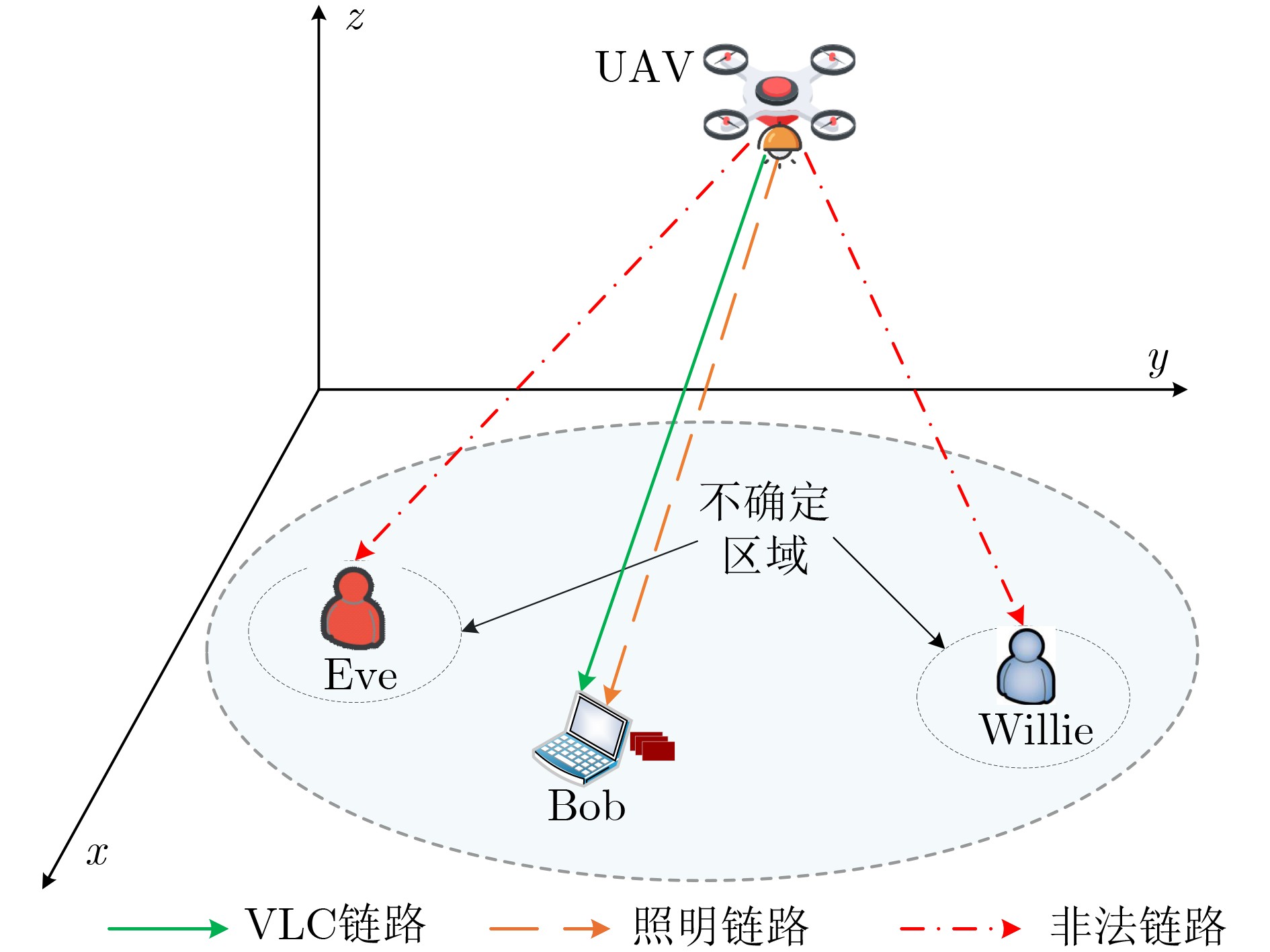
Objective Unmanned Aerial Vehicles (UAVs) can serve as aerial base stations for Visible Light Communication (VLC) because of their mobility and on-demand coverage capabilities. However, air-ground communication links are exposed to open environments, which makes VLC vulnerable to data eavesdropping and malicious detection. To address this issue, this paper proposes a secure and covert transmission strategy for a UAV-assisted VLC system from the perspectives of Physical Layer Security (PLS) and Covert Communication. The proposed strategy jointly optimizes UAV transmit power and hovering altitude to maximize the system secrecy capacity. The optimization is subject to covert communication requirements, illumination requirements, and operational constraints on UAV transmit power and hovering altitude. Methods This paper investigates secure and covert communication in a UAV-assisted VLC system. A UAV-assisted VLC system model is first established. In this model, a mobile UAV equipped with a Light-Emitting Diode (LED) is used to establish a VLC link with a legitimate ground user in the presence of an eavesdropper (Eve) and a warden (Willie). An optimization problem is then formulated to maximize the system secrecy capacity by jointly optimizing UAV transmit power and hovering altitude. To solve this problem, a Two-Layer OPtimization (TLOP) algorithm is proposed. The transformed problem is decomposed into two subproblems: an inner-layer transmit power optimization problem and an outer-layer UAV hovering altitude design problem. A closed-form expression for the optimal transmit power is derived for the inner-layer problem. A Particle Swarm Optimization (PSO) algorithm is then developed to solve the outer-layer problem. Results and Discussions In the simulations, the proposed optimization scheme is compared with two baseline schemes. First, the convergence of the proposed TLOP algorithm is verified ( Fig. 3 ). The results show that the algorithm converges rapidly within a limited number of iterations. Second, the optimal UAV hovering altitude with respect to the UAV horizontal coordinates is illustrated under the spatial distribution (Fig. 4 ). The results indicate that the optimal hovering altitude decreases as the UAV approaches the legitimate ground user. The secrecy capacity with respect to the UAV horizontal coordinates is then presented (Fig. 5 ). The secrecy capacity increases as the UAV approaches the legitimate ground user. This is because the legitimate VLC channel gain increases when the UAV is closer to the user. In contrast, when the UAV approaches Eve and Willie, the security and covertness constraints become stricter. The UAV is then forced to reduce its transmit power or increase its hovering altitude, which decreases the system secrecy capacity. Furthermore, the secrecy capacity of all schemes increases as ϵ increases (Fig. 6 ). This is because a larger ϵ relaxes the covertness requirement. The UAV can therefore adjust its hovering altitude and transmit power more flexibly to increase the system secrecy capacity. In addition, the secrecy capacity decreases as the number of symbols increases (Fig. 7 ). This occurs because more symbols provide Willie with more signal samples for detection, thereby improving Willie’s detection capability. Finally, the secrecy capacity of all schemes decreases as the uncertainty-region radius of illegal nodes increases (Fig. 8 ). This trend occurs because greater location uncertainty forces the UAV to address potential threats over a wider area. The UAV must therefore adopt a more conservative strategy under worst-case eavesdropping and detection conditions. Overall, the simulation results confirm that the proposed scheme improves the secrecy capacity of the UAV-assisted VLC system.Conclusions This paper investigates secure and covert communication in a UAV-assisted VLC system. The objective is to maximize the system secrecy capacity by jointly optimizing UAV transmit power and hovering altitude under covert communication, illumination, transmit power, and hovering altitude constraints. Because the formulated problem is highly non-convex, a PSO-based TLOP algorithm is designed to solve it. The proposed algorithm decomposes the problem into an inner-layer transmit power optimization problem and an outer-layer UAV hovering altitude optimization problem. Simulation results show that the proposed algorithm converges rapidly and improves the system secrecy capacity compared with the baseline schemes. -
1 基于PSO的TLOP算法求解$ {\mathcal{P}}_{0} $
初始化:在$ [0,L] $范围内随机初始$ S $个UAV悬停高度
$ {H}_{\rm u}^{(1)},{H}_{\rm u}^{(2)},\cdots,{H}_{\rm u}^{(S)} $。(1) 循环 (2) 给定$ {H}_{\rm u}^{(s)} $,对$ {h}_{{\mathrm{b}}}^{2}\sigma _{{\mathrm{e}}}^{2}-h_{{\mathrm{e}}}^{*}{}^{2}\sigma _{{\mathrm{b}}}^{2}\gtrless 0 $进行判决; (3) 基于式(33)求解以获得最优解$ p_{\rm u}^{{\mathrm{opt}}} $; (4) 给定$ p_{\rm u}^{{\mathrm{opt}}} $,基于式(36)获得$ {H}_{\rm u}^{(s)} $对应的适应度; (5) 根据适应度更新最优位置,基于式(39)和式(40)更新每个
粒子的速度和位置;(6) 重复步骤(2)~(5),直到收敛。  下载: 导出CSV
-
[1] 王金元, 于印长, 林生红, 等. 人工噪声辅助的MISO可见光通信安全波束成形策略[J]. 通信学报, 2025, 46(12): 93–103. doi: 10.11959/j.issn.1000-436x.2025224.WANG Jinyuan, YU Yinchang, LIN Shenghong, et al. Secure beamforming schemes in artificial noise-based MISO visible light communications[J]. Journal on Communications, 2025, 46(12): 93–103. doi: 10.11959/j.issn.1000-436x.2025224. [2] MATHEUS L E M, VIEIRA A B, VIEIRA L F M, et al. Visible light communication: Concepts, applications and challenges[J]. IEEE Communications Surveys & Tutorials, 2019, 21(4): 3204–3237. doi: 10.1109/COMST.2019.2913348. [3] WANG Jinyuan, LIU Cheng, WANG Junbo, et al. Physical-layer security for indoor visible light communications: Secrecy capacity analysis[J]. IEEE Transactions on Communications, 2018, 66(12): 6423–6436. doi: 10.1109/TCOMM.2018.2859943. [4] ARFAOUI M A, SOLTANI M D, TAVAKKOLNIA I, et al. Physical layer security for visible light communication systems: A survey[J]. IEEE Communications Surveys & Tutorials, 2020, 22(3): 1887–1908. doi: 10.1109/COMST.2020.2988615. [5] WU Mengru, WU Haonan, LU Weidang, et al. Security-aware designs of multi-UAV deployment, task offloading and service placement in edge computing networks[J]. IEEE Transactions on Mobile Computing, 2025, 24(10): 11046–11060. doi: 10.1109/TMC.2025.3574061. [6] ZHU Manjing, WANG Yuhao, LIU Xiaodong, et al. Physical layer security performance analysis for relay-aided visible light communication system[J]. IEEE Photonics Journal, 2023, 15(3): 7302009. doi: 10.1109/JPHOT.2023.3263122. [7] HU Qingqing, HUANG Nuo, and GONG Chen. Superposition modulation for physical layer security in water-to-air visible light communication systems[J]. Journal of Lightwave Technology, 2023, 41(10): 2976–2990. doi: 10.1109/JLT.2023.3240180. [8] LIU Zehao, YANG Fang, SUN Shiyuan, et al. Physical layer security in NOMA-based VLC systems with optical intelligent reflecting surface: A Max-Min secrecy data rate perspective[J]. IEEE Internet of Things Journal, 2025, 12(6): 7180–7194. doi: 10.1109/JIOT.2024.3493858. [9] 吴梦如, 仲南艳, 胡嘉阳, 等. 面向空地协同网络的无线安全通信技术研究与展望[J]. 移动通信, 2026, 50(1): 139–145. doi: 10.3969/j.issn.1006-1010.20251016-0002.WU Mengru, ZHONG Manyan, HU Jiayang, et al. Research and prospects on wireless secure communication technologies for air-ground collaborative networks[J]. Mobile Communications, 2026, 50(1): 139–145. doi: 10.3969/j.issn.1006-1010.20251016-0002. [10] WANG Jinyuan, SU Daopeng, FENG Pan, et al. Optimal height of UAV in covert visible light communications[J]. IEEE Communications Letters, 2023, 27(10): 2682–2686. doi: 10.1109/LCOMM.2023.3304651. [11] SU Daopeng, LU Dingshan, YU Yinchang, et al. Joint optimization of UAV’s height and peak optical intensity in weather-dependent covert VLC[J]. IEEE Signal Processing Letters, 2024, 31: 2315–2319. doi: 10.1109/LSP.2024.3451969. [12] QIAN Lei, WU Fangqian, WANG Di, et al. Optical RIS-aided covert visible light communications[J]. IEEE Transactions on Vehicular Technology, 2025, 74(7): 11518–11523. doi: 10.1109/TVT.2025.3545851. [13] LIU Zehao, YANG Fang, SONG Jian, et al. Optical intelligent reflecting surface-assisted visible light covert communication with NOMA: An effective covert spectral efficiency perspective[J]. IEEE Transactions on Wireless Communications, 2026, 25: 11303–11318. doi: 10.1109/TWC.2026.3658113. [14] LIU Jiaji, YANG Fang, LIU Zehao, et al. RSMA-based visible light covert communications with jammer assistance for UAV systems: Joint trajectory design and resource allocation[J]. IEEE Journal on Selected Areas in Communications, 2026, 44: 1675–1691. doi: 10.1109/JSAC.2025.3637734. [15] WANG Haichao, BAI Hengzhi, LI Fei, et al. Throughput maximization for covert UAV relaying system[J]. IEEE Transactions on Vehicular Technology, 2024, 73(3): 4429–4434. doi: 10.1109/TVT.2023.3324919. [16] MAMAGHANI M T, ZHOU Xiangyun, YANG Nan, et al. Secure short-packet communications via UAV-enabled mobile relaying: Joint resource optimization and 3D trajectory design[J]. IEEE Transactions on Wireless Communications, 2024, 23(7): 7802–7815. doi: 10.1109/TWC.2023.3344802. [17] WANG Manlin, LIU Tian, LU Ouxin, et al. Robust beamforming for secure and covert communications against location uncertainty[J]. IEEE Wireless Communications Letters, 2025, 14(11): 3685–3689. doi: 10.1109/LWC.2025.3600665. [18] WANG Jinyuan, FU Xiantao, LU Rongrong, et al. Tight capacity bounds for indoor visible light communications with signal-dependent noise[J]. IEEE Transactions on Wireless Communications, 2021, 20(3): 1700–1713. doi: 10.1109/TWC.2020.3035615. [19] WANG Junbo, HU Qingsong, WANG Jiangzhou, et al. Tight bounds on channel capacity for dimmable visible light communications[J]. Journal of Lightwave Technology, 2013, 31(23): 3771–3779. doi: 10.1109/JLT.2013.2286088. [20] ZARINI H, GHOLIPOOR N, MILI M R, et al. Multiplexing B5G/6G services over aerial VLC networks: A comprehensive radio resource management framework[J]. IEEE Internet of Things Journal, 2025, 12(9): 11600–11621. doi: 10.1109/JIOT.2024.3523016. [21] ABDEL-RAHMAN M J, ALWAQFI A M, ATOUM J K, et al. A novel multi-objective sequential resource allocation optimization for UAV-assisted VLC[J]. IEEE Transactions on Vehicular Technology, 2023, 72(5): 6896–6901. doi: 10.1109/TVT.2023.3233991. [22] YANG Yang, CHEN Mingzhe, GUO Caili, et al. Power efficient visible light communication with unmanned aerial vehicles[J]. IEEE Communications Letters, 2019, 23(7): 1272–1275. doi: 10.1109/LCOMM.2019.2916998. [23] WU Kun, DONG Yuhan, YU Xinchun, et al. Relay-aided physical layer security in multi-user VLC with single light source using cooperative jamming[J]. IEEE Transactions on Vehicular Technology, 2025, 74(9): 15002–15007. doi: 10.1109/TVT.2025.3566084. [24] CANG Yihan, CHEN Ming, ZHAO Jingwen, et al. Joint deployment and resource management for VLC-enabled RISs-assisted UAV networks[J]. IEEE Transactions on Wireless Communications, 2023, 22(2): 746–760. doi: 10.1109/TWC.2022.3165853. [25] WANG Yining, CHEN Mingzhe, YANG Zhaohui, et al. Deep learning for optimal deployment of UAVs with visible light communications[J]. IEEE Transactions on Wireless Communications, 2020, 19(11): 7049–7063. doi: 10.1109/TWC.2020.3007804. [26] 王金元, 余鹏飞, 石佳炜, 等. 隐蔽可见光通信的基本性能限研究[J]. 电子与信息学报, 2022, 44(8): 2619–2628. doi: 10.11999/JEIT220026.WANG Jinyuan, YU Pengfei, SHI Jiawei, et al. Research on fundamental performance limit of covert visible light communications[J]. Journal of Electronics & Information Technology, 2022, 44(8): 2619–2628. doi: 10.11999/JEIT220026. [27] WANG He, WEI Jiaqi, WU Mengru, et al. Security-oriented UAV deployment, DNN splitting, and resource allocation for collaborative inference[J]. IEEE Wireless Communications Letters, 2026, 15: 455–459. doi: 10.1109/LWC.2025.3628854. -

 下载:
下载:

图(8) / 表(1)
计量
- 文章访问数: 628
- HTML全文浏览量: 262
- PDF下载量: 66
- 被引次数: 0
