




A Task Prediction-augmented Hierarchical Offloading Method for Space-Air-Ground Integrated Networks
-
摘要: 空天地一体化网络(SAGIN)通过低轨卫星(LEO)、无人机(UAV)与地面设备的协同,构建了面向计算密集型移动应用的高效融合架构。然而,由于无人机轨迹控制、任务卸载与资源分配之间存在强耦合关系,加之任务负载的动态性和不确定性,实现时延与能耗兼顾的高效任务卸载仍面临挑战。该文以任务完成时延与无人机飞行能耗的加权和最小化为优化目标,将优化问题建模为去中心化部分可观测马尔可夫决策过程(DEC-POMDP),并提出一种任务预测增强的多智能体近端策略优化算法(PA-MAPPO)。该方法在多智能体强化学习框架中引入轻量化任务负载预测模块,以增强各智能体的前瞻性与协同决策能力,从而在动态SAGIN环境下实现无人机轨迹规划、任务卸载与计算资源分配的联合优化。仿真结果表明,所提算法能够有效降低系统综合成本,并在平均任务时延与无人机飞行能耗之间取得良好平衡。Abstract:
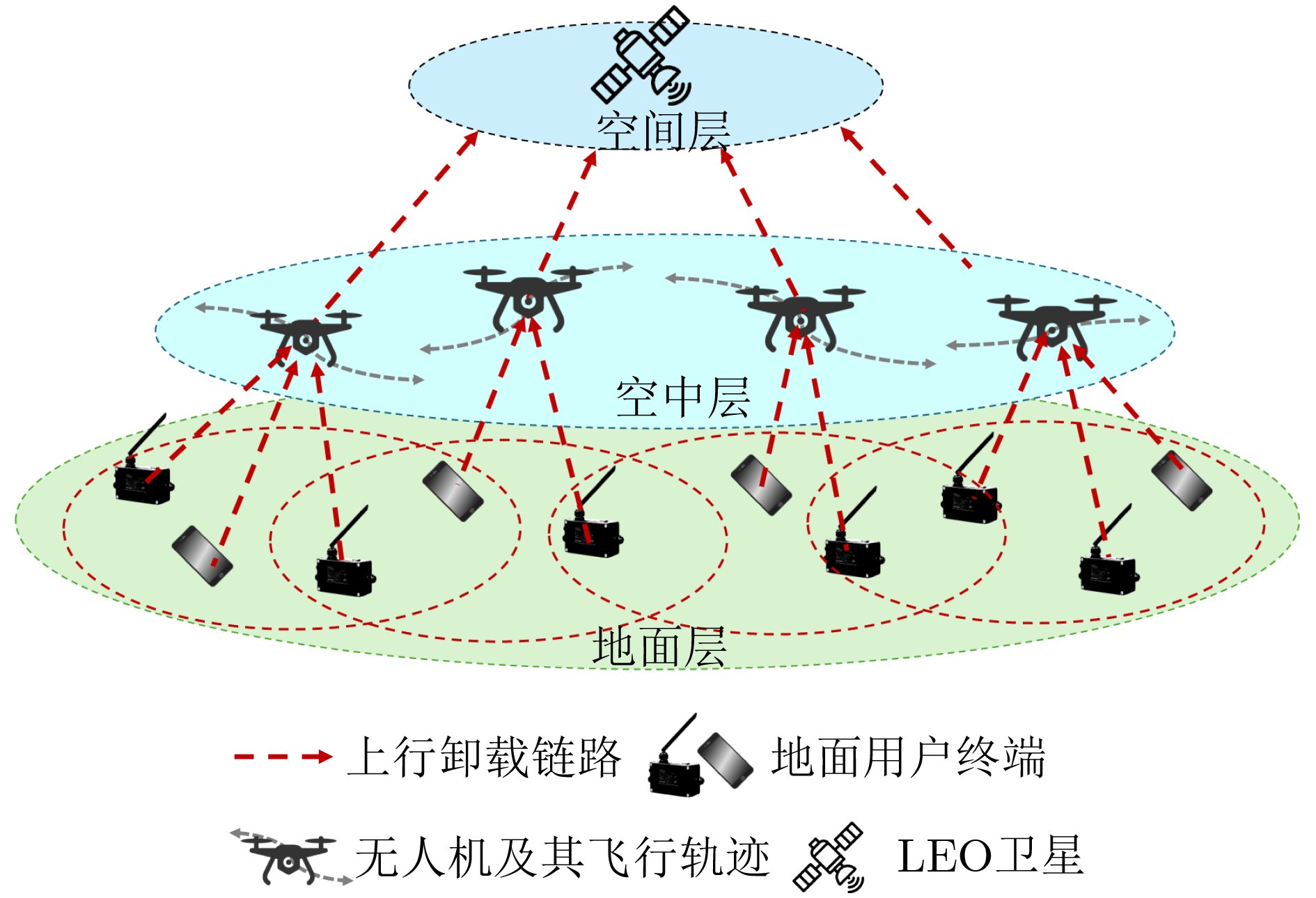
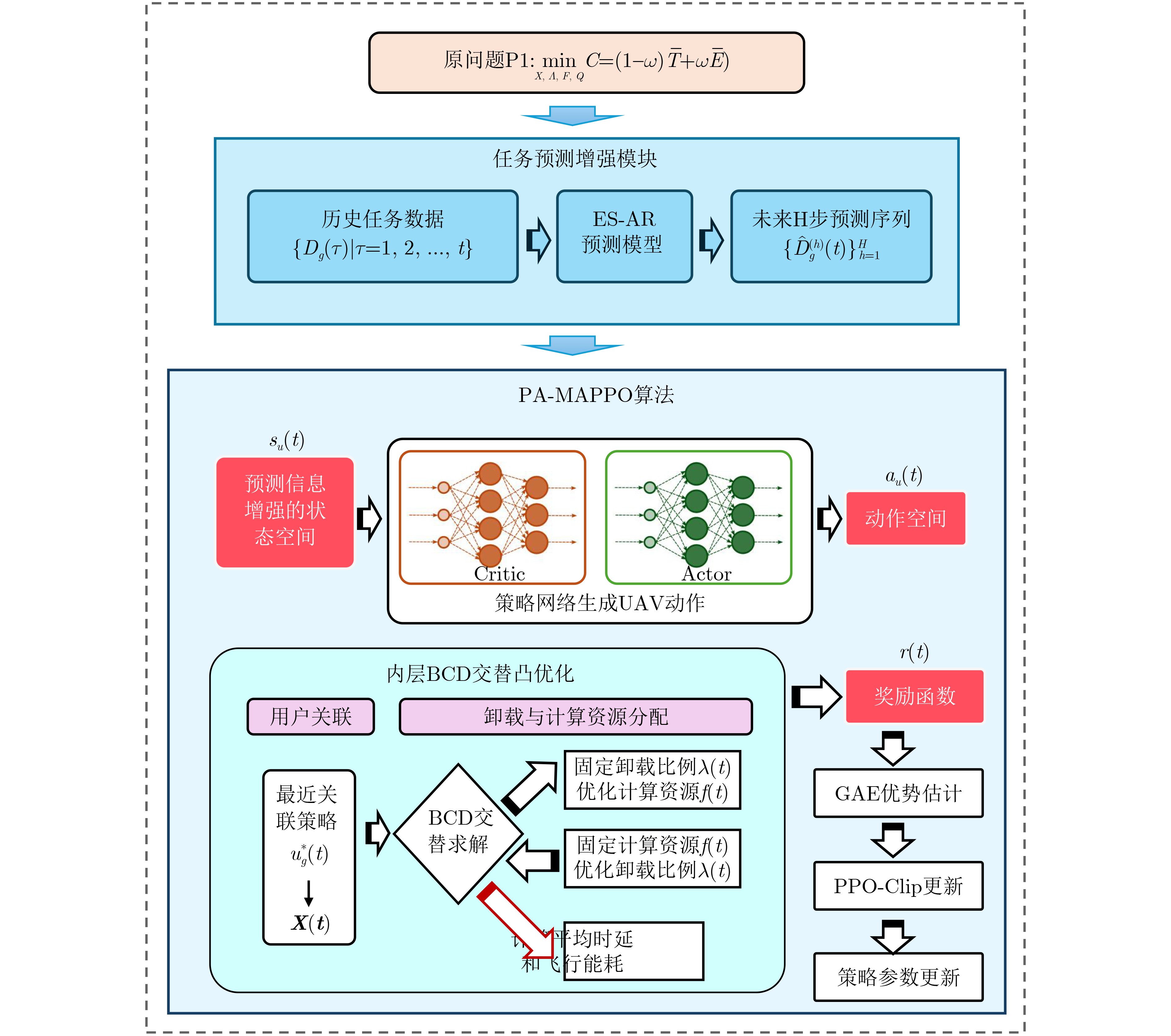
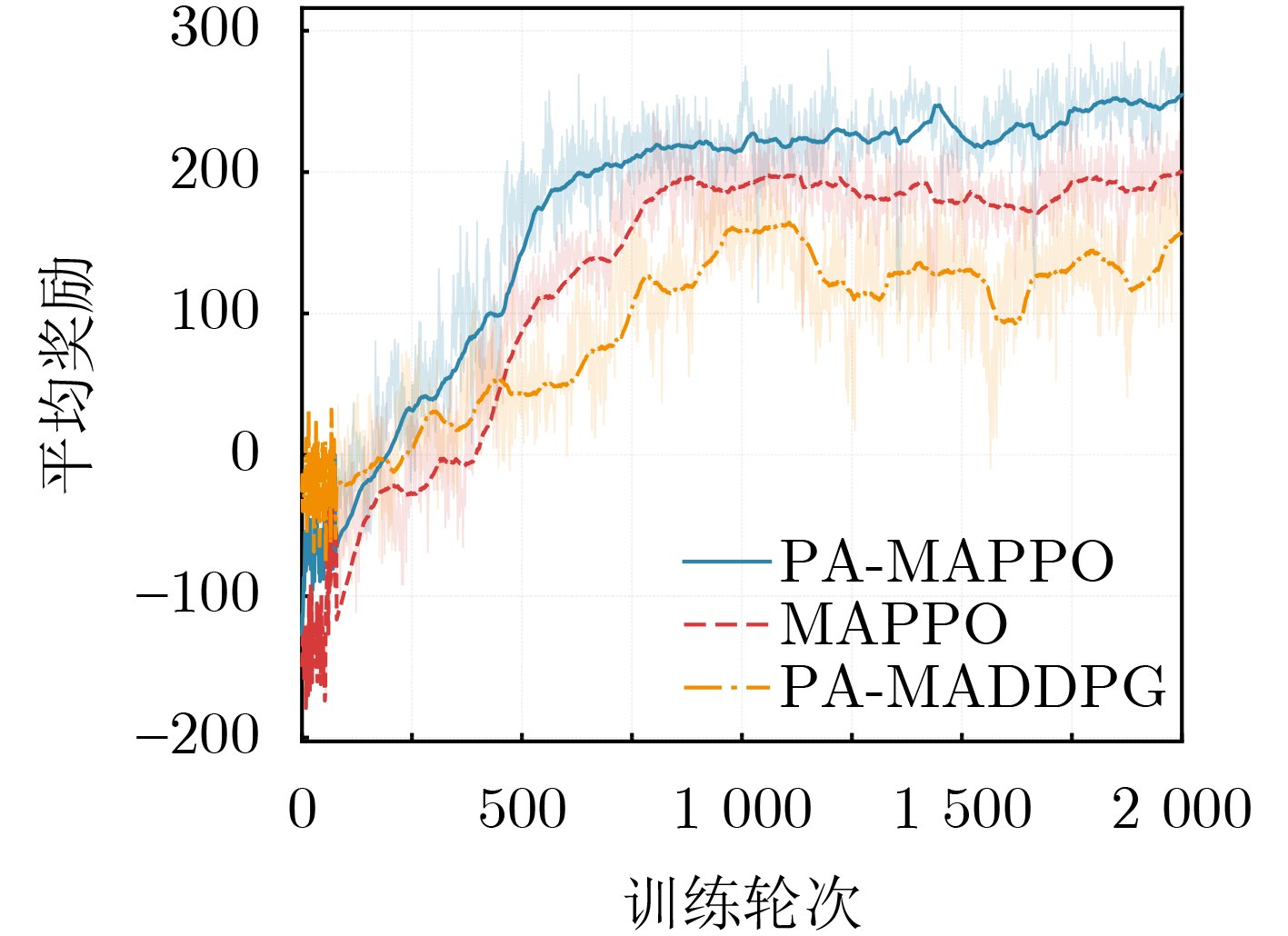
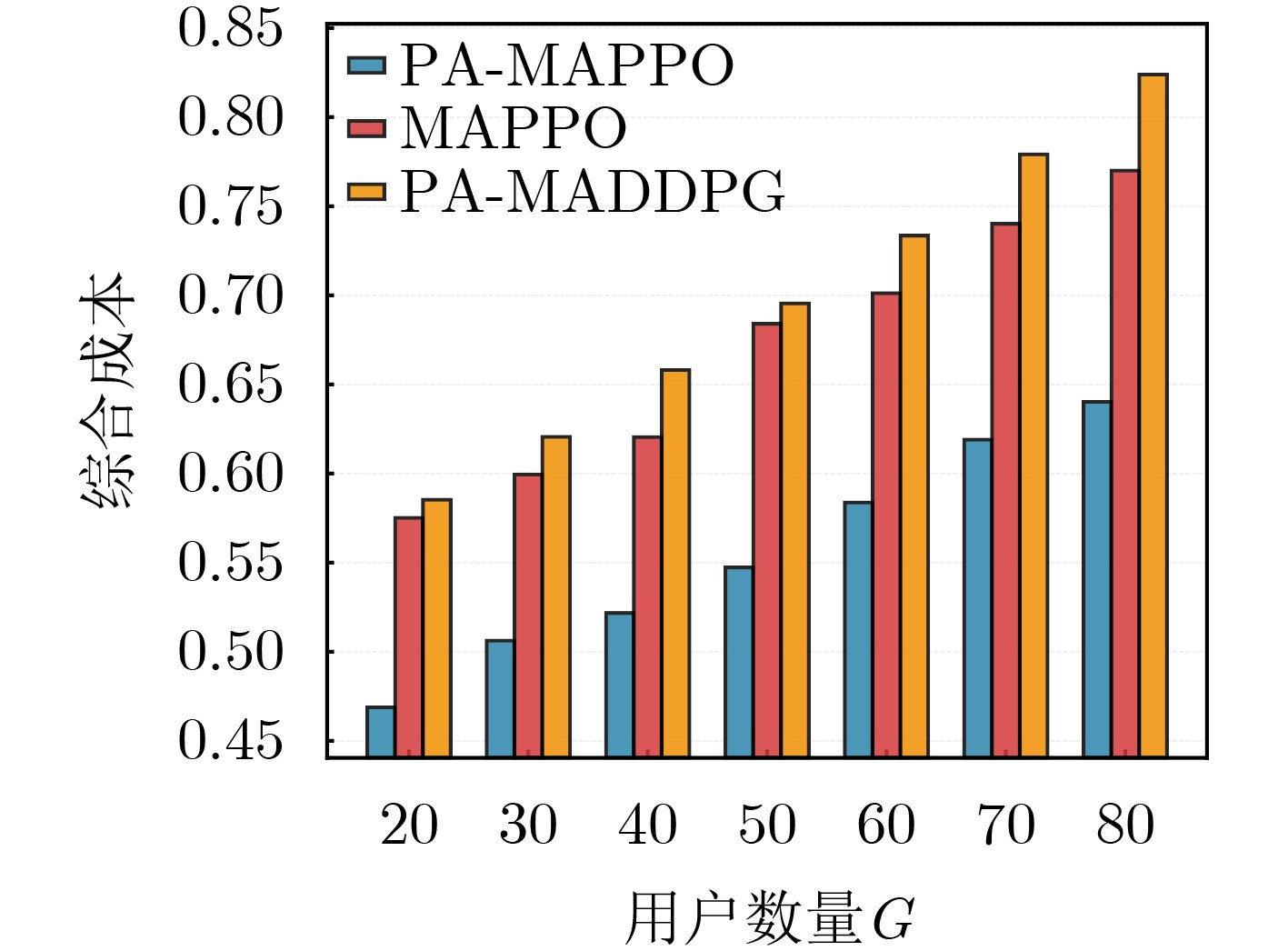
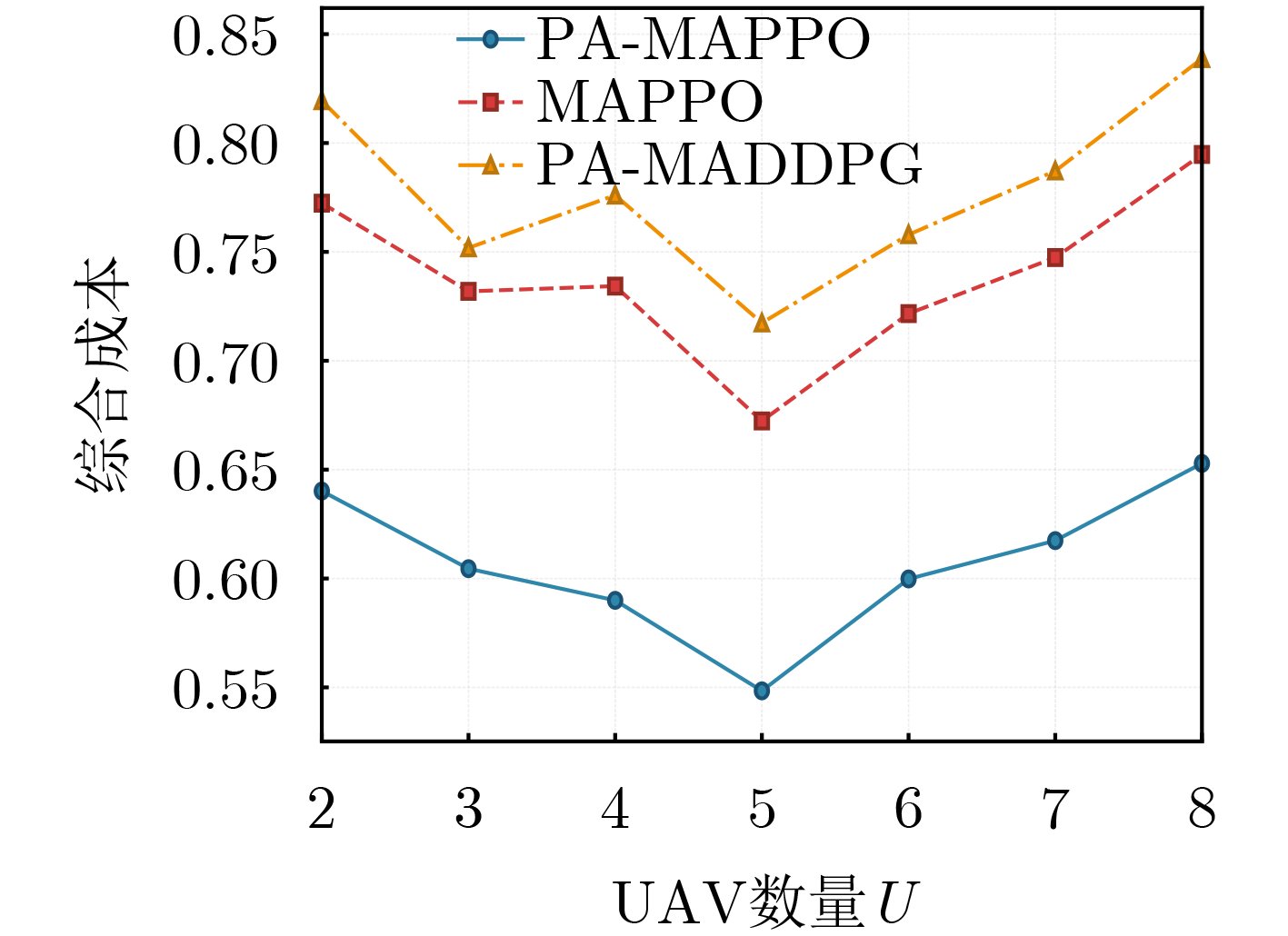
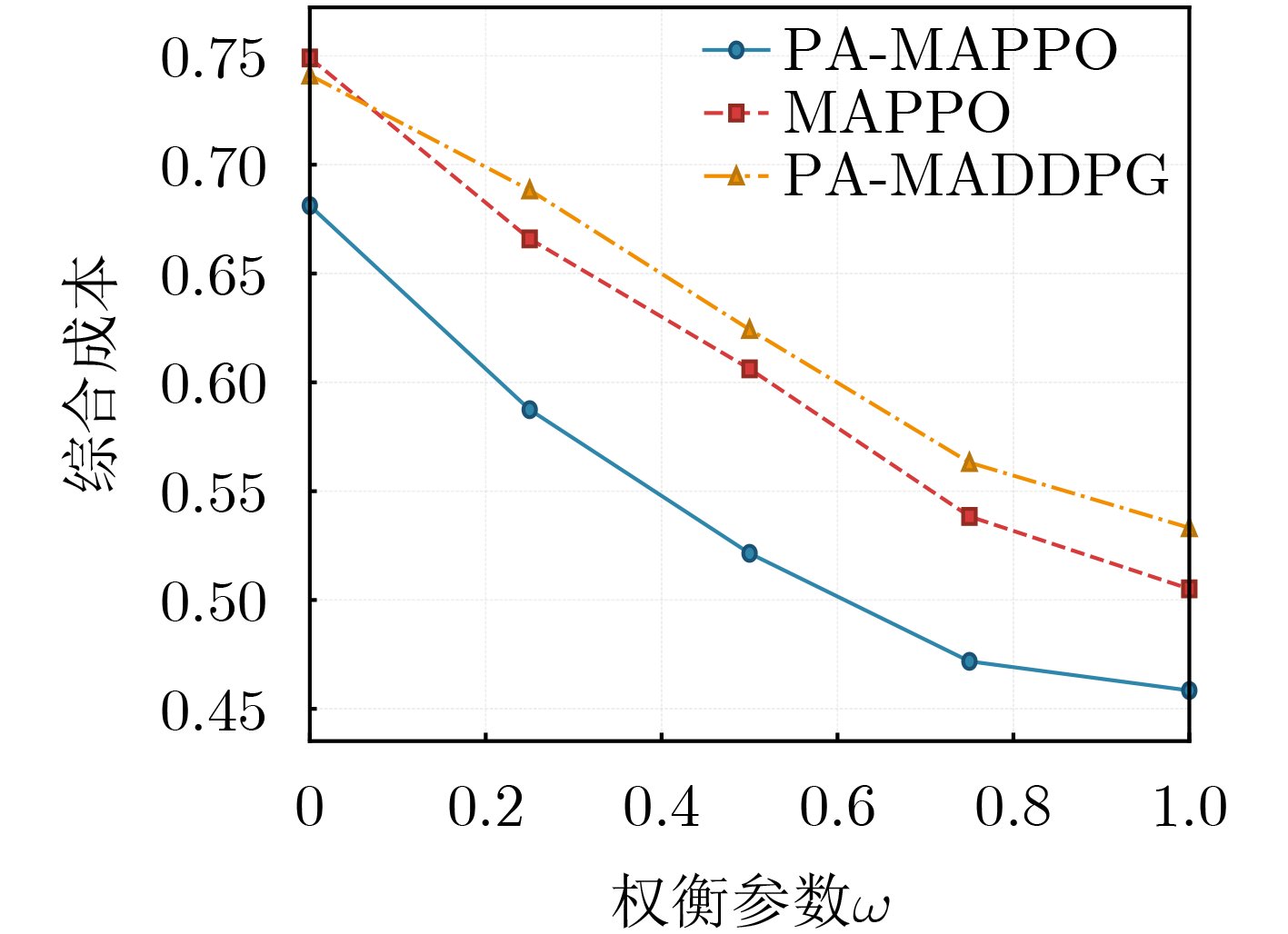
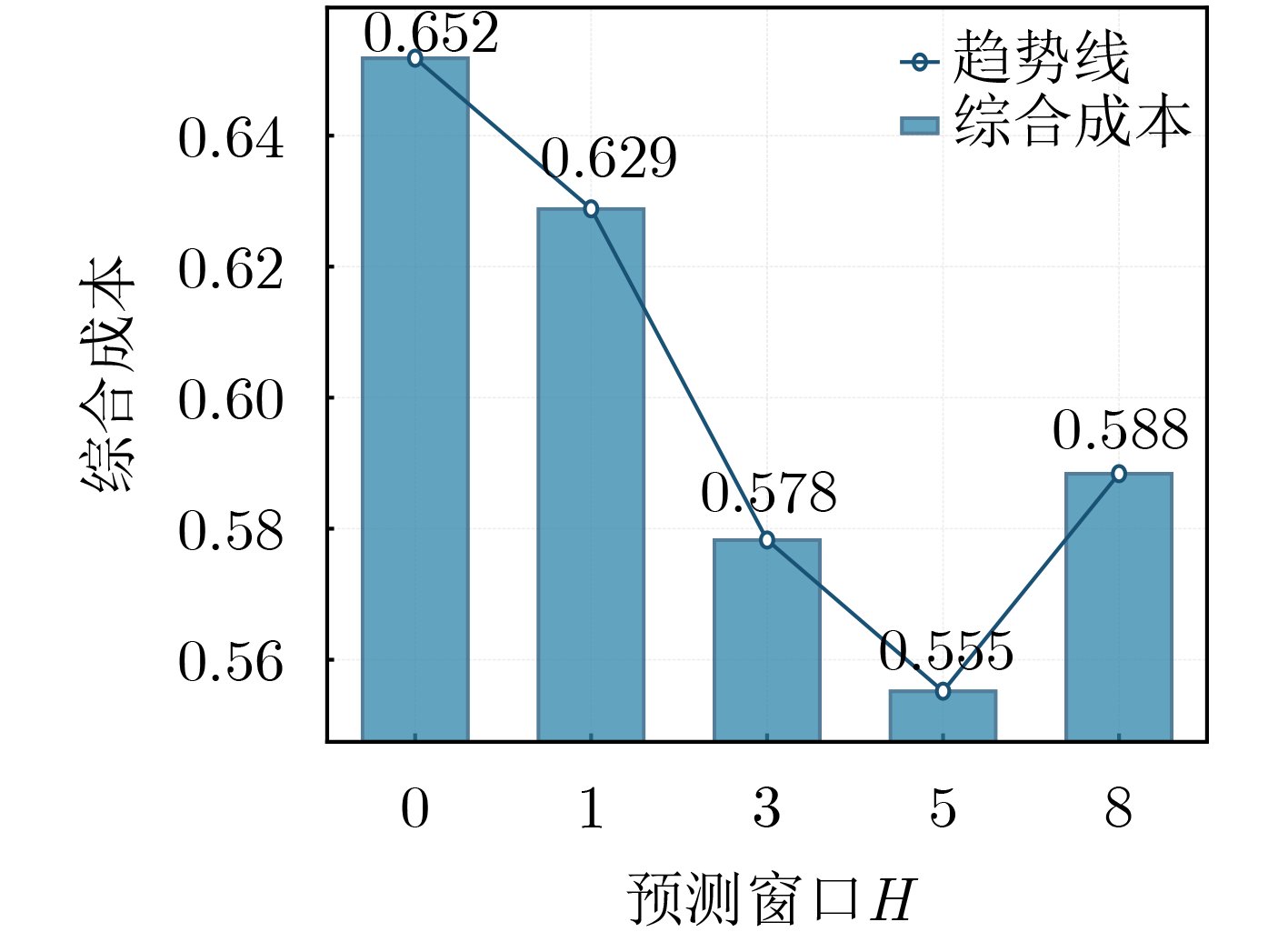
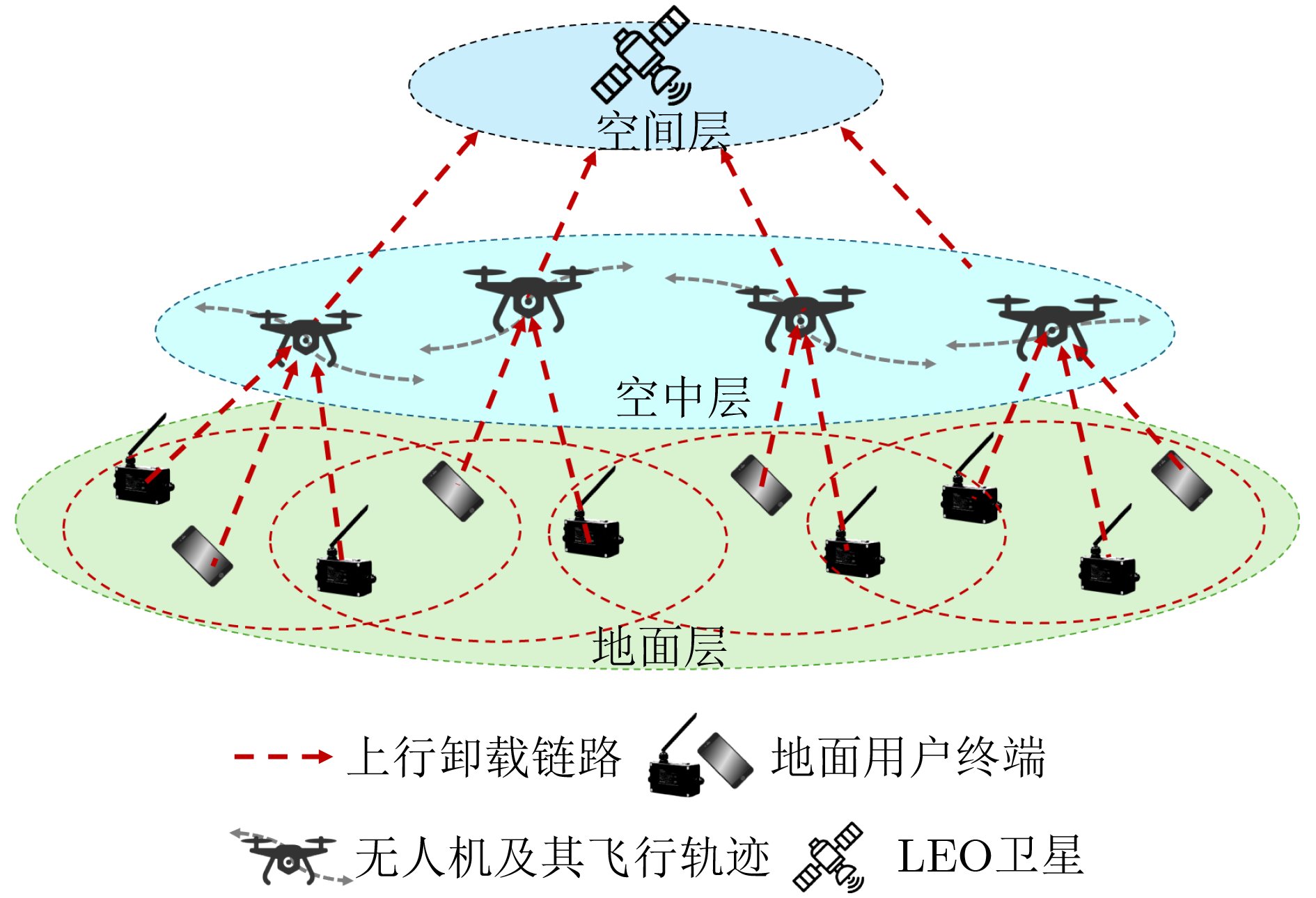
Objective Space-Air-Ground Integrated Networks (SAGIN) have become key infrastructure for future 6G communications. They support wide-area coverage and flexible deployment through the coordinated operation of Low Earth Orbit (LEO) satellites, Unmanned Aerial Vehicles (UAVs), and Ground Users (GUs). With the rapid growth of Internet of Things (IoT), Internet of Vehicles (IoV), and smart city applications, terminal devices generate increasingly diverse computation-intensive tasks. These tasks impose high requirements on real-time computing and resource scheduling. Mobile Edge Computing (MEC) has been integrated into SAGIN architectures to provide near-user computing services by using UAVs and satellites as edge nodes, thereby reducing task completion latency. However, efficient task offloading remains challenging when average task completion latency and UAV flight energy consumption must be jointly reduced. This difficulty is caused by the strong coupling among UAV trajectory planning, task offloading, and computational resource allocation. It is further intensified by the dynamic and partially observable nature of SAGIN environments. Existing Multi-Agent Reinforcement Learning (MARL) methods mainly rely on reactive decisions based on instantaneous observations. They lack awareness of future task workload changes, which leads to decision lag and limited adaptability under bursty traffic. To address these issues, a task prediction-augmented MARL method is proposed to support forward-looking decisions in dynamic SAGIN environments. Methods A three-layer SAGIN-MEC architecture is considered, including one LEO satellite, multiple UAVs, and GUs. Tasks can be processed locally, offloaded to UAVs through Ground-to-Air (G2A) links, or further relayed to the LEO satellite through Air-to-Satellite (A2S) links under a partial offloading mechanism. The joint optimization of UAV trajectory, user association, offloading ratios, and computational resource allocation is formulated as a Mixed-Integer NonLinear Programming (MINLP) problem. The objective is to minimize the weighted sum of average task completion latency and UAV flight energy consumption. Owing to the nonconvexity and high dimensionality of this problem, it is reformulated as a Decentralized Partially Observable Markov Decision Process (DEC-POMDP). A Prediction-Augmented Multi-Agent Proximal Policy Optimization (PA-MAPPO) algorithm is then developed. A lightweight Exponential Smoothing-Autoregressive (ES-AR) prediction module is used to generate multi-step workload forecasts, which are incorporated into the state space of each agent. The algorithm adopts a bilevel structure. In the outer layer, Centralized Training and Decentralized Execution (CTDE)-based PA-MAPPO generates UAV trajectory actions. In the inner layer, Block Coordinate Descent (BCD)-based convex optimization solves the resource allocation and offloading subproblems, and closed-form resource allocation solutions are obtained through Lagrangian analysis. Generalized Advantage Estimation (GAE) and the PPO-Clip objective are used to improve training stability and convergence. Results and Discussions Simulations are conducted with one LEO satellite, five UAVs, and 50 GUs in a 1×1 km2 area. PA-MAPPO is compared with MAPPO without prediction and Prediction-Augmented Multi-Agent Deep Deterministic Policy Gradient (PA-MADDPG). The training curves show that PA-MAPPO converges within 2500 episodes, with the highest average reward and the smallest variance, indicating better stability ( Fig. 3 ). As the number of GUs increases from 20 to 80, PA-MAPPO consistently achieves the lowest system cost. Compared with MAPPO and PA-MADDPG, it reduces the average cost by approximately 12.4% and 18.7%, respectively (Fig. 4 ). Experiments with different UAV numbers show a U-shaped cost curve for all algorithms. The best configuration is obtained when U=5, where PA-MAPPO achieves the minimum cost (Fig. 5 ). Sensitivity analysis of the latency-energy tradeoff weight ω confirms that PA-MAPPO remains robust under different optimization preferences (Fig. 6 ). The prediction horizon H has a nonmonotonic effect on performance. When H=5, PA-MAPPO obtains the best result and reduces the cost by approximately 10.5% compared with the no-prediction case. Longer horizons degrade performance because prediction errors accumulate (Fig. 7 ).Conclusions The PA-MAPPO algorithm is proposed to solve the joint optimization of UAV trajectory planning, user association, task offloading, and computational resource allocation in dynamic SAGIN environments. By integrating a lightweight ES-AR task workload prediction module into the MARL process, PA-MAPPO enables UAV agents to account for future task dynamics. This design reduces the decision lag caused by purely reactive methods. The inner BCD-based convex optimization converges to a Karush-Kuhn-Tucker (KKT)-stationary point, while the outer CTDE-based PPO mechanism improves training stability and scalability. Simulation results show that PA-MAPPO consistently achieves a lower overall system cost than the baseline methods across different system scales and parameter settings, achieving a better balance between task latency and UAV flight energy consumption. It also maintains strong scalability and robustness under different system configurations. Future work will study online prediction and decision co-optimization in multi-satellite cooperative scenarios and examine the effect of dynamic network topology changes on algorithm performance. -
表 1 实验仿真参数
仿真参数 参数值 卫星高度$ {H}_{\text{s}} $ 500 km UAV数量$ U $ 5 地面用户数量$ G $ 50 UAV飞行高度$ {H}_{u} $ 100 m UAV最大速度$ {v}_{\text{max}} $ 30 m/s UAV最大加速度$ {a}_{\text{max}} $ 2.5 m/s² 最小安全距离$ {d}_{\text{min}} $ 30 m 通信带宽$ {B}_{g,u} $,$ {B}_{u,L} $ 10 MHz, 20 MHz 计算频率$ f_{g}^{\text{loc}} $,$ f_{u}^{\text{max}} $,$ f_{L}^{\text{max}} $ 1 GHz, 2 GHz, 10 GHz 任务数据量$ {D}_{g}(t) $ 平均0.5~2.0 Mbit 噪声功率谱密度$ {N}_{0} $ –174 dBm/Hz 折扣因子$ \gamma $ 0.99 学习率 $ 3\times {10}^{-4} $ 预测窗口$ H $ 5  下载: 导出CSV
-
[1] 刘雪芳, 毛伟灏, 杨清海. 基于深度强化学习的空天地一体化网络资源分配算法[J]. 电子与信息学报, 2024, 46(7): 2831–2841. doi: 10.11999/JEIT231016.LIU Xuefang, MAO Weihao, and YANG Qinghai. A resource allocation algorithm for space-air-ground integrated network based on deep reinforcement learning[J]. Journal of Electronics & Information Technology, 2024, 46(7): 2831–2841. doi: 10.11999/JEIT231016. [2] DU Jianbo, WANG Jiaxuan, SUN Aijing, et al. Joint optimization in blockchain- and MEC-enabled space-air-ground integrated networks[J]. IEEE Internet of Things Journal, 2024, 11(19): 31862–31877. doi: 10.1109/JIOT.2024.3421529. [3] NGUYEN M D, AJIB W, ZHU Weiping, et al. Integrated user association, computation offloading, resource allocation, and UAV trajectory control against jamming for UAV-based wireless networks[J]. IEEE Transactions on Wireless Communications, 2025, 24(7): 5588–5604. doi: 10.1109/TWC.2025.3547975. [4] FAN Wenhao, SU Yi, LIU Jie, et al. Joint task offloading and resource allocation for vehicular edge computing based on V2I and V2V modes[J]. IEEE Transactions on Intelligent Transportation Systems, 2023, 24(4): 4277–4292. doi: 10.1109/TITS.2022.3230430. [5] ZHANG Haibo, LIU Xiangyu, XU Yongjun, et al. Partial offloading and resource allocation for MEC-assisted vehicular networks[J]. IEEE Transactions on Vehicular Technology, 2024, 73(1): 1276–1288. doi: 10.1109/TVT.2023.3306939. [6] LIU Boyang, WAN Yiyao, ZHOU Fuhui, et al. Resource allocation and trajectory design for MISO UAV-assisted MEC networks[J]. IEEE Transactions on Vehicular Technology, 2022, 71(5): 4933–4948. doi: 10.1109/TVT.2022.3140833. [7] LI Shichao, ALE L, CHEN Hongbin, et al. Joint computation offloading and multidimensional resource allocation in air-ground integrated vehicular edge computing network[J]. IEEE Internet of Things Journal, 2024, 11(20): 32687–32700. doi: 10.1109/JIOT.2024.3441236. [8] ZHANG Yibo, HOU Xiangwang, DU Hongyang, et al. Joint trajectory and resource optimization for UAV and D2D-enabled heterogeneous edge computing networks[J]. IEEE Transactions on Vehicular Technology, 2024, 73(9): 13816–13827. doi: 10.1109/TVT.2024.3397335. [9] HE Jingchao, CHENG Nan, YIN Zhisheng, et al. Service-oriented network resource orchestration in space-air-ground integrated network[J]. IEEE Transactions on Vehicular Technology, 2024, 73(1): 1162–1174. doi: 10.1109/TVT.2023.3301676. [10] JIA Ziye, CAO Yilu, HE Lijun, et al. Service function chain dynamic scheduling in space-air-ground integrated networks[J]. IEEE Transactions on Vehicular Technology, 2025, 74(7): 11235–11248. doi: 10.1109/TVT.2025.3543259. [11] JIA Ziye, CAO Yilu, HE Lijun, et al. NFV-enabled service recovery in space-air-ground integrated networks: A matching game-based approach[J]. IEEE Transactions on Network Science and Engineering, 2025, 12(3): 1732–1744. doi: 10.1109/TNSE.2025.3538614. [12] 曹怡璐, 贾子晔, 尤嘉豪, 等. 基于SDN和NFV的空天地一体化网络任务部署与恢复综述[J]. 电信科学, 2025, 41(5): 1–16. doi: 10.11959/j.issn.1000-0801.2025138.CAO Yilu, JIA Ziye, YOU Jiahao, et al. A survey of task deployment and recovery in space-air-ground integrated networks based on SDN and NFV[J]. Telecommunications Science, 2025, 41(5): 1–16. doi: 10.11959/j.issn.1000-0801.2025138. [13] HUANG Chong, CHEN Gaojie, XIAO Pei, et al. Joint offloading and resource allocation for hybrid cloud and edge computing in SAGINs: A decision assisted hybrid action space deep reinforcement learning approach[J]. IEEE Journal on Selected Areas in Communications, 2024, 42(5): 1029–1043. doi: 10.1109/JSAC.2024.3365899. [14] DU Jingjing, XIONG Lei, FEI Dan, et al. Joint offloading and resource allocation based on Lyapunov algorithm in delay-sensitive SAGIN[J]. Journal of Communications and Networks, 2025, 27(3): 166–178. doi: 10.23919/JCN.2025.000033. [15] HUANG Xinyu, HE Lijun, CHEN Xing, et al. Revenue and energy efficiency-driven delay-constrained computing task offloading and resource allocation in a vehicular edge computing network: A deep reinforcement learning approach[J]. IEEE Internet of Things Journal, 2022, 9(11): 8852–8868. doi: 10.1109/JIOT.2021.3116108. [16] LI Xuanheng, DU Xinyang, ZHAO Nan, et al. Computing over the sky: Joint UAV trajectory and task offloading scheme based on optimization-embedding multi-agent deep reinforcement learning[J]. IEEE Transactions on Communications, 2024, 72(3): 1355–1369. doi: 10.1109/TCOMM.2023.3331029. [17] JIA Min, ZHANG Liang, WU Jian, et al. Deep multiagent reinforcement learning for task offloading and resource allocation in satellite edge computing[J]. IEEE Internet of Things Journal, 2025, 12(4): 3832–3845. doi: 10.1109/JIOT.2024.3482290. [18] MIAO Yiming, WU Gaoxiang, LI Miao, et al. Intelligent task prediction and computation offloading based on mobile-edge cloud computing[J]. Future Generation Computer Systems, 2020, 102: 925–931. doi: 10.1016/j.future.2019.09.035. [19] LI Y, MA X, HUANG L, et al. Adaptive task offloading for mobile edge computing with forecast information[J]. IEEE Transactions on Wireless Communications, 2025, 24(3): 4132–4167. doi: 10.1109/TWC.2024.3489073. [20] PENG Sicong, LI Bin, LIU Lei, et al. Trajectory design and resource allocation for multi-UAV-assisted sensing, communication, and edge computing integration[J]. IEEE Transactions on Communications, 2025, 73(4): 2847–2861. doi: 10.1109/TCOMM.2024.3478115. [21] GAO Yulan, YE Ziqiang, and YU Han. Cost-efficient computation offloading in SAGIN: A deep reinforcement learning and perception-aided approach[J]. IEEE Journal on Selected Areas in Communications, 2024, 42(12): 3462–3476. doi: 10.1109/JSAC.2024.3459073. [22] SHEN Hang, TIAN Yibo, WANG Tianjing, et al. Slicing-based task offloading in space-air-ground integrated vehicular networks[J]. IEEE Transactions on Mobile Computing, 2024, 23(5): 4009–4024. doi: 10.1109/TMC.2023.3283852. [23] TRAN T X and POMPILI D. Joint task offloading and resource allocation for multi-server mobile-edge computing networks[J]. IEEE Transactions on Vehicular Technology, 2019, 68(1): 856–868. doi: 10.1109/TVT.2018.2881191. [24] 张京奎, 王星星, 陈永昌. 结合去趋势的AR模型变形数据预测[J]. 电子技术与软件工程, 2022(12): 259–262 doi: 10.20109/j.cnki.etse.2022.12.063.ZHANG Jingkui, WANG Xingxing, and CHEN Yongchang. Deformation data prediction using AR model combined with detrending[J]. Electronic Technology & Software Engineering, 2022(12): 259–262 doi: 10.20109/j.cnki.etse.2022.12.063. [25] LIU Qinghua, NETRAPALLI P, SZEPESVARI C, et al. Optimistic MLE: A generic model-based algorithm for partially observable sequential decision making[C]. The 55th Annual ACM Symposium on Theory of Computing, Orlando, USA, 2023: 363–376. doi: 10.1145/3564246.3585161. [26] CHEN Gong, ZHAI X B, and LI Congduan. Joint optimization of trajectory and user association via reinforcement learning for UAV-aided data collection in wireless networks[J]. IEEE Transactions on Wireless Communications, 2023, 22(5): 3128–3143. doi: 10.1109/TWC.2022.3216049. [27] ZHAO Youhan, LIU Chenxi, HU Xiaoling, et al. Joint content caching, service placement, and task offloading in UAV-enabled mobile edge computing networks[J]. IEEE Journal on Selected Areas in Communications, 2025, 43(1): 51–63. doi: 10.1109/JSAC.2024.3460049. [28] XIAO Yang, SONG Yuqian, and LIU Jun. Collaborative multi-agent deep reinforcement learning for energy-efficient resource allocation in heterogeneous mobile edge computing networks[J]. IEEE Transactions on Wireless Communications, 2024, 23(6): 6653–6668. doi: 10.1109/TWC.2023.3335597. [29] FAN Kexin, FENG Bowen, ZHANG Xilin, et al. Demand-driven task scheduling and resource allocation in space-air-ground integrated network: A deep reinforcement learning approach[J]. IEEE Transactions on Wireless Communications, 2024, 23(10): 13053–13067. doi: 10.1109/TWC.2024.3398199. [30] 周晓天, 杨潇辉, 张海霞, 等. 无人机辅助边缘计算网络的任务卸载与资源分配联合优化[J]. 电子与信息学报, 2024, 46(12): 4399–4408. doi: 10.11999/JEIT240411.ZHOU Xiaotian, YANG Xiaohui, ZHANG Haixia, et al. Joint optimization of task offloading and resource allocation for unmanned aerial vehicle-assisted edge computing network[J]. Journal of Electronics & Information Technology, 2024, 46(12): 4399–4408. doi: 10.11999/JEIT240411. [31] 王俊华, 罗菲, 高广鑫, 等. 动态车辆网络场景中的协同空地计算卸载和资源优化[J]. 电子与信息学报, 2025, 47(1): 102–115. doi: 10.11999/JEIT240464.WANG Junhua, LUO Fei, GAO Guangxin, et al. Collaborative air-ground computation offloading and resource optimization in dynamic vehicular network scenarios[J]. Journal of Electronics & Information Technology, 2025, 47(1): 102–115. doi: 10.11999/JEIT240464. [32] 王侃, 曹铁林, 李旭杰, 等. 无人机辅助边缘计算网络轨迹规划与资源分配研究综述[J]. 电子与信息学报, 2025, 47(5): 1266–1281. doi: 10.11999/JEIT241071.WANG Kan, CAO Tielin, LI Xujie, et al. A survey on trajectory planning and resource allocation in unmanned aerial vehicle-assisted edge computing networks[J]. Journal of Electronics & Information Technology, 2025, 47(5): 1266–1281. doi: 10.11999/JEIT241071. [33] 沈学民, 承楠, 周海波, 等. 空天地一体化网络技术: 探索与展望[J]. 物联网学报, 2020, 4(3): 1–19. doi: 10.11959/j.issn.2096-3750.2020.00142.SHEN Xuemin, CHENG Nan, ZHOU Haibo, et al. Space-air-ground integrated networks: Review and prospect[J]. Chinese Journal on Internet of Things, 2020, 4(3): 1–19. doi: 10.11959/j.issn.2096-3750.2020.00142. -

 下载:
下载:

图(7) / 表(1)
计量
- 文章访问数: 640
- HTML全文浏览量: 277
- PDF下载量: 43
- 被引次数: 0
