




A Low-latency Synchronization Header Detection Algorithm and Circuit for the JESD204C Interface
-
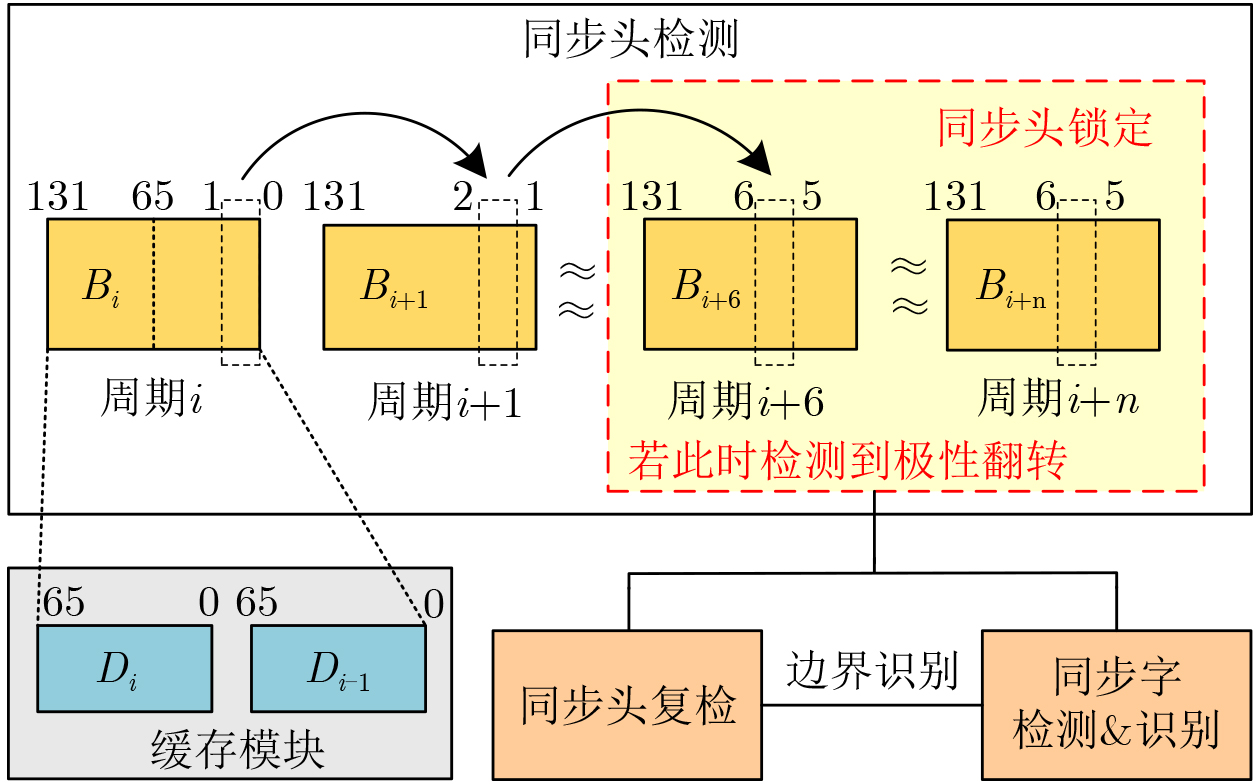
摘要: JESD204C串行(SerDes)接口作为高速芯片互连和边缘AI计算网络的核心器件,其链路初始化延迟长、同步过程功耗高等问题制约了系统实时性与能效。为此,该文提出一种基于迭代式集合筛查(ISS)的同步头(SH)检测方法,旨在提升检测效率。该方法利用同步头序列固有的极性翻转特性,构建并行筛查机制,动态压缩搜索空间,高效剔除无效候选位置,实现同步头的快速精准定位。所提电路已集成至JESD204C接收链路,并在FPGA平台完成验证。实验结果表明:对比典型方案,该设计将同步头锁定时间缩短70%,且检测时延对同步头的位置不敏感,同步过程稳定性与能效同步提升。
-
关键词:
- JESD204C接口 /
- SerDes /
- 同步头 /
- FPGA
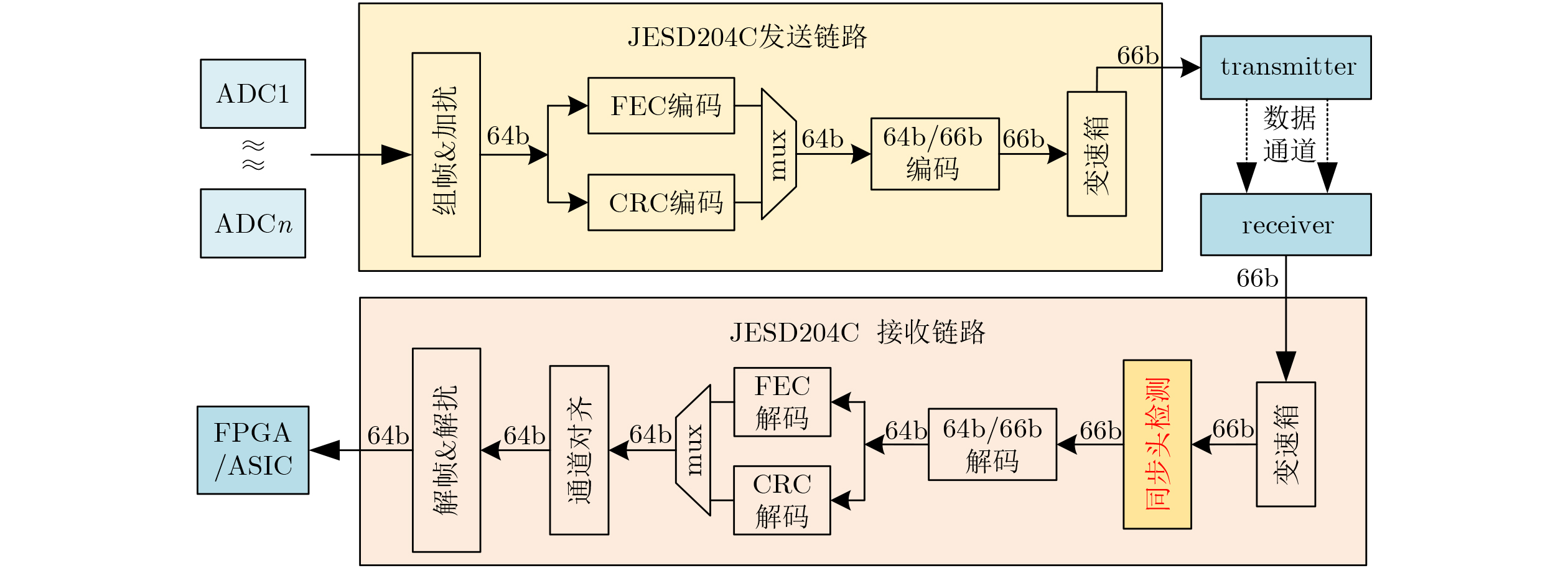
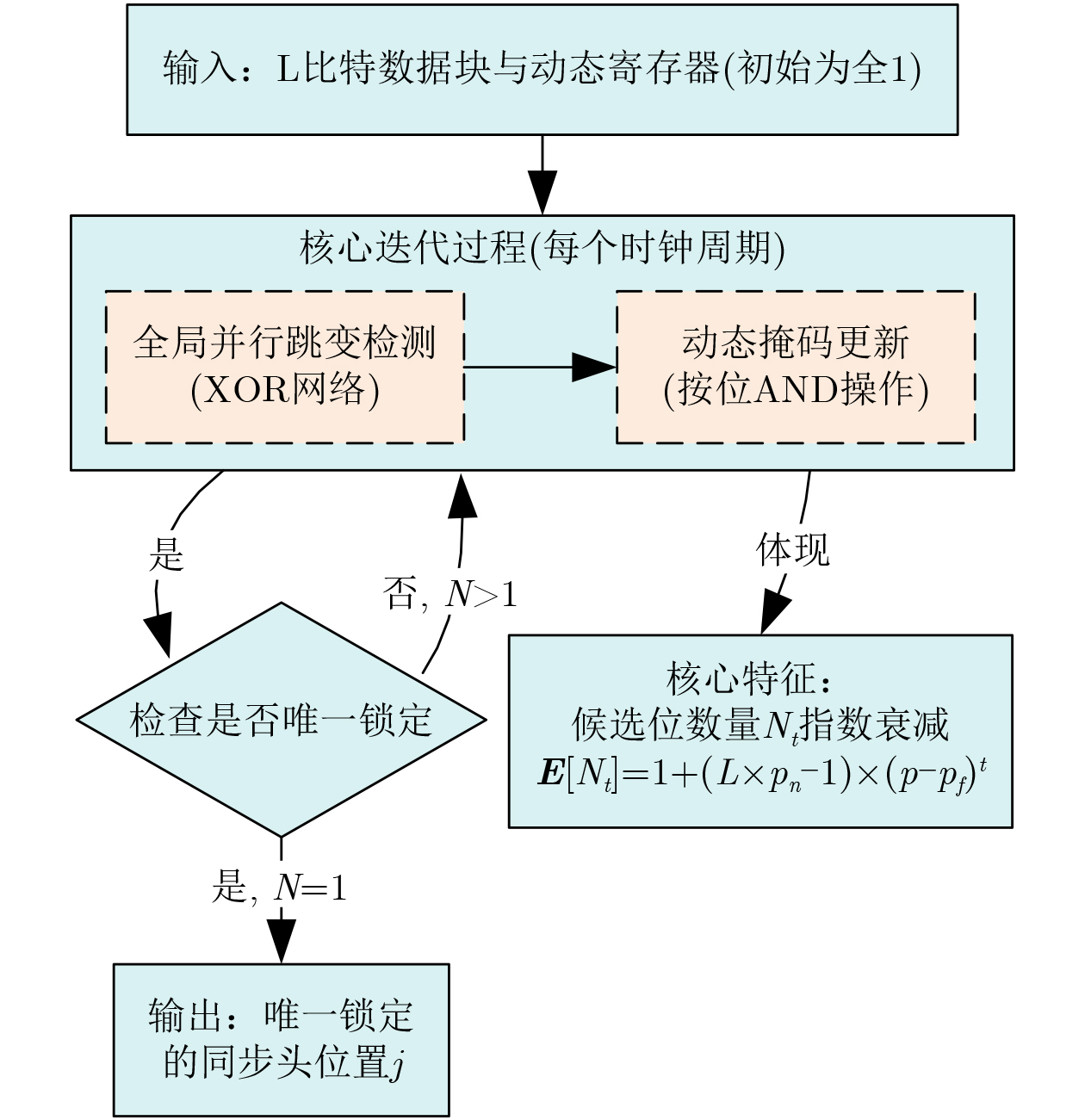
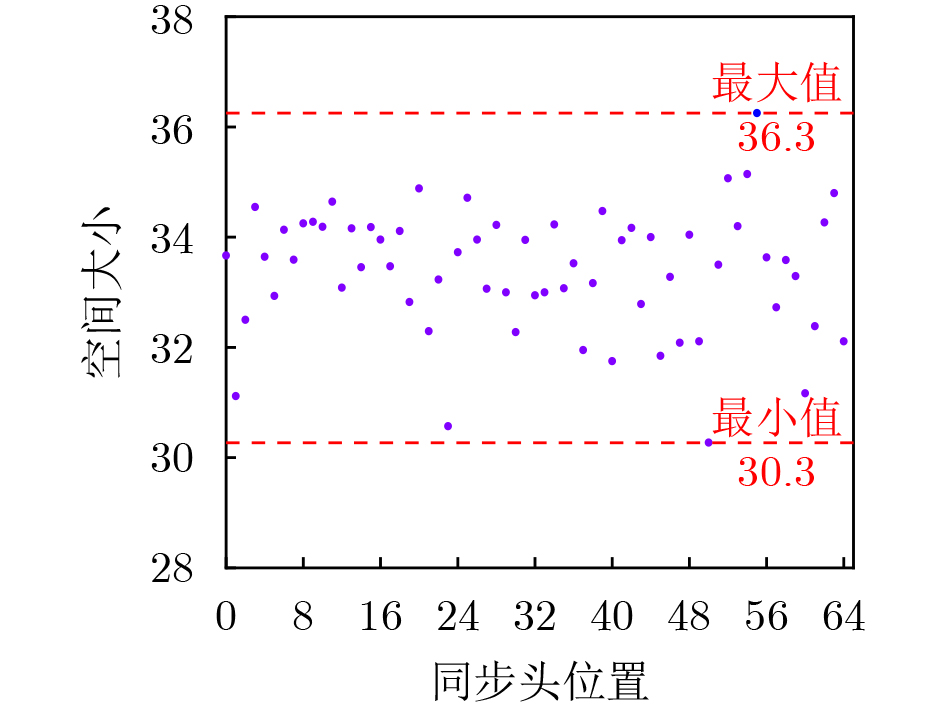
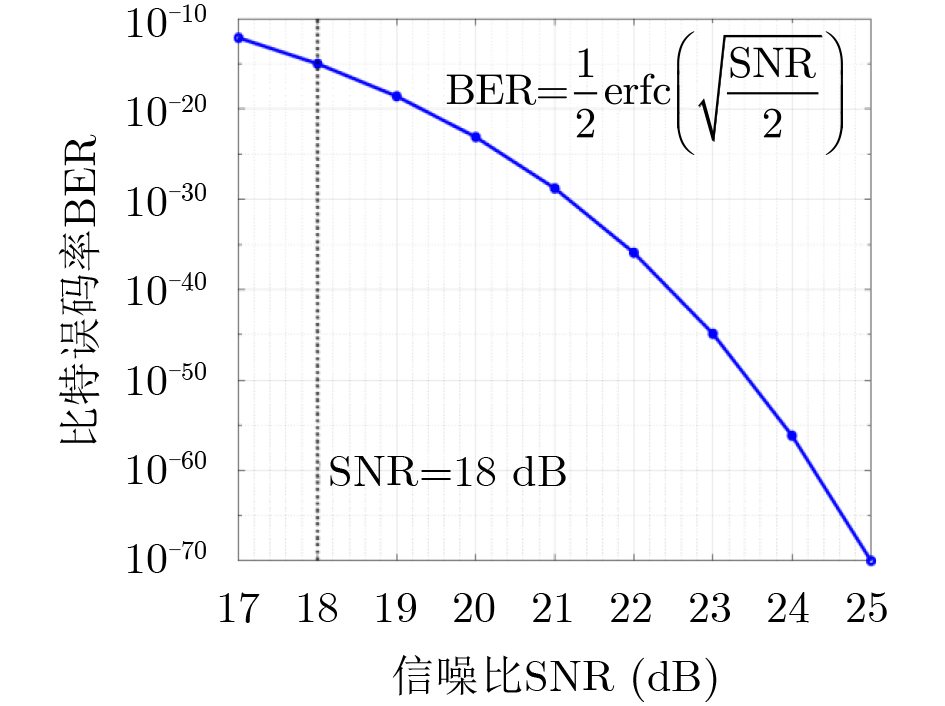
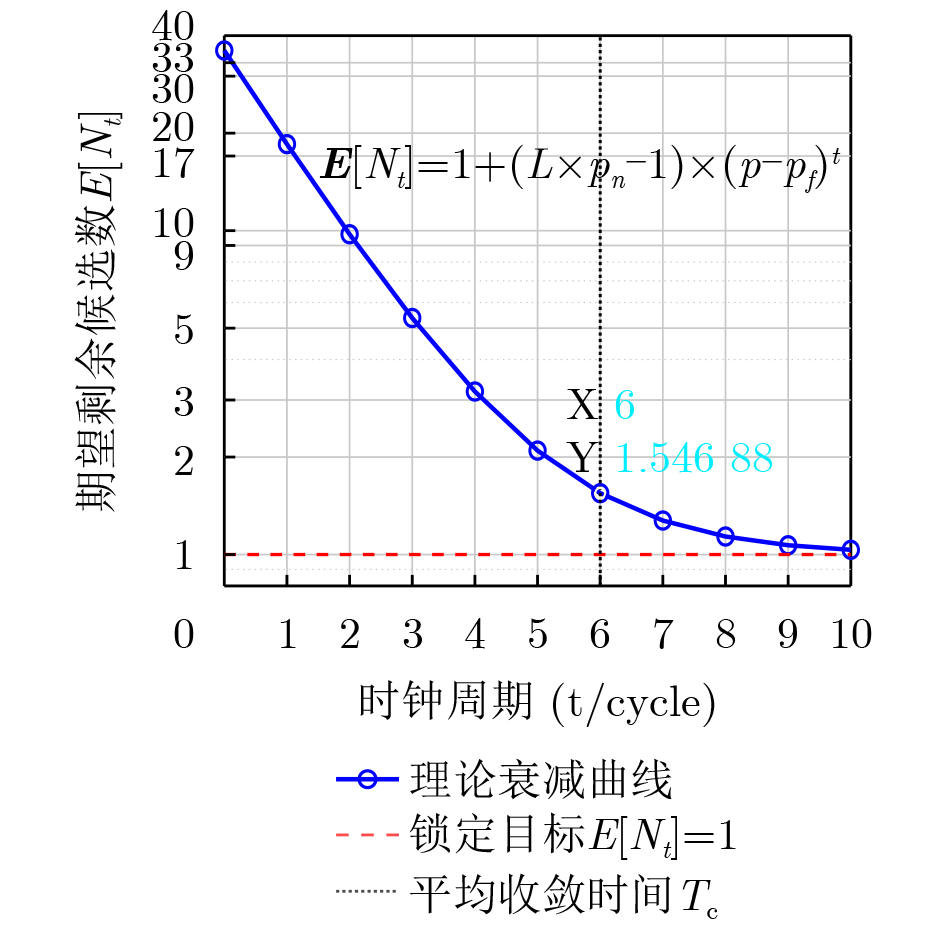
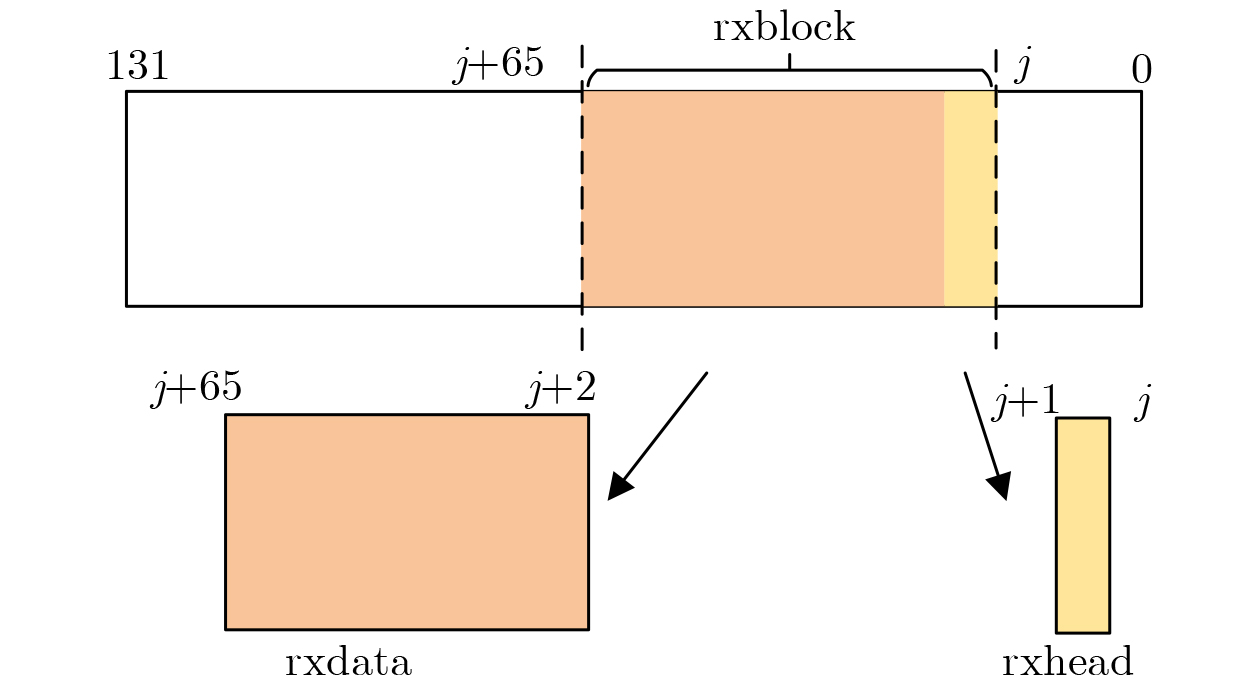
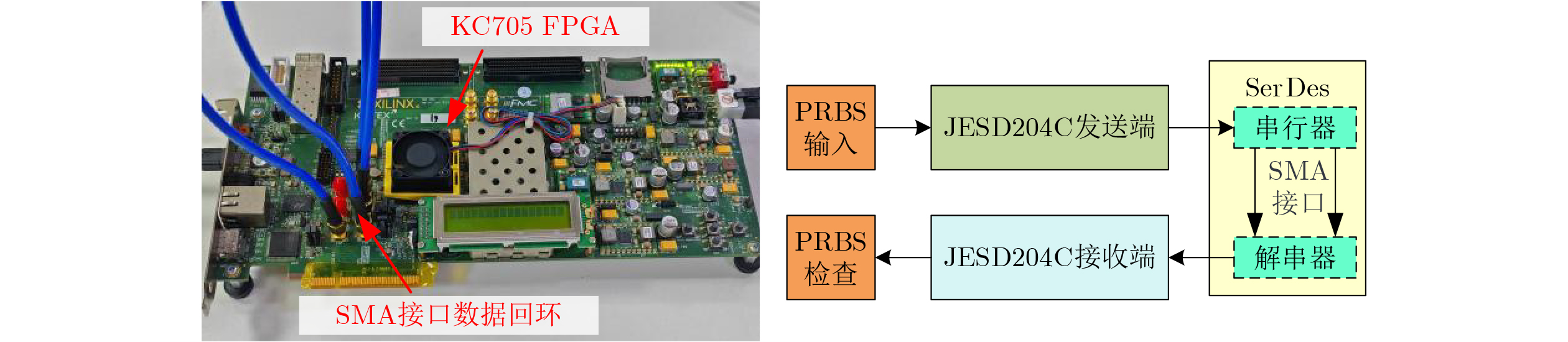
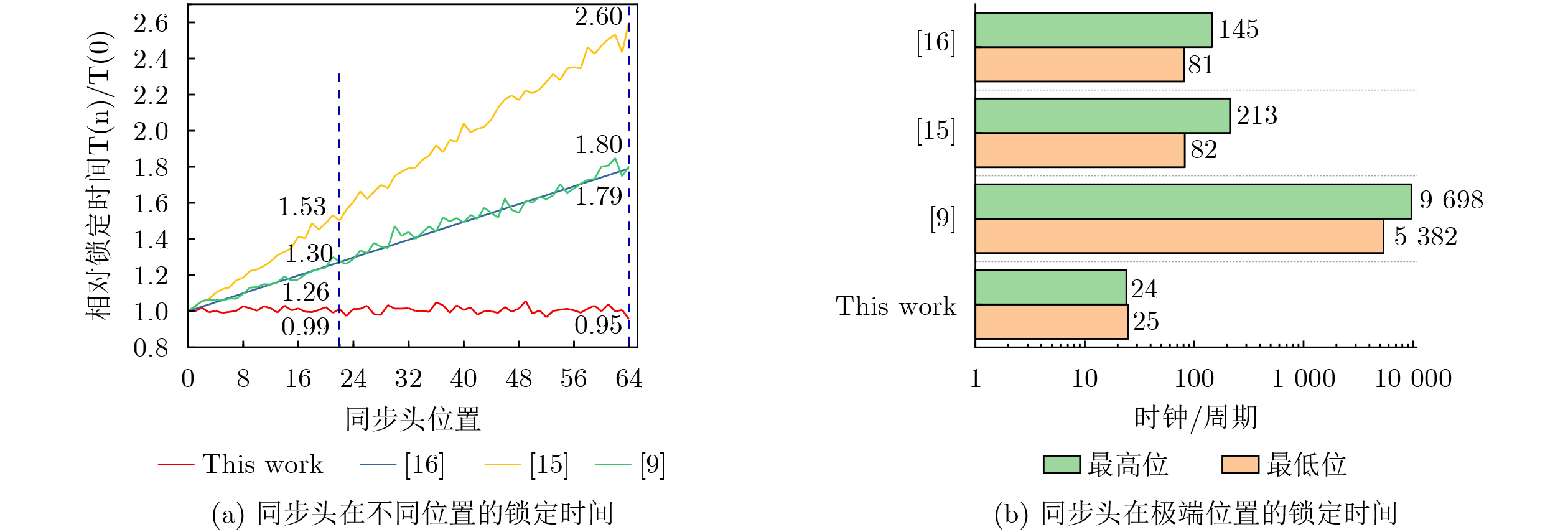
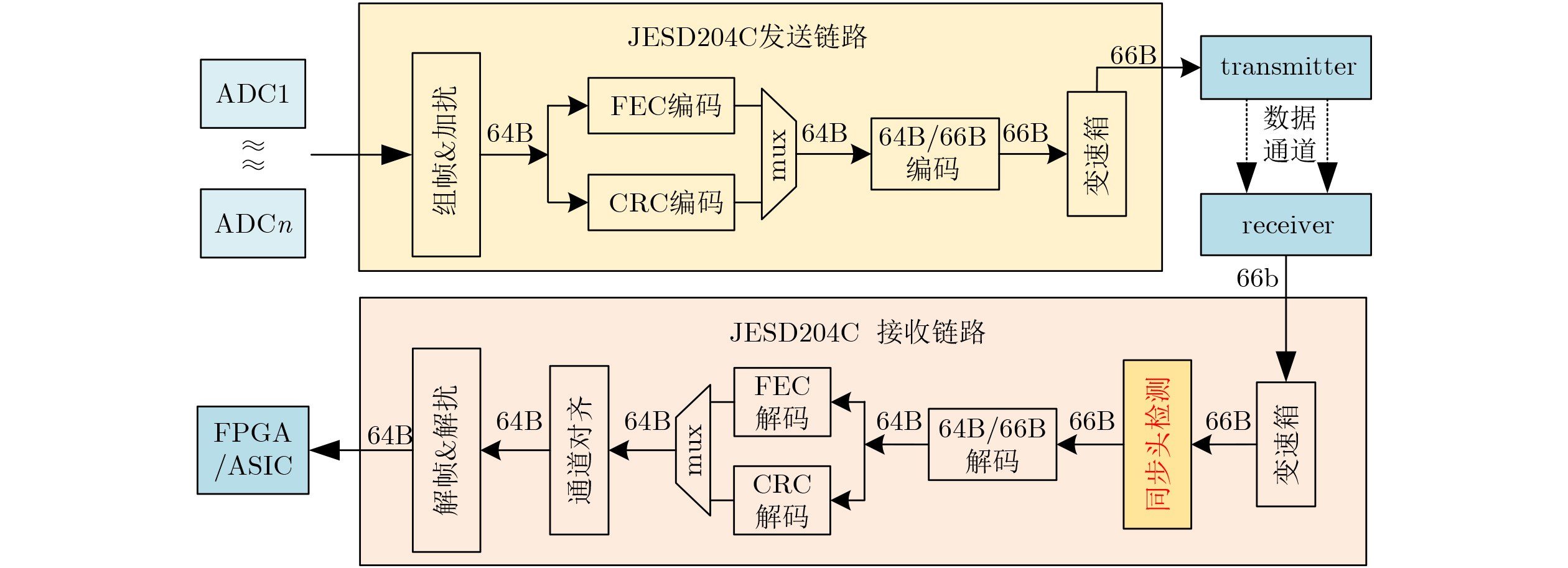
Abstract:Objective With rapid advances in high-speed electronics, front-end Analog-to-Digital Converters and Digital-to-Analog Converters (ADCs/DACs) continue to increase in sampling rate and resolution. Back-end Field-Programmable Gate Arrays and Application-Specific Integrated Circuits (FPGAs/ASICs) also provide stronger computing capability. These trends impose strict requirements on high-speed data interfaces, including high bandwidth, low latency, low power consumption, and reliable synchronization. As a mainstream high-speed Serializer/Deserializer (SerDes) interface, the JESD204C interface still suffers from long link initialization latency and high synchronization power consumption. These limitations restrict system real-time performance and energy efficiency. To address these issues, this study optimizes the link-layer design of the JESD204C receiver and proposes an efficient Synchronization Header (SH) detection method. The method implements exponential compression of the search set through global observation and iterative convergence. Detection efficiency is improved, fast and accurate SH positioning is achieved, link synchronization latency is reduced, and synchronization stability and energy efficiency are enhanced. Methods A typical JESD204C interface uses serial sliding detection for SH detection, which causes high link initialization latency and large delay jitter. To solve these problems, an Iterative Set Screening (ISS)-based SH detection algorithm is proposed. The SH detection task is modeled as the rapid localization of a deterministic pattern in a binary random sequence. A theoretical model based on information theory and stochastic processes is constructed. Expected space utilization and Bit Error Rate (BER) are introduced to support quantitative performance evaluation. In this model, SH candidate positions are defined as a dynamic set. Based on the inherent polarity inversion characteristic of the SH and global observations in each clock cycle, multilevel XOR logic is used to verify all candidate hypotheses in parallel. Non-inverting candidate positions are eliminated, and the search space is dynamically compressed. This design improves synchronization speed and position robustness, providing a low-latency and reliable initialization solution for high-speed SerDes links. Results and Discussions The proposed ISS-based SH detection algorithm is validated under harsh conditions, including SH crossing block boundaries and loss of lock caused by burst errors. The results demonstrate strong robustness, with rapid SH locking and link resynchronization under all test conditions ( Figs. 11 ~16 ). To evaluate performance, four representative schemes are reproduced: a single-bit serial locking circuit, a 66-bit serial locking architecture, a register-intensive block synchronization method, and a parallel search circuit. A systematic comparison is then conducted between these schemes and the proposed design. The results show that the normalized locking time of the single-bit serial locking circuit, 66-bit serial locking architecture, and register-intensive block synchronization method varies substantially with SH position (Fig. 17(a) ), especially at block boundari0es (Fig. 17(b) ). When the SH is located at the Most Significant Bit (MSB), typical sliding detection requires about 1.8 times the time needed at the Least Significant Bit (LSB), indicating strong sensitivity to the starting position and search path. In contrast, the proposed ISS scheme maintains a stable normalized locking time within 1.0 ± 0.05 across all positions, with the standard deviation reduced by more than 70%. By evaluating all candidate positions equally through parallel filtering, the scheme eliminates position dependence. Synchronization can be completed within tens of clock cycles whether the SH is located at the LSB, the MSB, or any other position in the block. The experimental results verify that the ISS algorithm improves synchronization robustness and predictability while accelerating link initialization. Table 3 summarizes the performance metrics. The average locking time is only 24.4 clock cycles, representing an overall improvement of more than 70% compared with the single-bit serial locking circuit, 66-bit serial locking architecture, and register-intensive block synchronization method. The standard deviation of locking time is only 4.7, indicating a more stable synchronization process. In terms of resource utilization, the design consumes 509 Look-Up Tables (LUTs) and only 2.0 mW, much lower than the 3 503 LUTs and 94.1 mW required by the register-intensive scheme. Its energy efficiency reaches 0.03 mW/bit, which is better than those of the three conventional methods. Compared with the parallel search circuit, the average locking time is reduced by 6.87%, power consumption is reduced by 53.5%, and energy efficiency is improved by 53.8%. Therefore, the proposed JESD204C receiver link shows advantages in SH detection speed, stability, power consumption, and energy efficiency.Conclusions An ISS-based SH detection algorithm is proposed for the JESD204C receiver. By screening the data stream in parallel through multilevel XOR logic, dynamically compressing the search space, and efficiently eliminating non-inverting candidate positions, the algorithm converges to the true SH position. This approach improves the conventional serial detection mechanism. The design is verified on the Xilinx KC705 FPGA platform. A Pseudorandom Binary Sequence 31 (PRBS31) is used to emulate the random distribution of polarity transitions, and a high-speed SubMiniature version A (SMA) cable is used for data loopback transmission. The results show that the algorithm achieves an average locking time of only 24.4 clock cycles, with a standard deviation as low as 4.7. High robustness is maintained for the SH at any position within the 66-bit block, and the energy efficiency reaches 0.03 mW/bit. The algorithm is superior to existing typical schemes in locking speed, delay stability, and energy efficiency. It provides a low-latency, reliable, and energy-efficient synchronization initialization approach for high-speed SerDes links. -
Key words:
- JESD204C Interface /
- Serializer/Deserializer (SerDes) /
- Synchronization header /
- FPGA
-
表 1 ISS算法与典型方案的对比
典型方案 ISS算法 基本对象 单个候选位置 候选位置集合 搜索方式 按位滑动、逐位置试探 全位置并行筛查、集合迭代筛查 判断依据 每次滑动后重新判断当前窗口 使用寄存器跨周期累计保留信息 收敛原理 依赖搜索路径,逐步接近目标位置 错误候选随周期指数衰减 位置敏感性 高,锁定时间随同步头位置变化明显 低,对同步头所在位置不敏感 非理想信道适配性 未考虑干扰和噪声对结果的影响 引入误码率、期望空间利用率等参数修正模型,
推导非理想信道下的搜索集合衰减公式 下载: 导出CSV
表 2 参数映射
参数 参数描述 周期t 时钟周期数 初始空间大小L 对应一个数据块内的初始候选位数量,决定了66b_reg的最小位宽 集合期望数E[Nt] 66b_reg中仍为“1”的位数,即当前仍被保留的候选位置数量 错误候选期望数量阈值δ 当E[Nt]< δ时,认为搜索空间已收敛至唯一位置。 理论收敛时间Tc 同步头锁定所需的理论时钟周期数,为接收链路初始化提供依据
下载: 导出CSV
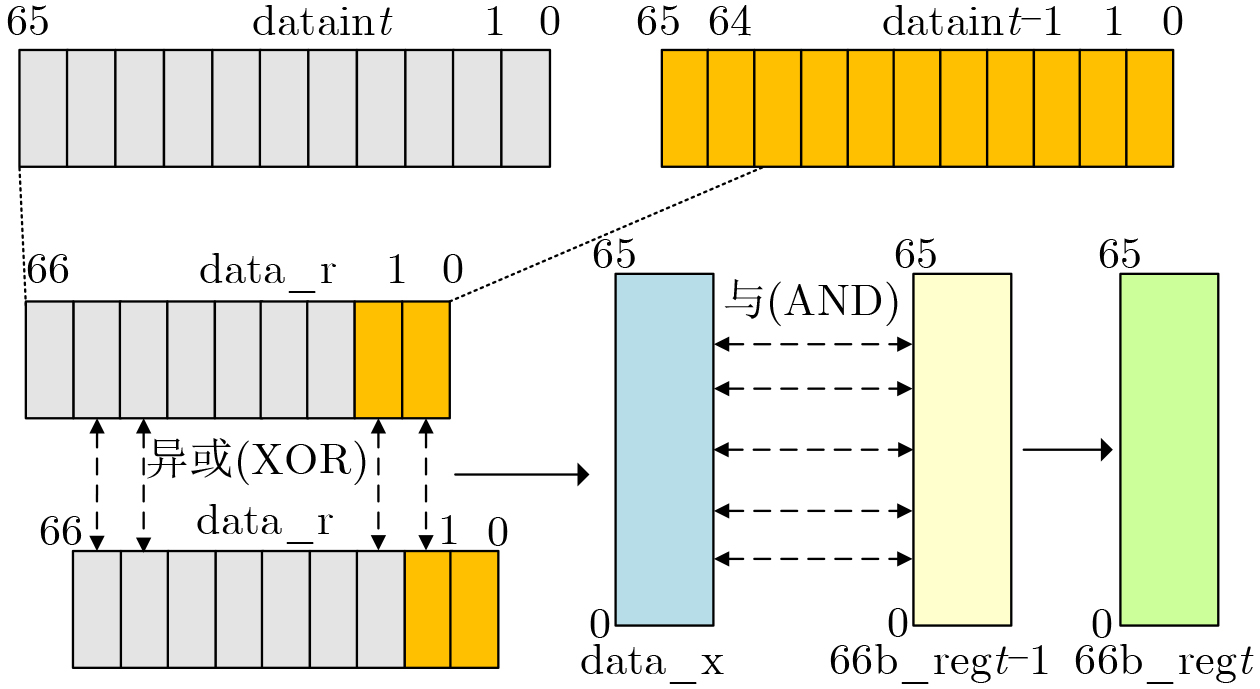
1 同步头检测
输入:datain 输出:同步头位置j (1)数据拼接与极性翻转检测 (a)通过将当前和之前的数据块合并,形成连续的数据流数据: datar={dataint[65:0],datain(t–1)[65]} (b)利用异或运算计算翻转特征值序列的异或数据: datax[i]=datar[i]$\oplus $datar[i+1], i=0,1,···,65 (2)同步头的迭代式集合筛查 (a)初始化一个66位寄存器,初始化为全“1”: 66b_reg0=[1,1,···,1] (b)在每个时钟周期t中使用按位与更新66b_reg: 66b_regt=66b_reg(t–1)&data_xt (3)同步头锁定与复位机制 (a)检查同步头是否被锁定: sh_test=(66b_reg&(66b_reg–1))==0 (b)如果sh_test为“0”,则锁定同步头位置j,其中
66b_reg[j]=1,否则从步骤1重新开始。(4)数据对齐与输出 一旦同步头锁定,输出同步头位置j。
下载: 导出CSV
-
[1] ZHOU Guoqing, ZHANG Haotian, XU Chao, et al. A real-time data acquisition system for single-band bathymetric LiDAR[J]. IEEE Transactions on Geoscience and Remote Sensing, 2023, 61: 5702721. doi: 10.1109/TGRS.2023.3282624. [2] 王知非, 黄之闻, 叶天辰, 等. 面向芯粒互连的单端64 Gb/s全双工收发机设计[J]. 电子与信息学报, 2025, 47(9): 2979–2993. doi: 10.11999/JEIT250506.WANG Zhifei, HUANG Zhiwen, YE Tianchen, et al. A 64 Gb/s single-ended simultaneous bi-directional transceiver for die-to-die interfaces[J]. Journal of Electronics & Information Technology, 2025, 47(9): 2979–2993. doi: 10.11999/JEIT250506. [3] ZHAO Wenhao, WANG Houjun, LIU Ke, et al. Design of synchronous multichannel cascadable high-speed arbitrary waveform generator[J]. IEEE Transactions on Instrumentation and Measurement, 2025, 74: 2003617. doi: 10.1109/TIM.2025.3545161. [4] 骆建军, 沈一凡, 周迪, 等. 一种高性能硬件加密引擎阵列架构[J]. 电子与信息学报, 2021, 43(12): 3743–3748. doi: 10.11999/JEIT200855.LUO Jianjun, SHEN Yifan, ZHOU Di, et al. High performance crypto module with array of hardware engines[J]. Journal of Electronics & Information Technology, 2021, 43(12): 3743–3748. doi: 10.11999/JEIT200855. [5] KOU Zhengchang, YOU Qi, KIM J, et al. High-level synthesis design of scalable ultrafast ultrasound beamformer with single FPGA[J]. IEEE Transactions on Biomedical Circuits and Systems, 2023, 17(3): 446–457. doi: 10.1109/TBCAS.2023.3267614. [6] 文溢, 陈建军, 黄俊, 等. 采用自适应连续时间线性均衡器和判决反馈均衡器算法的一种16 Gbit/s 并转串/串转并接口[J]. 电子与信息学报, 2023, 45(11): 3984–3990. doi: 10.11999/JEIT230668.WEN Yi, CHEN Jianjun, HUANG Jun, et al. A 16 Gbit/s serializer/deserializer with adaptive continuous time linear equalizer and decision feedback equalizer equalization algorithm[J]. Journal of Electronics & Information Technology, 2023, 45(11): 3984–3990. doi: 10.11999/JEIT230668. [7] ZHAO Haoyu and JIANG Ziyun. Implementation of deterministic latency at the receiver of JESD204C[C]. 2024 4th International Conference on Computer Science, Electronic Information Engineering and Intelligent Control Technology (CEI), Guangzhou, China, 2024: 301–304. doi: 10.1109/CEI63587.2024.10871333. [8] LI Shijie, MA Ruichang, DENG Mingxing, et al. A 312.5 Mbps-32 Gbps JESD204C wireline transceiver back-compatible with JESD204B in 28 nm CMOS[J]. Integrated Circuits and Systems, 2024, 1(2): 109–118. doi: 10.23919/ICS.2024.3423852. [9] YIN Peng, SHU Zhou, XIA Yingjun, et al. A low-area and low-power comma detection and word alignment circuits for JESD204B/C controller[J]. IEEE Transactions on Circuits and Systems I: Regular Papers, 2021, 68(7): 2925–2935. doi: 10.1109/TCSI.2021.3072772. [10] WANG Qiushi, YIN Peng, WU N, et al. A high-logic-density, low-power control character detection and identification circuit for the JESD204B data link layer[J]. IEEE Transactions on Circuits and Systems II: Express Briefs, 2023, 70(4): 1600–1604. doi: 10.1109/TCSII.2022.3226520. [11] JEDEC. JESD204C. 1 Serial interface for data converters[S]. JEDEC, 2021. https://www.jedec.org/standards-documents/docs/jesd204c1. [12] 代苏杰, 杨定坤, 阳江平, 等. JESD204C同步算法研究[J]. 自动化与信息工程, 2025, 46(2): 18–24. doi: 10.12475/aie.20250203.DAI Sujie, YANG Dingkun, YANG Jiangping, et al. Research on JESD204C synchronization algorithm[J]. Automation & Information Engineering, 2025, 46(2): 18–24. doi: 10.12475/aie.20250203. [13] PEREZ-RESA A, GARCIA-BOSQUE M, SANCHEZ-AZQUETA C, et al. Chaotic encryption for 10-Gb ethernet optical links[J]. IEEE Transactions on Circuits and Systems I: Regular Papers, 2019, 66(2): 859–868. doi: 10.1109/TCSI.2018.2867918. [14] ZENG Jinrui, YANG Junfeng, ZHANG Lei, et al. FPGA implementation of fixed-latency command distribution based on aurora 64B/66B[J]. IEEE Transactions on Nuclear Science, 2024, 71(6): 1348–1356. doi: 10.1109/TNS.2024.3400378. [15] IEEE Standard for Ethernet[J], IEEE Std 802.3-2022 (Revision of IEEE Std 802.3-2018), 2022, 1-7025,doi: 10.1109/IEEESTD.2022.9844436. [16] ALI I, ASIF M, UR REHMAN M R, et al. A configurable, multi-mode comma detection and word alignment controller for high speed serial interface in 130 nm CMOS technology[C]. 2018 14th International Conference on Emerging Technologies (ICET), Islamabad, Pakistan, 2018: 1–5. doi: 10.1109/ICET.2018.8603553. [17] RANJULA W P, SENARATH R M A U, SENARATNA D P D, et al. Implementation techniques for IEEE 802.3ba 40Gbps Ethernet Physical Coding Sublayer (PCS)[C]. 2015 12th International Conference on Electrical Engineering/Electronics, Computer, Telecommunications and Information Technology (ECTI-CON), Hua Hin, Thailand, 2015: 1–5. doi: 10.1109/ECTICon.2015.7207093. [18] WANG Bin and HU Qingsheng. A high-speed 64b/66b decoder used in SerDes[J]. Applied Mechanics and Materials, 2014, 556/562: 1549–1552. doi: 10.4028/www.scientific.net/AMM.556-562.1549. [19] YIN Peng, CHEN Haoran, MA Rui, et al. A low-latency synchronization header detector and hardware-efficient correction decoder for JESD204C receiver[J]. IEEE Transactions on Circuits and Systems I: Regular Papers, 2026: 1–13. doi: 10.1109/TCSI.2026.3662461. -

 下载:
下载:







图(17) / 表(4)
计量
- 文章访问数: 616
- HTML全文浏览量: 206
- PDF下载量: 38
- 被引次数: 0
