




An Incremental Density-Based Clustering Method with TDOA Prior for Mobile Multi-Station Radar Signal Sorting
-
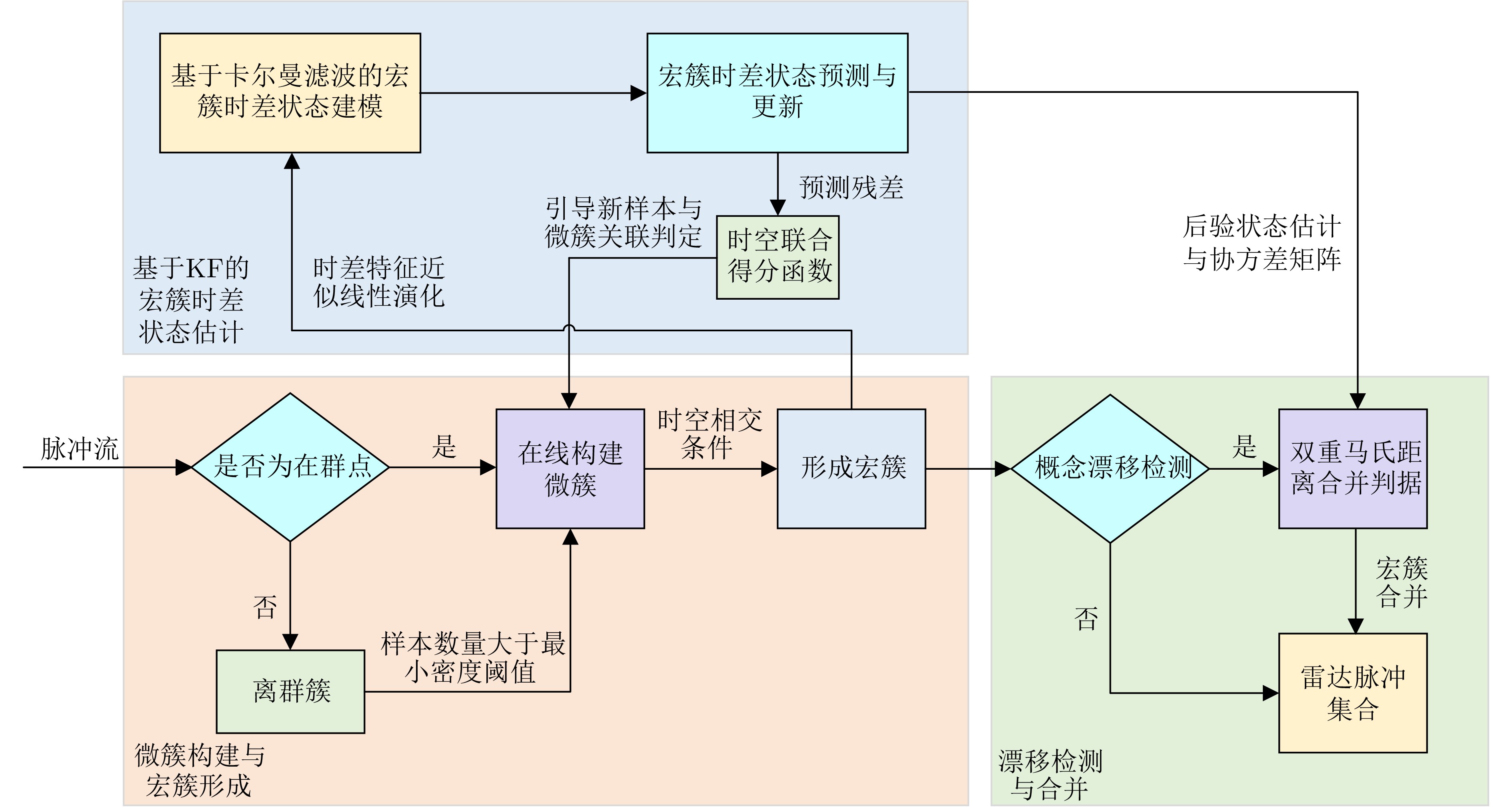
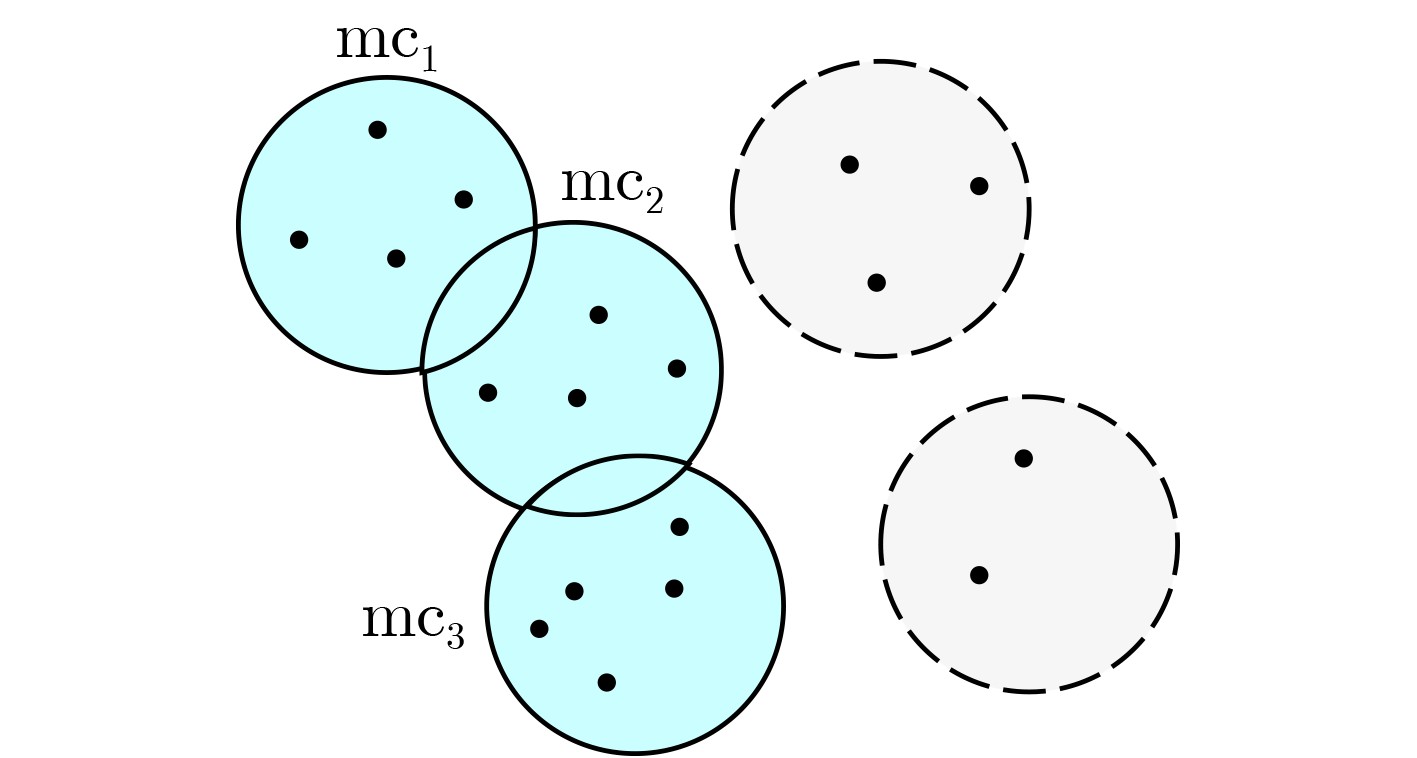
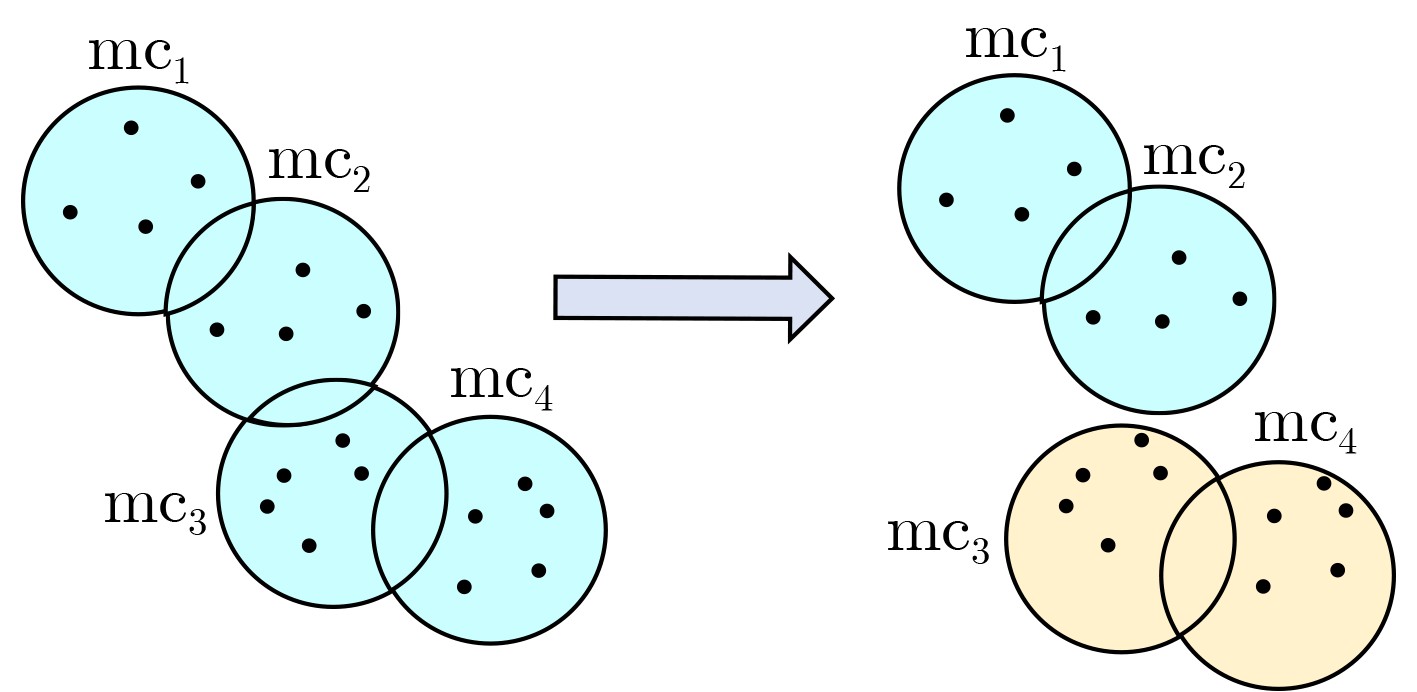
摘要: 在移动多站协同电子侦察场景中,观测站位置随时间变化使雷达辐射源信号的到达时间差(TDOA)呈现明显的时变特性。传统多站信号分选方法通常基于固定时差模型构建,当观测站运动发生运动时,难以准确表征到达时间差的演化过程,易引发雷达簇误分裂与增批现象,导致分选稳定性下降。针对上述问题,该文提出一种面向移动多站协同雷达信号分选的时差先验增量密度聚类方法。该方法首先对多站到达时间差观测数据进行在线微簇构建,并利用微簇之间的时空关联关系实现初始聚合成宏簇;在此基础上,根据观测站运动信息建立时差随时间变化的线性先验状态模型,采用卡尔曼滤波(KF)对宏簇的时差演化轨迹进行递推预测。预测得到的时差先验被引入增量聚类更新过程,通过构建时空联合得分函数约束新到样本与微簇的关联判定。在增量聚类更新过程中,基于预测得到的时差先验,结合双重马氏距离统计判据,对发生漂移的雷达簇进行合并,从而有效抑制雷达簇增批现象。仿真结果表明,在到达时间(TOA)测量误差为150 ns、干扰率为15%的移动多站场景下,所提方法的分选正确率达到96.5%。Abstract:
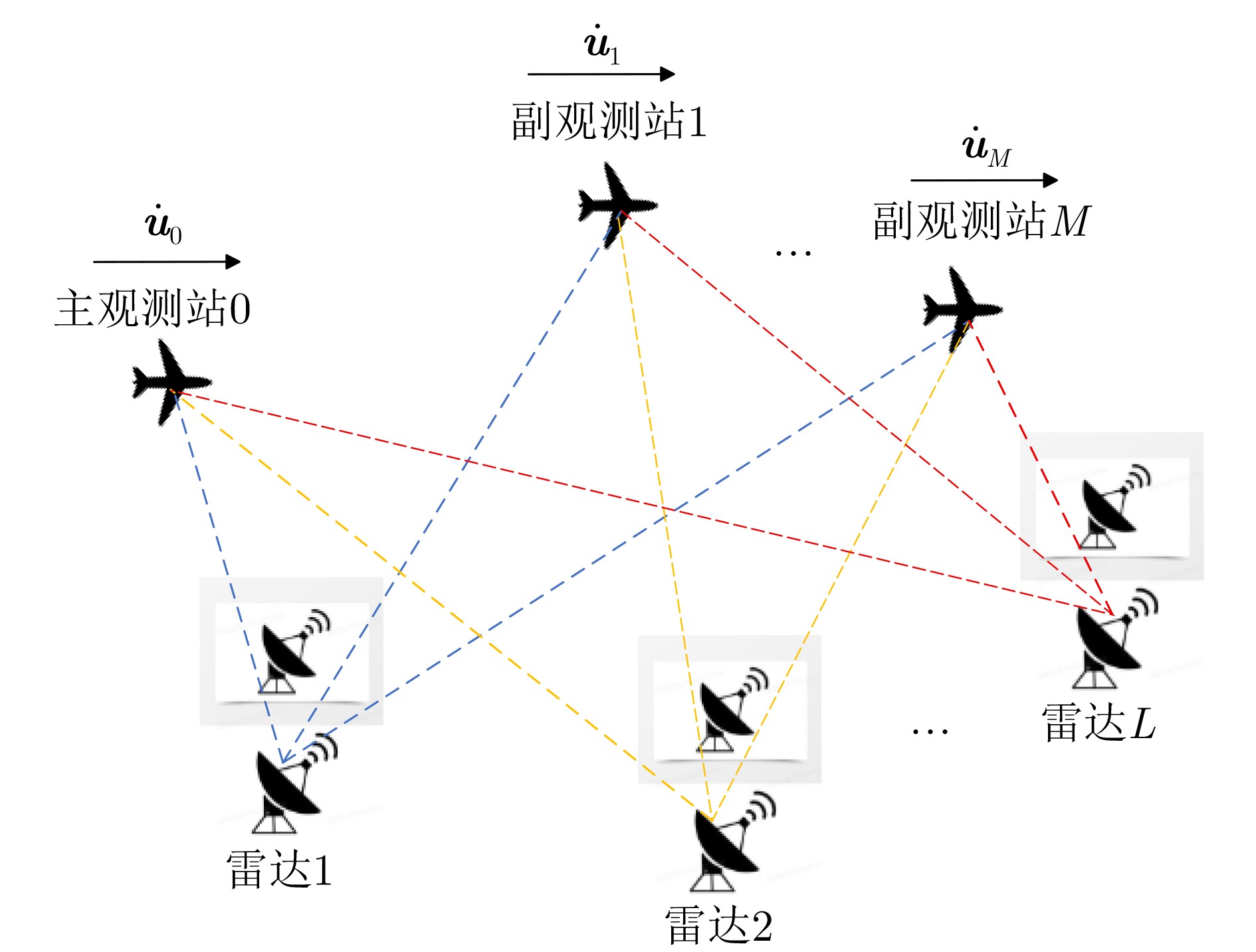
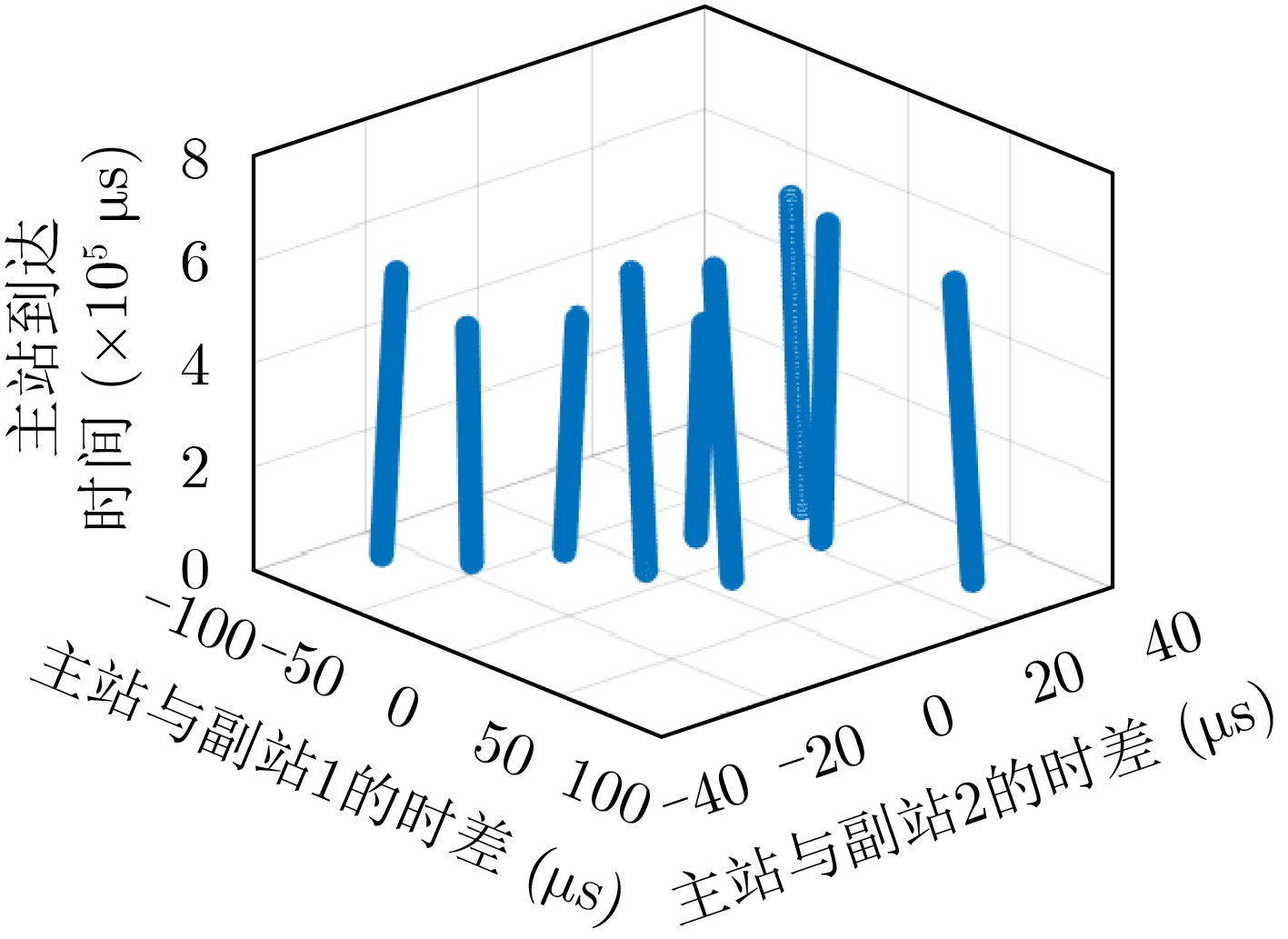
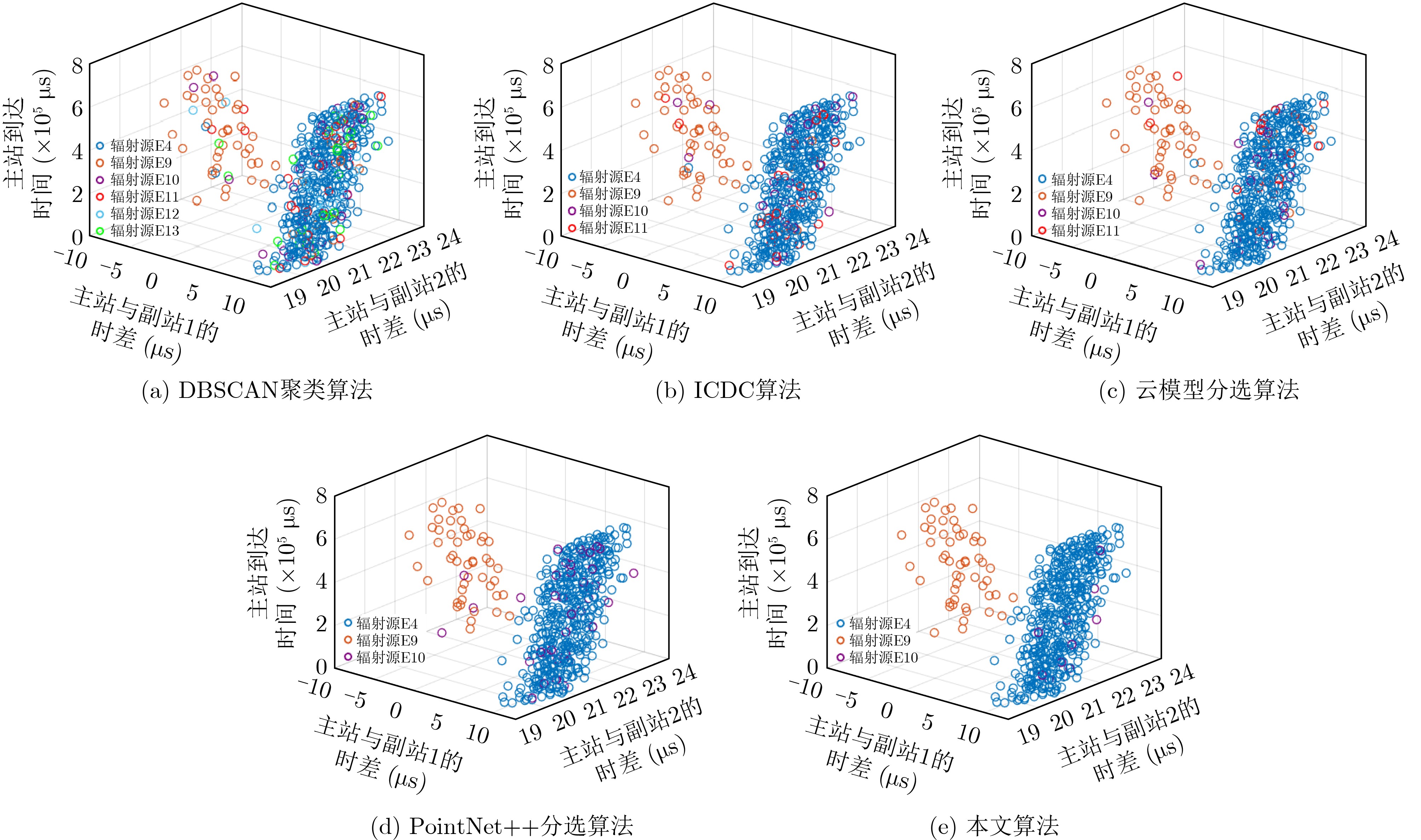
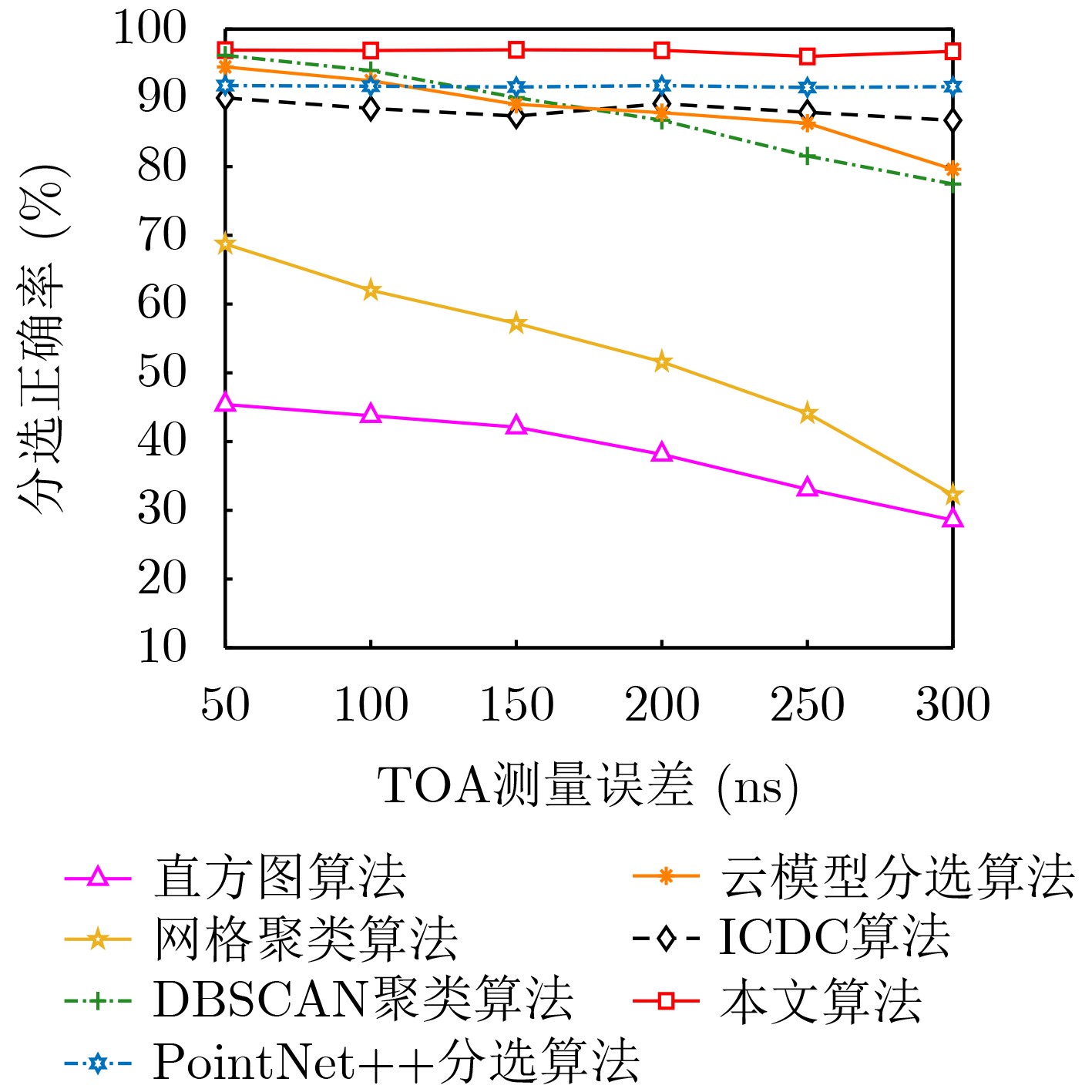
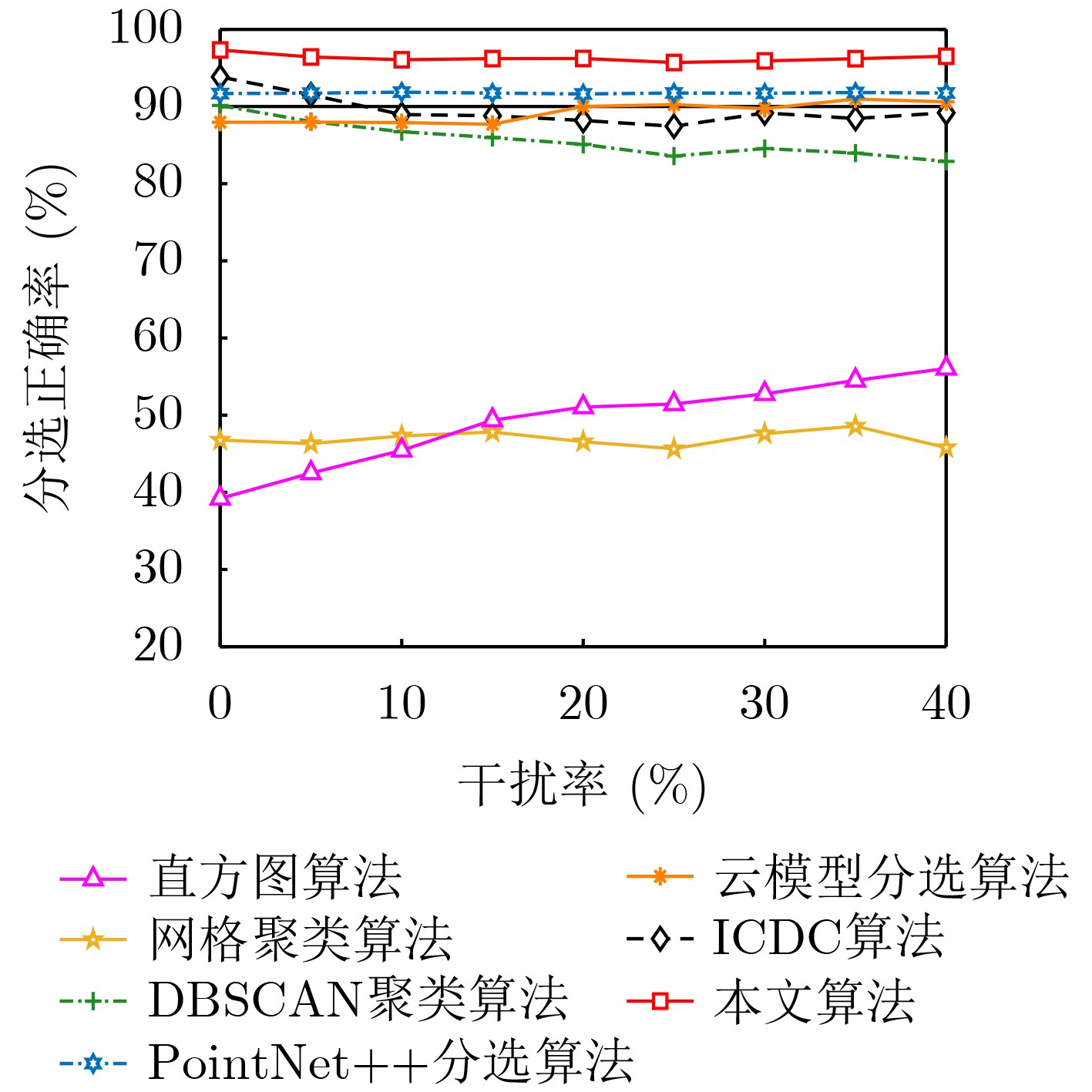
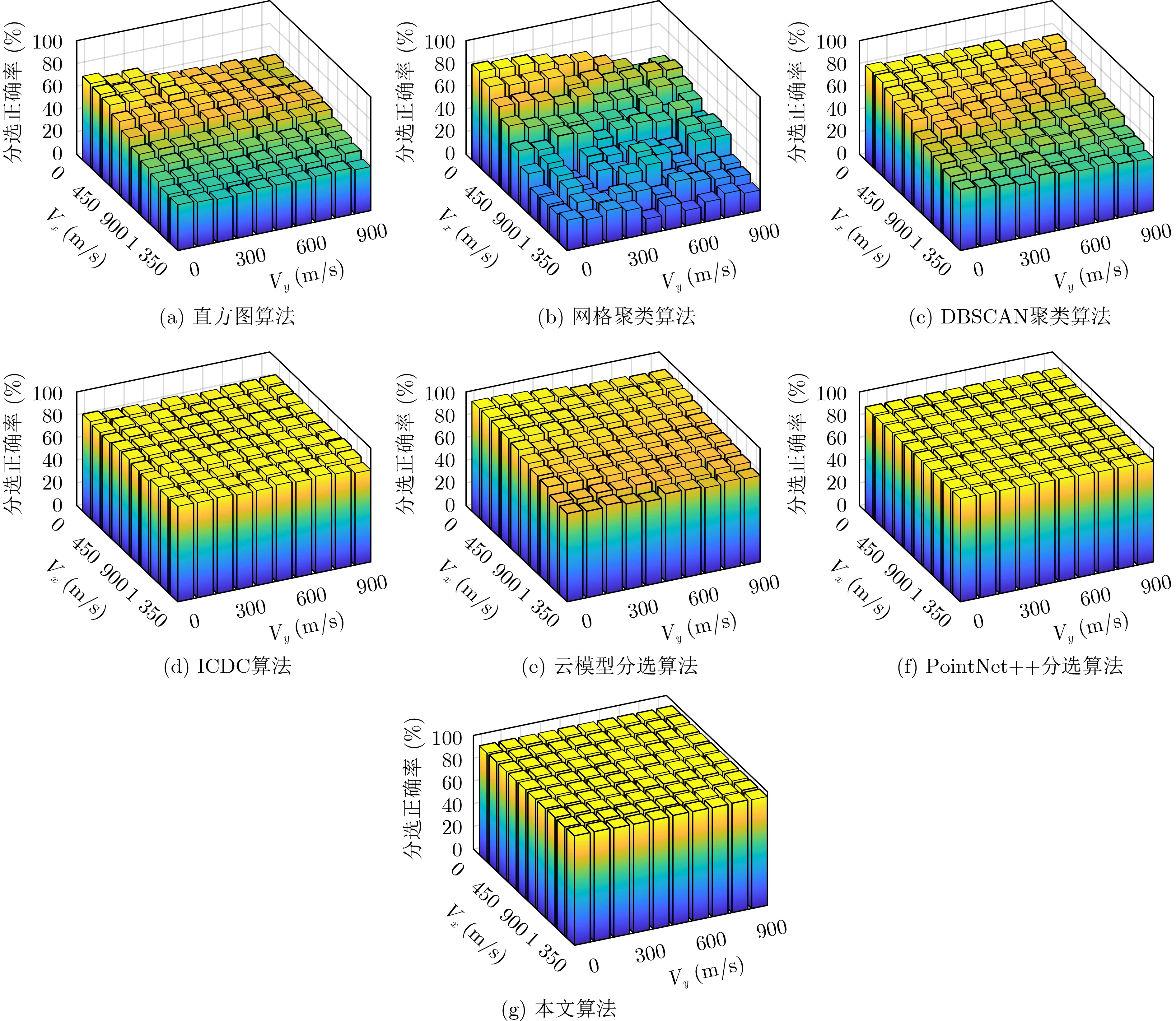
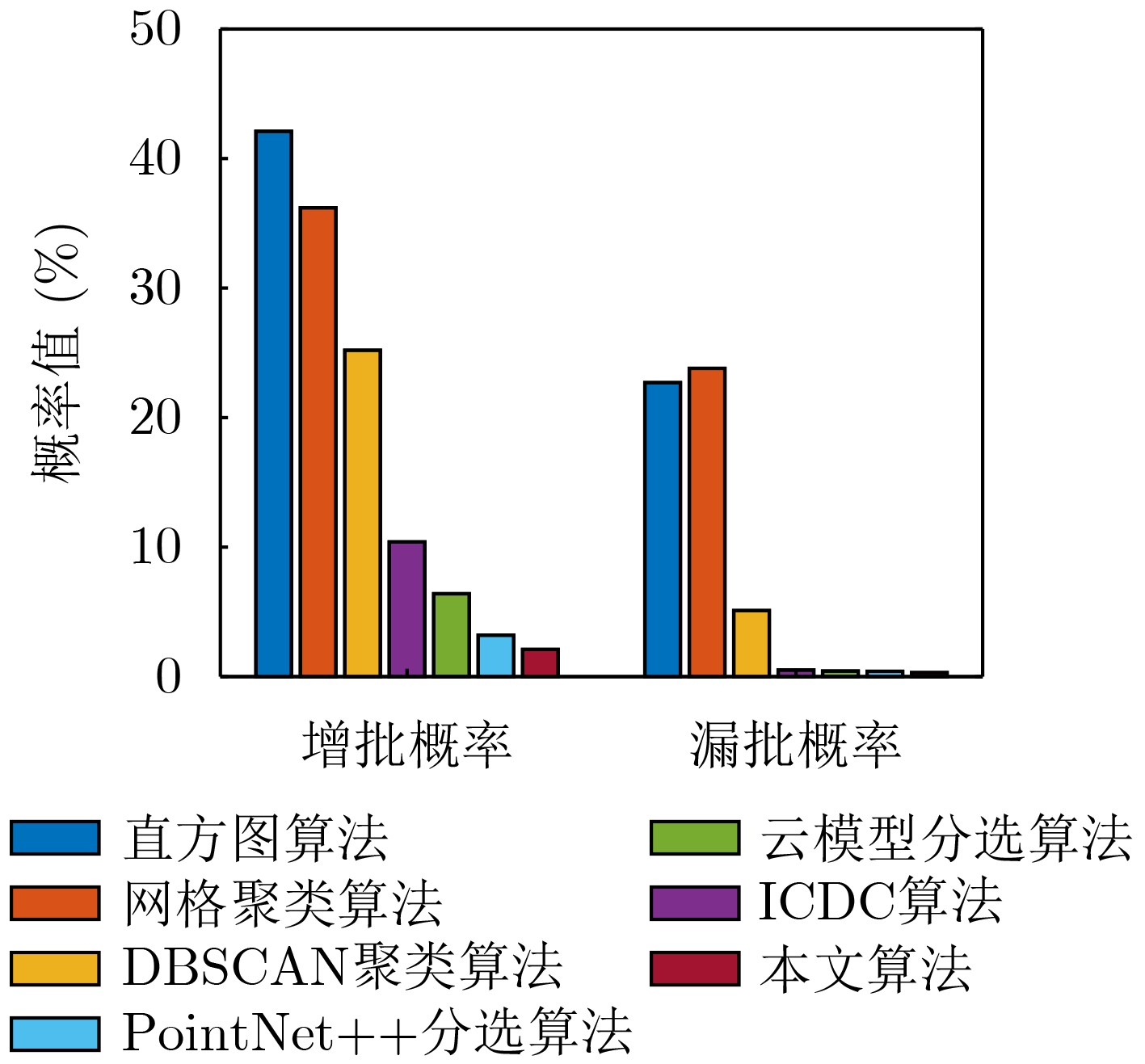
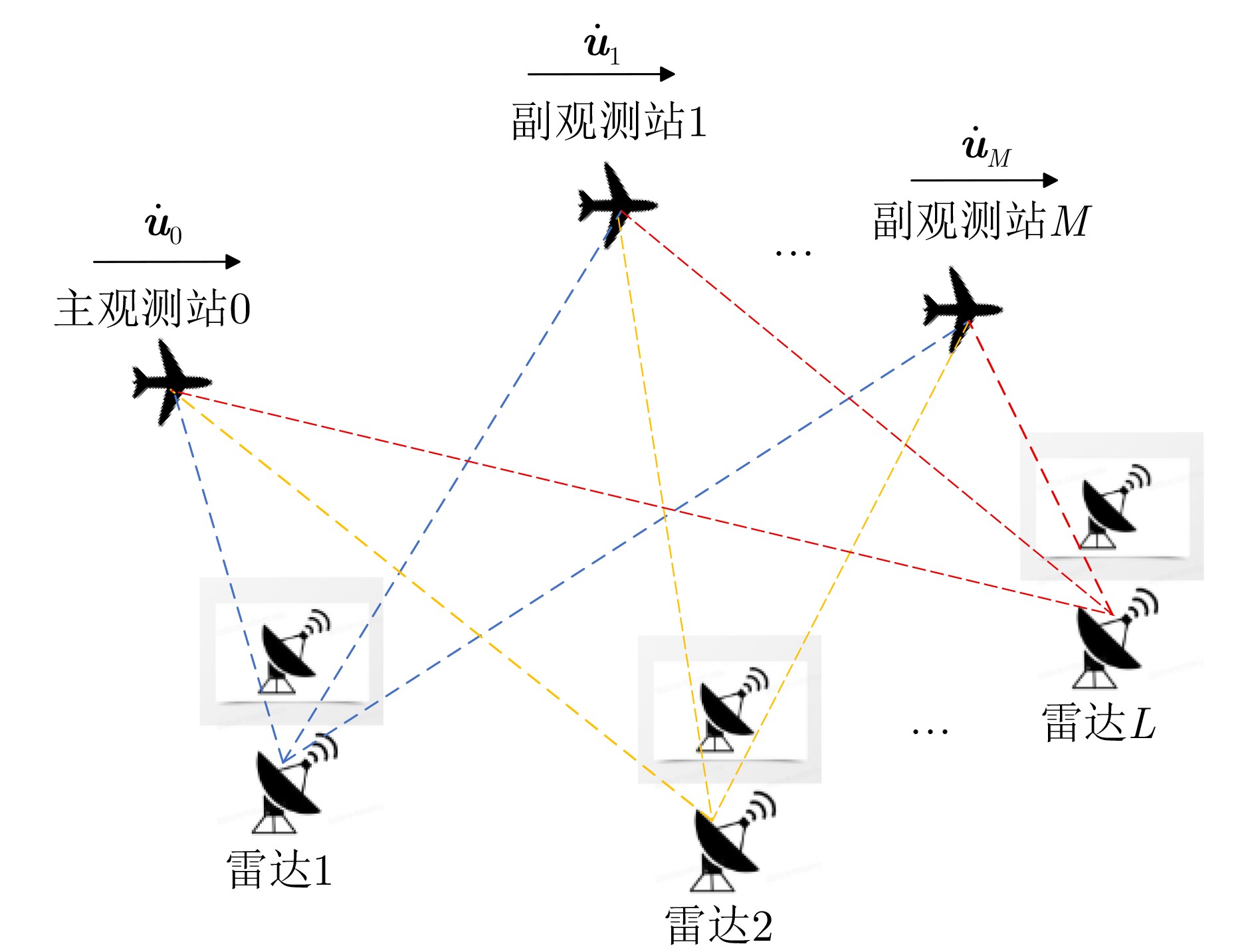
Objective Radar signal sorting is a core technology in electronic reconnaissance that aims to deinterleave and classify pulses from multiple radar emitters within dense, overlapping pulse streams. In practical reconnaissance missions, especially those employing mobile platforms such as aircraft, observation stations continuously change position, whereas radar emitters are typically stationary. The resulting variation in the relative geometry causes the Time Difference of Arrival (TDOA) of intercepted signals to evolve over time. Conventional multi-station radar signal sorting methods are generally developed under a static TDOA assumption and cannot effectively characterize this temporal evolution. Therefore, pulses from the same radar emitter are easily split into multiple clusters, resulting in cluster proliferation and degraded sorting performance. To address this problem, an Incremental Density-Based Clustering (ICDC) method with TDOA prior information is proposed for mobile multi-station radar signal sorting. The proposed method exploits the temporal evolution of TDOA to improve sorting stability and accuracy in mobile multi-station scenarios. Methods The temporal evolution of TDOA in mobile multi-station scenarios is first analyzed, and the TDOA trajectory is approximated as a linear function of time to establish a linear prior state model. Online micro-clusters are then constructed from multi-station TDOA observations and aggregated into macro-clusters according to their spatiotemporal intersection relationships. For each macro-cluster, an independent Kalman Filter (KF) model is established for each TDOA dimension. The state vector consists of the TDOA value and its rate of change, and recursive state estimation is performed to provide dynamic TDOA priors for newly arriving samples. During incremental clustering, a spatiotemporal joint scoring function is developed by incorporating KF prediction residuals as dynamic constraints. The matching criterion therefore evolves from a conventional density-based rule into a joint spatiotemporal consistency criterion, enabling more accurate assignment of newly arriving TDOA observations. To suppress cluster proliferation caused by TDOA evolution, a concept drift detection strategy based on macro-cluster center evolution is further employed. When concept drift is detected, posterior state estimates and covariance matrices generated by the KF are used to construct a dual Mahalanobis distance criterion that jointly evaluates state-distribution overlap and predicted TDOA overlap. Radar clusters produced by erroneous splitting are then adaptively merged under a 95% confidence threshold, effectively suppressing cluster proliferation caused by concept drift. Results and Discussions Simulation data are generated according to the radar parameters listed in Table 1. The multi-station TDOA corresponding to the same radar emitter exhibits an approximately linear evolution with respect to the Time of Arrival (TOA) at the observation station ( Fig. 5 ), consistent with the proposed linear prior model. The ability of the proposed method to suppress radar cluster proliferation is first evaluated (Fig. 6 ). Radar emitters E4 and E9 are selected from the nine simulated emitters as representative cases because their TDOA trajectories are closely spaced and difficult to separate. Compared with Density-Based Spatial Clustering of Applications with Noise (DBSCAN), ICDC, cloud model-based sorting, and PointNet++ sorting, the proposed method more effectively suppresses radar cluster proliferation and maintains greater cluster stability. The overall sorting performance is further compared with the histogram method, grid-based clustering, DBSCAN, ICDC, cloud model-based sorting, and PointNet++ sorting. When the TOA measurement error ranges from 50 to 300 ns (Fig. 7 ), the proposed method consistently achieves a sorting accuracy above 96%, demonstrating strong robustness to measurement errors. Under different pulse interference rates (Fig. 8 ), the sorting accuracy also remains above 96%, indicating excellent interference robustness. The performance under different observation station velocities is further evaluated (Fig. 9 ). The proposed method maintains high sorting accuracy over the entire velocity range and still achieves approximately 94% accuracy at relatively high observation station velocities, demonstrating strong robustness under dynamic observation conditions. Radar cluster proliferation probability, missed-cluster probability (Fig. 10 ), and computational complexity (Table 2 ) are also analyzed. The results demonstrate that the proposed method achieves a favorable balance among sorting accuracy, cluster proliferation suppression, missed-cluster control, and computational complexity.Conclusions An ICDC method with TDOA prior information is proposed to address the degradation of radar signal sorting performance caused by TDOA evolution in mobile multi-station scenarios. By incorporating observation station motion into a dynamic TDOA state model and applying KF-based recursive prediction, the proposed method effectively suppresses radar cluster proliferation and erroneous cluster splitting caused by concept drift. The spatiotemporal joint criterion and the adaptive cluster merging strategy further improve robustness in complex dynamic environments. Simulation results demonstrate the effectiveness and stability of the proposed method for mobile multi-station cooperative reconnaissance. Future work will focus on real-time multi-parameter fusion-based sorting in complex electromagnetic environments. Furthermore, adaptive estimation and adjustment of the micro-cluster spatial intersection threshold, process noise covariance matrix, and measurement noise variance will be investigated to further improve performance in complex scenarios. -
表 1 仿真雷达辐射源参数
辐射源序号 PRI(us) PW(us) CF(MHz) BW(MHz) 发射脉冲数 位置坐标(km) E1 450抖动 10.3固定 2500 固定7.8/7.9跳变 1296 [20,40,0] E2 420~510滑变 10/10.6跳变 2400 固定7固定 945 [0,–70,0] E3 480/550/620 参差 10~10.5滑变 2200 /2600 跳变5.9/8.1跳变 846 [10,-30,0] E4 1100 抖动7.8固定 2250 ~2400 滑变6.4~7.9滑变 543 [40,–40,0] E5 1380 ~1500 滑变11固定 2400 固定8固定 426 [–25,70,0] E6 1480 固定9.6/10跳变 2450 ~2550 滑变8.6固定 122 [–40,–40,0] E7 1500 /1750 /2000参差12固定 2800 固定5固定 366 [–30,10,0] E8 8000 抖动11.7 2600 /2750 跳变5~6.5滑变 75 [–40,–60,0] E9 10000 固定7.5~8.1滑变 2300 固定7.3固定 60 [0,0,0]  下载: 导出CSV
表 2 不同算法的运行时间及分选正确率对比
分选算法 本文算法 PointNet++分选算法 云模型分选算法 ICDC聚类算法 DBSCAN聚类算法 网格聚类算法 直方图算法 运行时间(s) 8.242 6.173 9.514 6.325 26.311 8.753 8.881 分选正确率(%) 96.542 92.346 89.061 87.353 89.036 57.204 42.098
下载: 导出CSV
-
[1] 黄琳玹, 何明浩, 郁春来, 等. 融合时序条件生成对抗网络的小样本雷达对抗侦察数据增强[J]. 电子与信息学报, 2025, 47(10): 3723–3734. doi: 10.11999/JEIT250280.HUANG Linxuan, HE Minghao, YU Chunlai, et al. Datae enhancement for few-shot radar countermeasure reconnaissance via temporal-conditional generative adversarial networks[J]. Journal of Electronics & Information Technology, 2025, 47(10): 3723–3734. doi: 10.11999/JEIT250280. [2] ZHOU Zixiang, FU Xiongjun, DONG Jian and GAO Meijing. Radar Signal Sorting With Multiple Self-Attention Coupling Mechanism Based Transformer Network[J]. IEEE Signal Processing Letters, 2024, 31: 1765-1769. doi: 10.1109/LSP.2024.3421948. [3] 常怀昭,顾颖彦,韩蕴智,等. 面向雷达信号分选的卷积混合多注意力编解码网络[J]. 电子与信息学报, 2025 ,47(12): 4887-4895. doi: 10.11999/JEIT251031.Chang Huaizhao, Gu Yingyan, Han Yunzhi, et al. Convo-lutional hybrid multi-attention encoder-decoder networkfor radar signal sorting[J]. Journal of Electronics & Information Technology, 2025, 47(12): 4887-4895. doi: 10.11999/JEIT251031. [4] 李松炜, 杨松岩, 邓志安, 等. 基于自适应流聚类的多站时差协同信号分选方法[J]. 信号处理, 2024, 40(4): 682–694. doi: 10.16798/j.issn.1003-0530.2024.04.007.LI Songwei, YANG Songyan, DENG Zhian, et al. Cooperative signal sorting method based on multi-station TDOA and adaptive stream clustering[J]. Journal of Signal Processing, 2024, 40(4): 682–694. doi: 10.16798/j.issn.1003-0530.2024.04.007. [5] 马爽, 吴海斌, 柳征, 等. 基于递归扩展直方图的辐射源时差分选方法[J]. 国防科技大学学报, 2012, 34(5): 83–89. doi: 10.3969/j.issn.1001-2486.2012.05.017.MA Shuang, WU Haibin, LIU Zheng, et al. Method for emitter TDOA sorting based on recursive extended histogram[J]. Journal of National University of Defense Technology, 2012, 34(5): 83–89. doi: 10.3969/j.issn.1001-2486.2012.05.017. [6] 刘智鑫, 赵拥军. 约束准则下扩展时差直方图脉冲分选配对方法[J]. 西安电子科技大学学报, 2019, 46(6): 102–111. doi: 10.19665/j.issn1001-2400.2019.06.015.LIU Zhixin and ZHAO Yongjun. Pulse sorting and pairing based on the constrained extended TDOA histogram[J]. Journal of Xidian University, 2019, 46(6): 102–111. doi: 10.19665/j.issn1001-2400.2019.06.015. [7] 马贤同, 罗景青, 孟祥豪. 基于时差的同类辐射源信号分选定位方法[J]. 电子与信息学报, 2015, 37(10): 2363–2368. doi: 10.11999/JEIT141480.MA Xiantong, LUO Jingqing, and MENG Xianghao. Signal sorting and positioning method for similar radiation sources based on time difference of arrival[J]. Journal of Electronics & Information Technology, 2015, 37(10): 2363–2368. doi: 10.11999/JEIT141480. [8] 陈涛, 王天航, 郭立民. 基于时差多参分选的多层感知器网络脉间识别[J]. 电子与信息学报, 2018, 40(7): 1567–1574. doi: 10.11999/JEIT170913.CHEN Tao, WANG Tianhang, and GUO Limin. Recognition of pulse repetition interval of multilayer percetron network based on multi-parameter TDOA sorting[J]. Journal of Electronics & Information Technology, 2018, 40(7): 1567–1574. doi: 10.11999/JEIT170913. [9] ZHAO Zihao, ZHANG Huaguo, and GAN Lu. A multi-station signal sorting method based on TDOA grid clustering[C]. 2021 IEEE 6th International Conference on Signal and Image Processing (ICSIP), Nanjing, China, 2021: 773–778. doi: 10.1109/ICSIP52628.2021.9689025. [10] XIANG Zhexi, ZHOU Zou, GU Yu, et al. A multi-station signal sorting method based on time difference pair and azimuth information[C]. Proceedings of the 12th International Conference on Computer Engineering and Networks, Singapore, 2022: 466–475. doi: 10.1007/978-981-19-6901-0_49. [11] LU Yang and DENG Zhian. A recursive sorting method based on multi-station TDOA vector[C]. 2023 8th International Conference on Intelligent Computing and Signal Processing (ICSP), Xi’an, China, 2023: 1024–1027. doi: 10.1109/ICSP58490.2023.10248871. [12] 姜宏志, 赵闯, 胡德秀, 等. 基于时差多参的单脉冲信号实时配对分选[J]. 电子学报, 2021, 49(3): 566–572. doi: 10.12263/DZXB.20191316.JIANG Hongzhi, ZHAO Chuang, HU Dexiu, et al. Real-time deinterleaving algorithm for single pulse signal based on TDOAs and multi-parameter information[J]. Acta Electronica Sinica, 2021, 49(3): 566–572. doi: 10.12263/DZXB.20191316. [13] 仇洪冰, 周兰兰, 周陬, 等. 基于云模型的辐射源信号多站分选方法[J]. 电子学报, 2022, 50(10): 2469–2477. doi: 10.12263/DZXB.20210212.QIU Hongbing, ZHOU Lanlan, ZHOU Zou, et al. Multi-station sorting method for emitter signal based on cloud model[J]. Acta Electronica Sinica, 2022, 50(10): 2469–2477. doi: 10.12263/DZXB.20210212. [14] 陈涛, 邱宝传, 肖易寒, 等. 基于点云分割网络的雷达信号分选方法[J]. 电子与信息学报, 2024, 46(4): 1391–1398. doi: 10.11999/JEIT230622.CHEN Tao, QIU Baochuan, XIAO Yihan, et al. The radar signal deinterleaving method base on point cloud segmentation network[J]. Journal of Electronics & Information Technology, 2024, 46(4): 1391–1398. doi: 10.11999/JEIT230622. [15] 姚璐, 孙浩禹, 李松炜, 等. 移动辐射源目标多站协同雷达信号分选[J]. 海军航空大学学报, 2025, 40(6): 932–942. doi: 10.7682/j.issn.2097-1427.2025.06.014.YAO Lu, SUN Haoyu, LI Songwei, et al. Sorting of multi-station collaborative radar signals for mobile radiation source targets[J]. Journal of Naval Aviation University, 2025, 40(6): 932–942. doi: 10.7682/j.issn.2097-1427.2025.06.014. [16] 陆昊阳, 范玉雷, 高楠, 等. 一种适用数据流概念漂移检测与适应的增量密度聚类算法[J]. 电子学报, 2025, 53(6): 2050–2062. doi: 10.12263/DZXB.20250060.LU Haoyang, FAN Yulei, GAO Nan, et al. An incremental density-based clustering algorithm for concept drift detection and adaption over data stream[J]. Acta Electronica Sinica, 2025, 53(6): 2050–2062. doi: 10.12263/DZXB.20250060. [17] WANG Jiale, LIAN Jie, and ZHU Guolei. A weighted Mahalanobis distance target sensing strategy for underwater integrated sensing and communication systems[J]. IEEE Wireless Communications Letters, 2024, 13(1): 79–83. doi: 10.1109/LWC.2023.3320121. [18] LI Zhengbang, JIAO Yujie, FU Pan, et al. A novel method for approximating the distribution of chi-squared-type mixtures[J]. Communications in Statistics—Theory and Methods, 2025, 54(12): 3462–3475. doi: 10.1080/03610926.2024.2393703. [19] 常安琪, 乔宏乐, 徐伟. 基于DBSCAN聚类和曲线拟合的PRI分选算法[J]. 火控雷达技术, 2023, 52(2): 21–26. doi: 10.19472/j.cnki.1008-8652.2023.02.004.CHANG Anqi, QIAO Hongle, and XU Wei. A PRI sorting algorithm based on DBSCAN clustering and curve fitting algorithm[J]. Fire Control Radar Technology, 2023, 52(2): 21–26. doi: 10.19472/j.cnki.1008-8652.2023.02.004. -

 下载:
下载:

图(10) / 表(2)
计量
- 文章访问数: 217
- HTML全文浏览量: 98
- PDF下载量: 12
- 被引次数: 0
