




Network Metric System and Scenario-Differentiated Analysis Driven by LLM Literature Mining
-
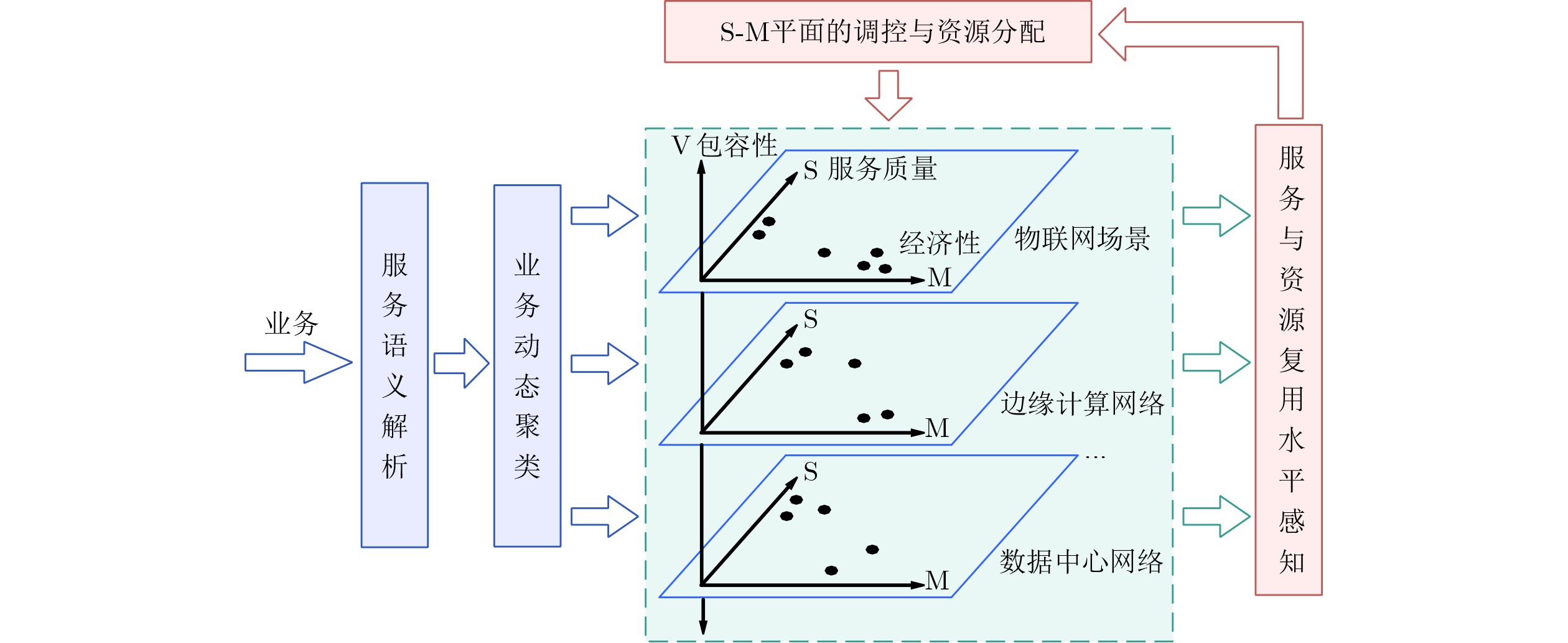
摘要: 网络指标是网络设计、运维与优化的基础。为此,有必要厘清网络指标的整体分布、场景依赖与关联规律,进而构建面向网络架构设计及全生命周期管理的多维分析框架。该文提出一种基于大语言模型(LLM)的文献挖掘方案,对《IEEE/ACM Transactions on Networking》2023~2024年刊载的583篇文献进行指标提取、术语规范化、场景标注与指标关联量化,并通过双LLM交叉验证和人工抽样复核检验挖掘结果。结果表明,网络指标呈现“少量共性指标+大量长尾专有指标”的结构,不同应用场景所关注的核心指标集及指标关联均具有场景依赖性。该文提出服务质量(S)、资源复用成本 (M)以及场景适配重构能力(V)3类相互独立且可组合的分析维度,为网络架构的设计、部署、运维和优化提供指导。Abstract:
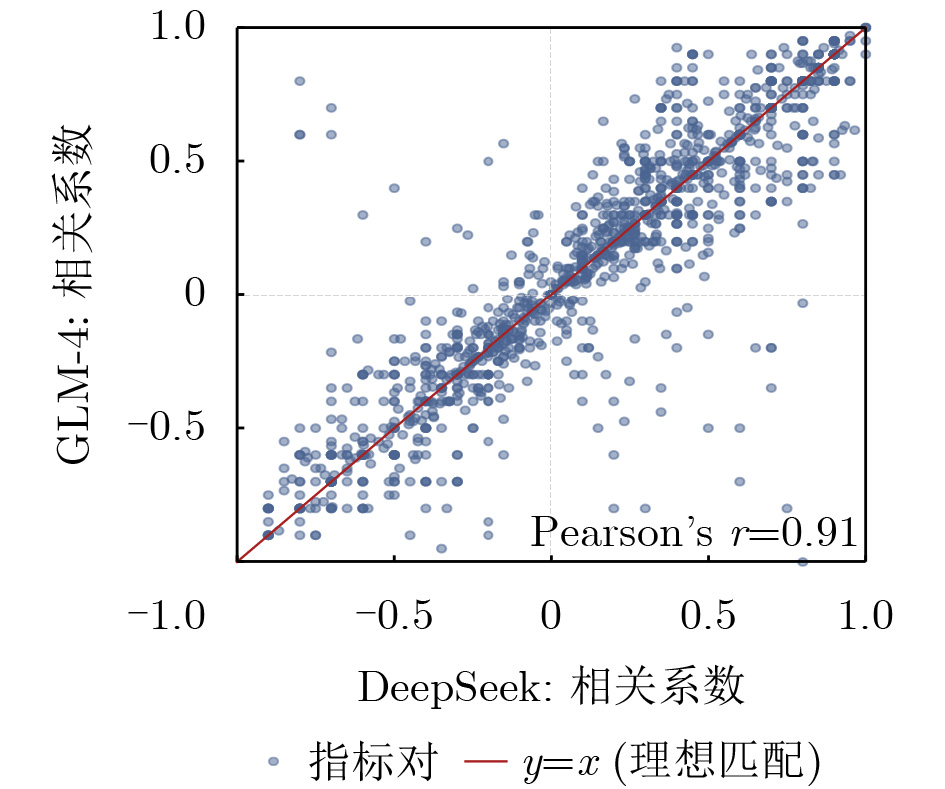
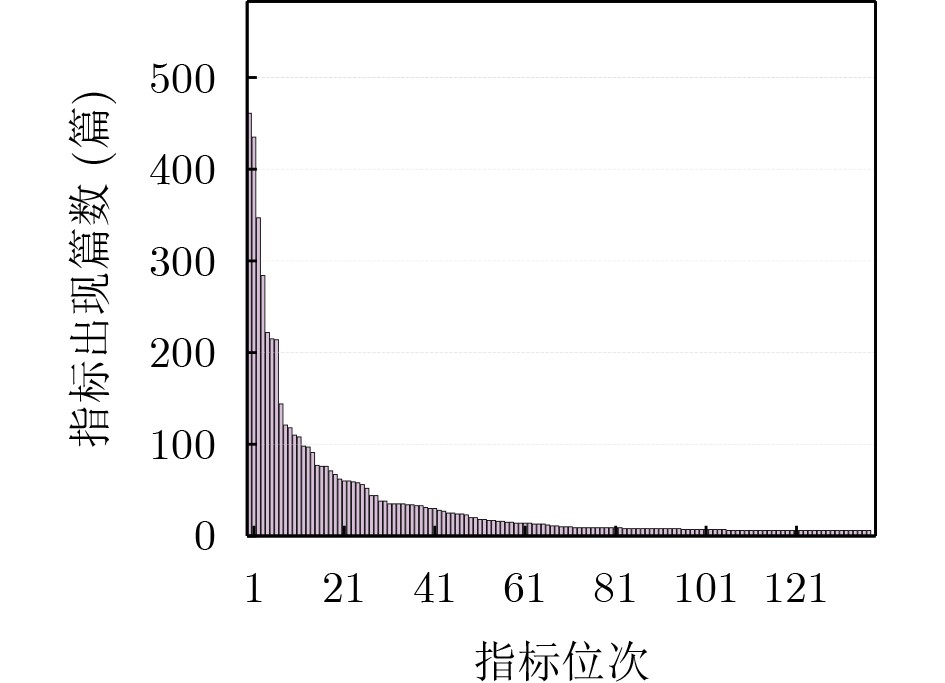
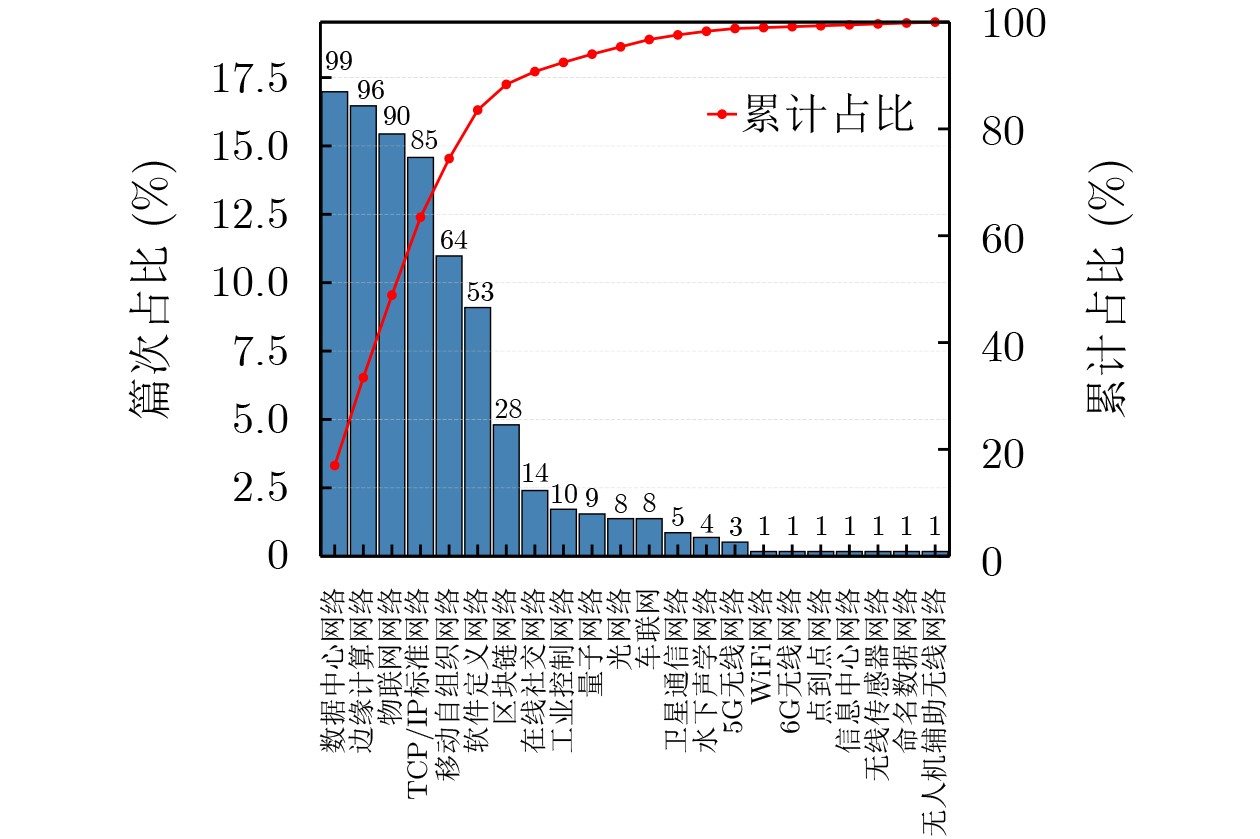
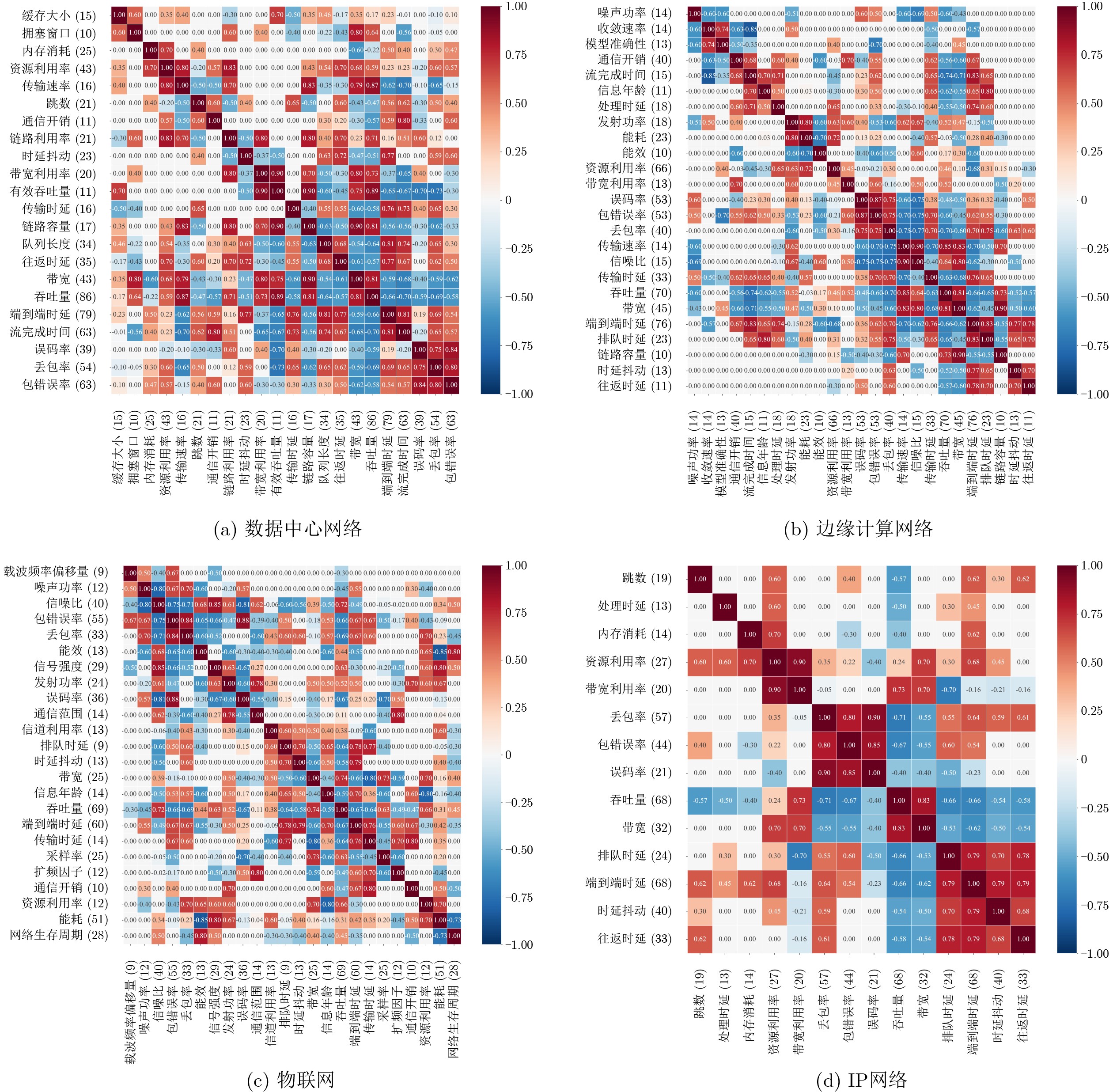
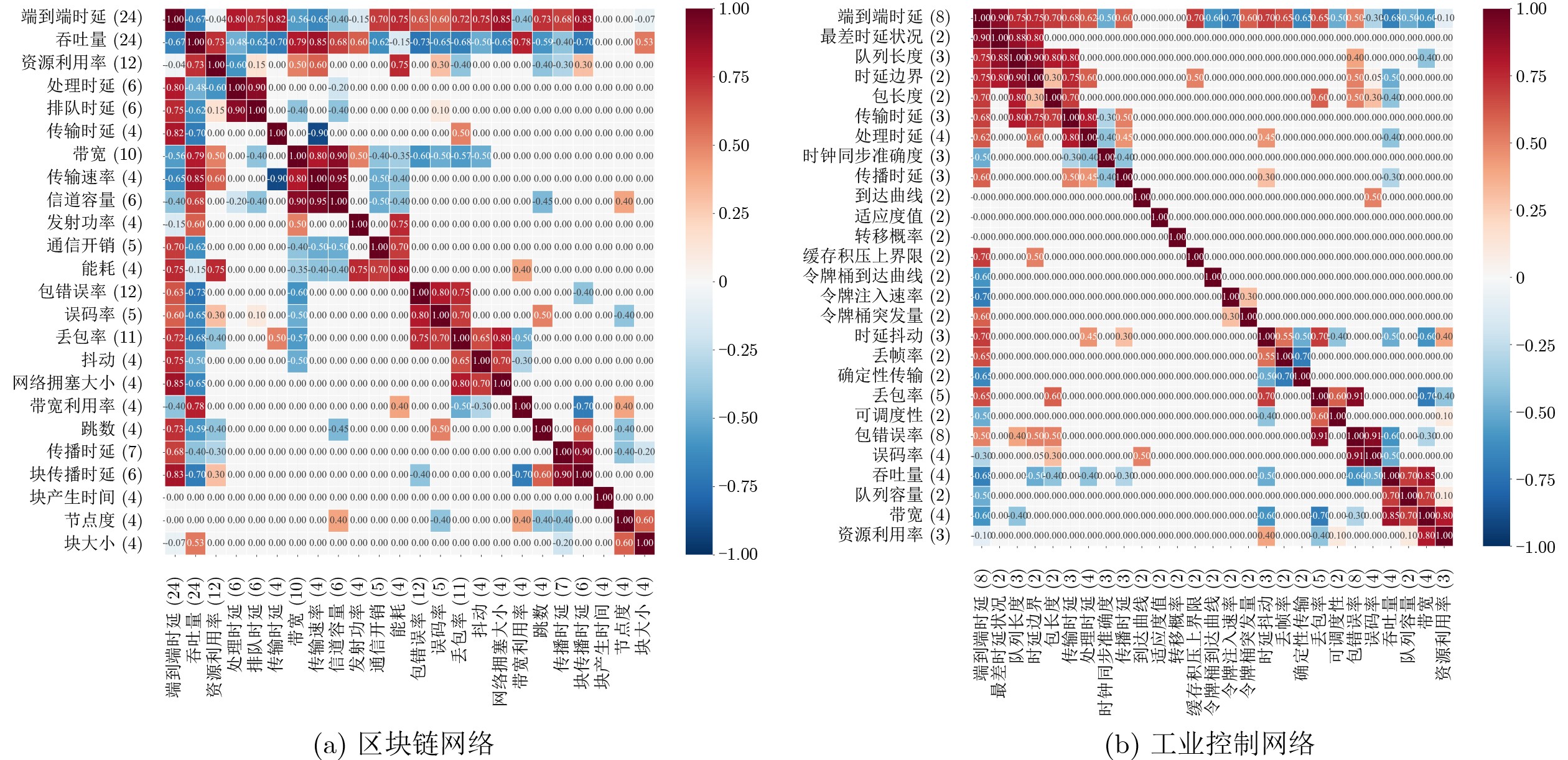
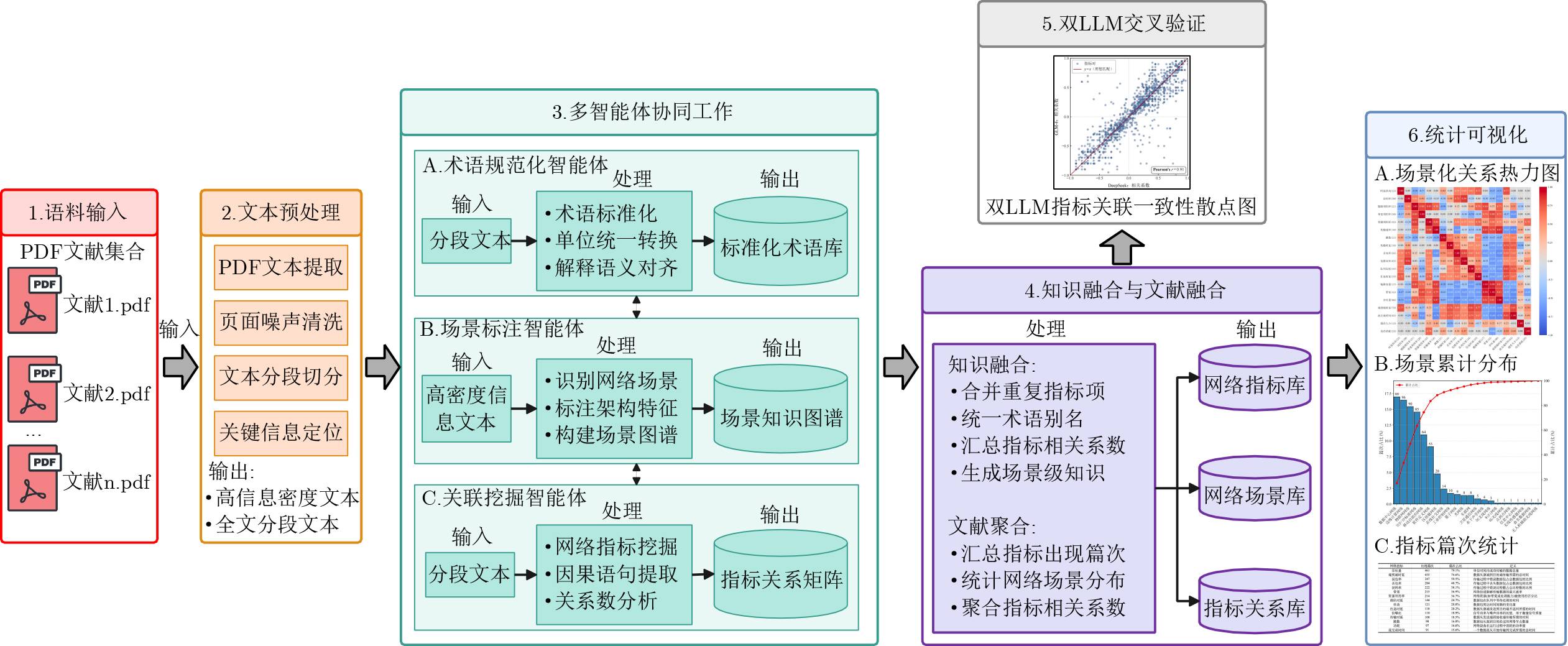
Objective Network metrics provide the foundation for network design, operation, and optimization. Existing studies primarily focus on individual scenarios or representative metrics and lack unified extraction rules and reproducible workflows for large-scale, cross-scenario metric analysis. To address terminology ambiguity, scenario heterogeneity, and the quantification of complex metric relationships, this study proposes a reproducible domain-specific literature mining framework based on a Large Language Model (LLM). The framework automatically extracts and standardizes network metrics, annotates application scenarios, quantifies inter-metric relationships, and establishes a Service-Multiplexing-Versatility (SMV) analytical framework. Rather than providing a complete set of metric calculation methods, the SMV framework serves as a conceptual model for guiding multi-objective tradeoffs in network architecture design and lifecycle management. Methods An automated literature mining framework based on a multi-agent LLM architecture is developed ( Fig. 1 ). A dataset comprising 583 articles published in IEEE/ACM Transactions on Networking during 2023~2024 is analyzed. The framework consists of three specialized agents. A terminology normalization agent maps aliases and synonymous expressions to standardized metric names. A scenario annotation agent assigns primary application scenario labels using high-information-density sections of each article. A correlation mining agent identifies the semantic direction and strength of relationships between metric pairs and quantifies these relationships as signed correlation coefficients ranging from –1 to +1. The reliability of the mining results is evaluated through dual-LLM cross-validation and manual sampling review (Fig. 2 ).Results and Discussions The proposed framework extracts 3 978 independent network metrics, of which 138 appear in more than 1% of the analyzed articles ( Fig. 3 ). The metric frequency distribution exhibits a pronounced heavy-tailed distribution, with throughput (79.1%), end-to-end delay (74.6%), and packet error rate (59.5%) representing the most frequently studied metrics (Table 1 ). The core metric sets show strong scenario dependence (Fig. 4 ). For example, data center networks primarily emphasize throughput, end-to-end delay, and flow completion time, whereas Internet of Things (IoT) applications additionally prioritize energy consumption and network lifetime (Table 2 ). Furthermore, scenario-specific correlation matrices reveal markedly different coupling patterns among metrics (Figs. 5 and6 ). In data center networks, throughput is strongly negatively correlated with flow completion time and queueing delay, reflecting the fundamental tradeoff associated with congestion control. In edge computing networks, end-to-end delay is negatively correlated with resource utilization, indicating the balance between real-time task offloading and resource utilization.Conclusions The strong coupling between network metrics and application scenarios indicates that future network architectures should be evaluated from a multidimensional perspective. Based on the extracted scenario-specific metric relationships, this study proposes the SMV analytical framework ( Fig. 7 ). By jointly considering differentiated service quality requirements (Service), physical infrastructure cost and resource reuse (Multiplexing), and adaptive reconfiguration capability for emerging services and application scenarios (Versatility), the framework provides a theoretical basis for adaptive resource orchestration in AI-native networks. Future work will extend the current static literature mining pipeline into a continuously updated network metric knowledge base and further validate the engineering applicability of the SMV framework in programmable and multimodal networks.-
Key words:
- Network metric /
- Large Language Model (LLM) /
- Metric system /
- Multimodal network
-
表 1 出现篇次前15位的核心网络指标
网络指标 出现篇次 篇次占比(%) 定义 吞吐量 461 79.1 单位时间内成功传输的数据总量 端到端时延 435 74.6 数据从源端到目的端传输所需的总时间 误包率 347 59.5 传输过程中错误数据包占总数据包的比例 丢包率 284 48.7 传输过程中丢失数据包占总数据包的比例 误码率 222 38.1 传输过程中错误比特数占总比特数的比例 带宽 215 36.9 网络信道能够传输数据的最大速率 资源利用率 214 36.7 网络资源(如带宽或处理能力)被使用的百分比 排队时延 144 24.7 数据包在队列中等待处理的时间 抖动 121 20.8 数据包到达时间间隔的变化量 往返时延 118 20.2 数据从源端发送到目的端并返回所需的时间 信噪比 110 18.9 信号功率与噪声功率的比值,用于衡量信号质量 传输时延 108 18.5 数据从发送端到接收端传输所需的时间 跳数 98 16.8 数据包从源到目的经过的网络节点数量 功耗 97 16.6 网络设备在运行过程中消耗的功率 流完成时间 91 15.6 一个数据流从开始传输到完成所需的总时间  下载: 导出CSV
表 2 分场景的网络核心指标特征
网络类型 重点关注指标(篇次占比)(%) 场景特性描述 数据中心网络 吞吐量(86.9) 大规模流量调度能力基准 端到端时延(79.8) 任务响应时延的关键约束 流完成时间(63.6) 拥塞控制的效能表征 边缘计算网络 端到端时延(79.2) 包含传输和计算的总处理时延 资源利用率(68.8) 跨设备和服务器的负载分配优化 通信开销(41.7) 参数服务器与客户端之间通信所消耗的资源 物联网 吞吐量(76.7) 单位时间内成功传输的传感器数据量 端到端时延(66.7) 传感器、执行器与边缘/云端反馈控制的实时性约束 能耗(56.7) 网络设备在处理和传输数据时的能量消耗 网络生存周期(31.1) 网络在能量耗尽前的持续运行时间 采样率(27.8) 传感器支持的每秒采集信号的次数 IP网络 丢包率(67.1) 传输过程中丢失的数据包占总发送数据包的比例 抖动(47.1) 数据包到达时间间隔的变化量 移动自组织网络 吞吐量(76.2) 动态路径的有效传输速率 误包率(65.1) 高扰动环境下的传输可靠性衡量 信干噪比(44.4) 高扰动环境下的无线信道稳定性表征 软件定义网络 吞吐量(90.6) VNF实例处理网络流量的能力 实例扩展时延(81.1) 根据负载动态调整规模的时间开销 区块链网络 吞吐量(85.7) 网络单位时间处理的消息数量 块传播时延(42.9) 分布式共识效率瓶颈
下载: 导出CSV
-
[1] WANG Chengxiang, YOU Xiaohu, GAO Xiqi, et al. On the road to 6G: Visions, requirements, key technologies, and testbeds[J]. IEEE Communications Surveys & Tutorials, 2023, 25(2): 905–974. doi: 10.1109/COMST.2023.3249835. [2] TANG Xiongyan, CAO Chang, WANG Youxiang, et al. Computing power network: The architecture of convergence of computing and networking towards 6G requirement[J]. China Communications, 2021, 18(2): 175–185. doi: 10.23919/JCC.2021.02.011. [3] 任超, 丁思颖, 张晓奇, 等. 6G无线多模态通信技术[J]. 电子与信息学报, 2024, 46(5): 1658–1671. doi: 10.11999/JEIT231201.REN Chao, DING Siying, ZHANG Xiaoqi, et al. Wireless multimodal communications for 6G[J]. Journal of Electronics & Information Technology, 2024, 46(5): 1658–1671. doi: 10.11999/JEIT231201. [4] OBIODU E and SASTRY N. From ATM to MPLS and QCI: The evolution of differentiated QoS standards and implications for 5G network slicing[J]. IEEE Communications Standards Magazine, 2020, 4(2): 14–21. doi: 10.1109/MCOMSTD.001.1800041. [5] CAMPBELL A, COULSON G, and HUTCHISON D. A quality of service architecture[J]. ACM SIGCOMM Computer Communication Review, 1994, 24(2): 6–27. doi: 10.1145/185595.185648. [6] KARAKUS M and DURRESI A. Quality of service (QoS) in software defined networking (SDN): A survey[J]. Journal of Network and Computer Applications, 2017, 80: 200–218. doi: 10.1016/j.jnca.2016.12.019. [7] KAUSHIK N, KUMAR H, and RAJ V. A systematic review of QoS enhancement techniques in microservices architecture[J]. Computers and Electrical Engineering, 2025, 127: 110550. doi: 10.1016/j.compeleceng.2025.110550. [8] HANEMANN A, LIAKOPOULOS A, MOLINA M, et al. A study on network performance metrics and their composition[J]. Campus-Wide Information Systems, 2006, 23(4): 268–282. doi: 10.1108/10650740610704135. [9] AL-SHEHRI S, LOSKOT P, NUMANOGLU T, et al. Towards taxonomy of telecommunication network metrics[C]. Proceedings of 2017 European Modelling Symposium (EMS), Manchester, UK, 2017: 227–232. doi: 10.1109/EMS.2017.46. [10] PENG Cong, HE Yuanzhi, ZHAO Shanghong, et al. Integration of data center into the distributed satellite cluster networks: Challenges, techniques, and trends[J]. IEEE Network, 2023, 37(3): 52–58. doi: 10.1109/MNET.105.2100614. [11] XIAO Yang, SONG Yuqian, and LIU Jun. Collaborative multi-agent deep reinforcement learning for energy-efficient resource allocation in heterogeneous mobile edge computing networks[J]. IEEE Transactions on Wireless Communications, 2024, 23(6): 6653–6668. doi: 10.1109/TWC.2023.3335597. [12] 张卫军, 蒋笑冰, 胡新, 等. 5G-R网络运维质量评价体系研究[J]. 铁道通信信号, 2025, 61(3): 1–9. doi: 10.13879/j.issn.1000-7458.2025-03.24031.ZHANG Weijun, JIANG Xiaobing, HU Xin, et al. Research on quality evaluation system of 5G-R network operation and maintenance[J]. Railway Signalling & Communication, 2025, 61(3): 1–9. doi: 10.13879/j.issn.1000-7458.2025-03.24031. [13] 文浩, 林闯, 任丰原, 等. 无线传感器网络的QoS体系结构[J]. 计算机学报, 2009, 32(3): 432–440. doi: 10.3724/SP.J.1016.2009.00432.WEN Hao, LIN Chuang, REN Fengyuan, et al. QoS Architecture in Wireless Sensor Network[J]. Chinese Journal of Computers, 2009, 32(3): 432–440. doi: 10.3724/SP.J.1016.2009.00432. [14] ZHAI Yunkai, XU Xing, CHEN Baozhan, et al. 5G-network-enabled smart ambulance: Architecture, application, and evaluation[J]. IEEE Network, 2021, 35(1): 190–196. doi: 10.1109/MNET.011.2000014. [15] TAO Zhenyu, XU Wei, HUANG Yongming, et al. Wireless network digital twin for 6G: Generative AI as a key enabler[J]. IEEE Wireless Communications, 2024, 31(4): 24–31. doi: 10.1109/MWC.002.2300564. [16] GUO Daya, YANG Dejian, ZHANG Haowei, et al. DeepSeek-R1 incentivizes reasoning in LLMs through reinforcement learning[J]. Nature, 2025, 645(8081): 633–638. doi: 10.1038/s41586-025-09422-z. [17] DAGDELEN J, DUNN A, LEE S, et al. Structured information extraction from scientific text with large language models[J]. Nature Communications, 2024, 15(1): 1418. doi: 10.1038/s41467-024-45563-x. [18] CHENG Xia, SHI Junyang, SHA Mo, et al. Revealing smart selective jamming attacks in WirelessHART Networks[J]. IEEE/ACM Transactions on Networking, 2023, 31(4): 1611–1625. doi: 10.1109/TNET.2022.3224358. [19] ZENG Yijing, CALVO-PALOMINO R, GIUSTINIANO D, et al. Adaptive uplink data compression in spectrum crowdsensing systems[J]. IEEE/ACM Transactions on Networking, 2023, 31(5): 2207–2221. doi: 10.1109/TNET.2023.3239378. [20] 张慧峰, 胡宇翔, 朱俊, 等. 支持网络多模态共生与演化的体系结构及运行逻辑[J]. 电子与信息学报, 2026, 48(2): 607–617. doi: 10.11999/JEIT250949.ZHANG Huifeng, HU Yuxiang, ZHU Jun, et al. Architecture and operational dynamics for enabling symbiosis and evolution of network modalities[J]. Journal of Electronics & Information Technology, 2026, 48(2): 607–617. doi: 10.11999/JEIT250949. [21] WU Jiangxing, LI Junfei, SUN Penghao, et al. Theoretical framework for a polymorphic network environment[J]. Engineering, 2024, 39: 222–234. doi: 10.1016/j.eng.2024.01.018. [22] EBRAHIMI S, BOUALI F, and HAAS O C L. Resource management from single-domain 5G to end-to-end 6G network slicing: A survey[J]. IEEE Communications Surveys & Tutorials, 2024, 26(4): 2836–2866. doi: 10.1109/COMST.2024.3390613. [23] ZHANG Kaiyi, SAMAAN N, and KARMOUCH A. A machine learning-based toolbox for P4 programmable data-planes[J]. IEEE Transactions on Network and Service Management, 2024, 21(4): 4450–4465. doi: 10.1109/TNSM.2024.3402074. [24] WU Qiang, ZHAI X B, LIU Xi, et al. Performance tuning via lean measurements for acceleration of network functions virtualization[J]. IEEE/ACM Transactions on Networking, 2023, 31(1): 366–379. doi: 10.1109/TNET.2022.3193686. [25] MOHAMMADI A and NIKAEIN N. Athena: An intelligent multi-x cloud native network operator[J]. IEEE Journal on Selected Areas in Communications, 2024, 42(2): 460–472. doi: 10.1109/JSAC.2023.3336172. [26] 朱俊, 徐琪, 张富军, 等. 面向云网融合环境的网络模态报文处理柔性流水线构建机制[J]. 电子与信息学报, 2026, 48(2): 522–533. doi: 10.11999/JEIT250806.ZHU Jun, XU Qi, ZHANG Fujun, et al. Flexible network modal packet processing pipeline construction mechanism for cloud-network convergence environment[J]. Journal of Electronics & Information Technology, 2026, 48(2): 522–533. doi: 10.11999/JEIT250806. -


 下载:
下载:

图(7) / 表(2)
计量
- 文章访问数: 456
- HTML全文浏览量: 218
- PDF下载量: 46
- 被引次数: 0
