




A Noise Reduction Strategy via Coprime-Spacing Subarrays for Biodiversity Acoustic Indices
-
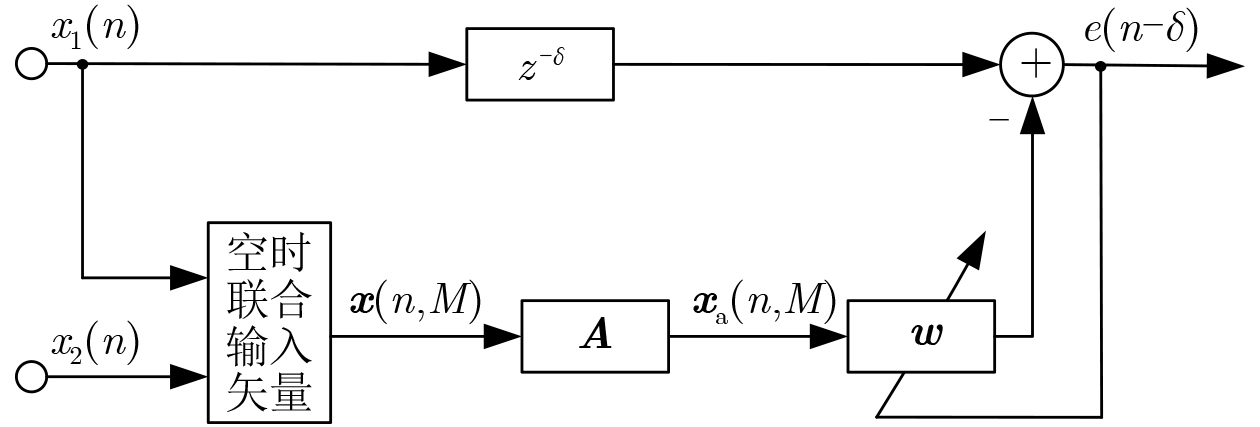
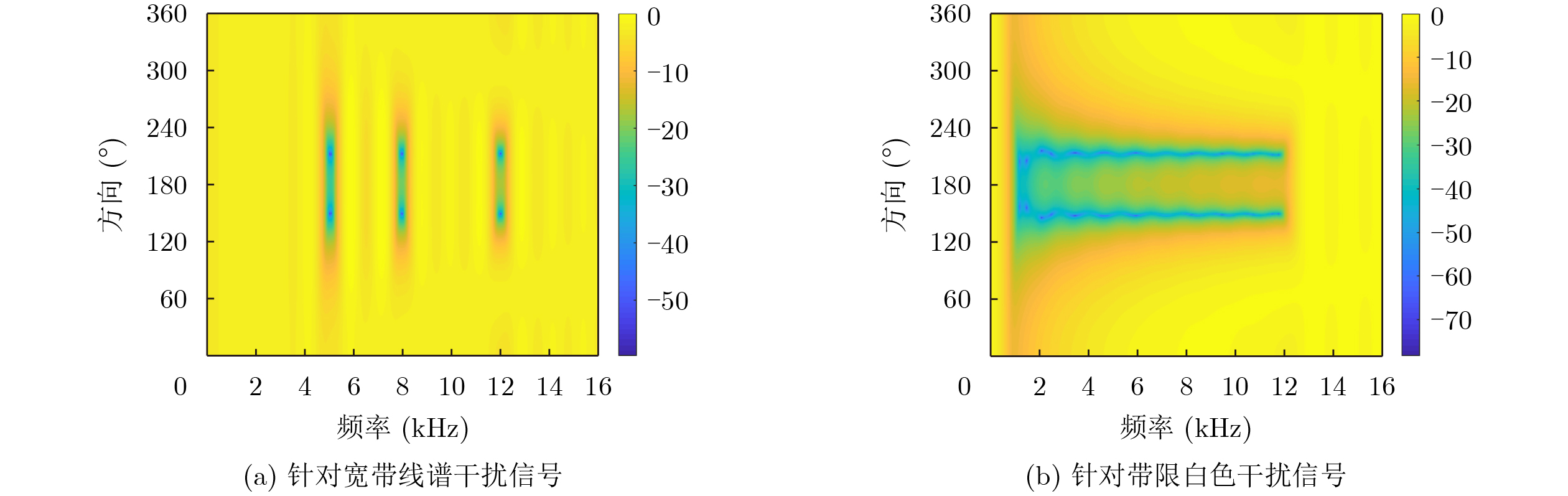
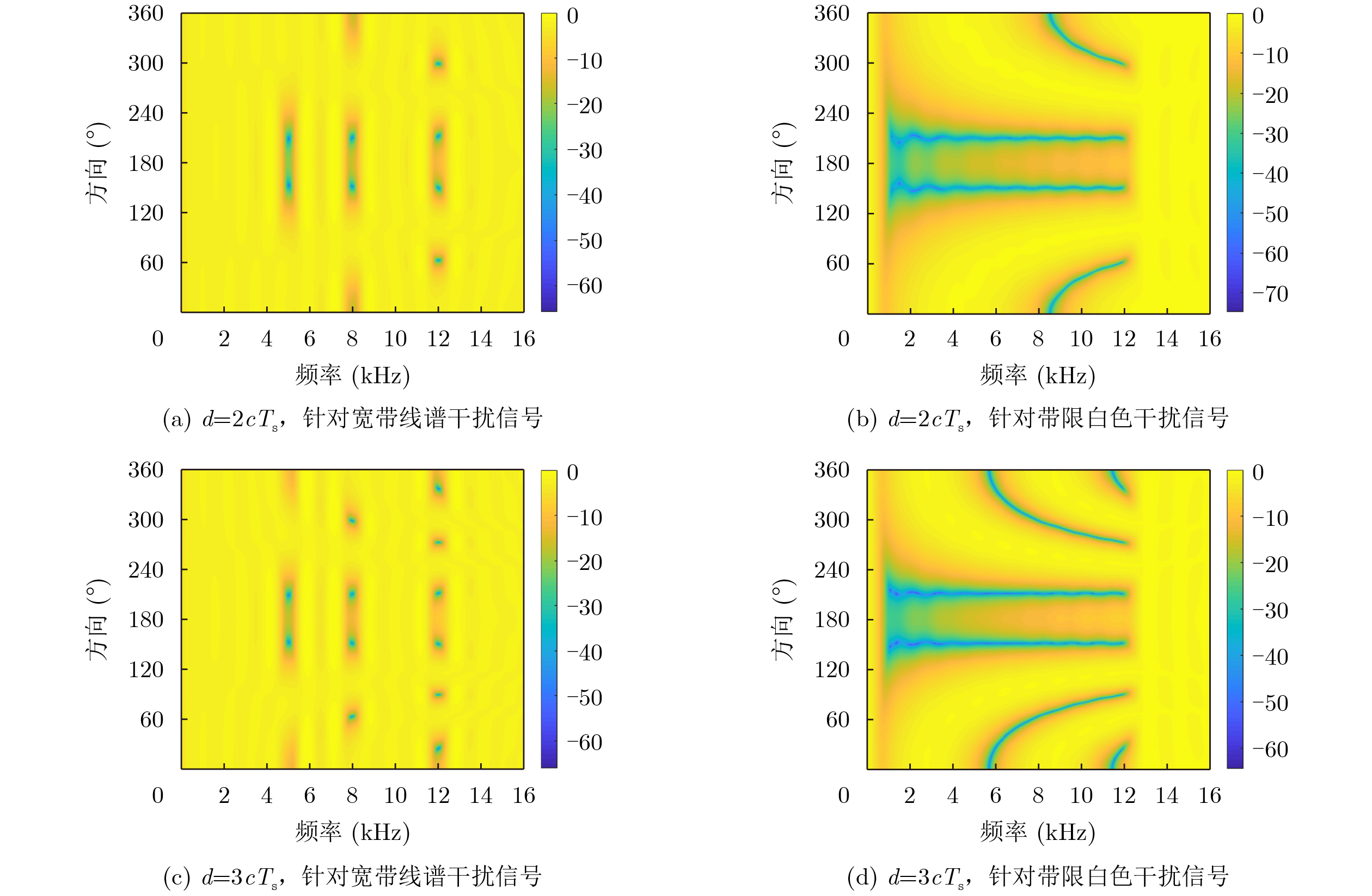
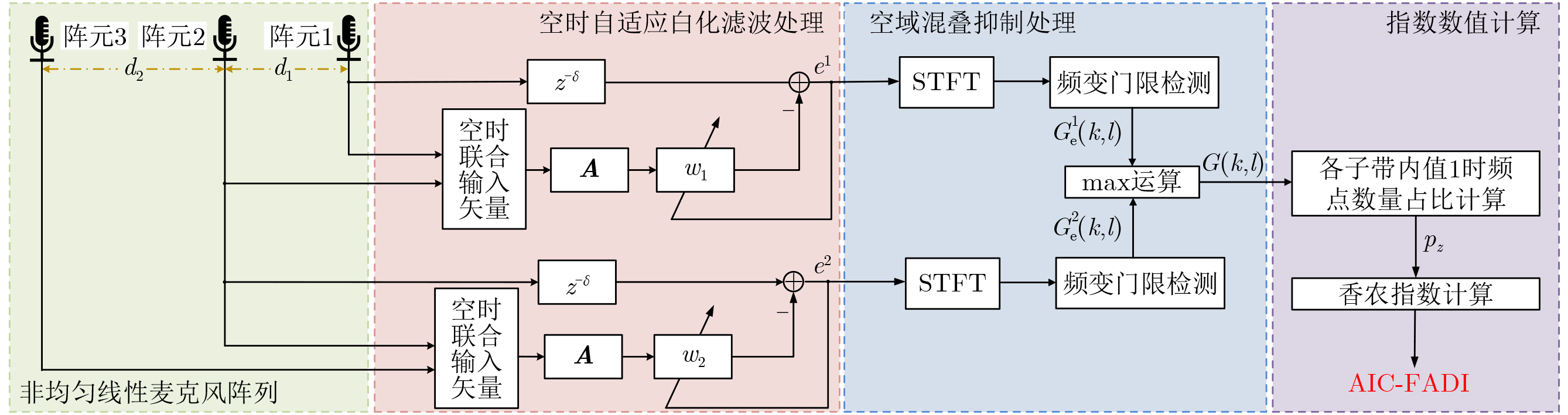
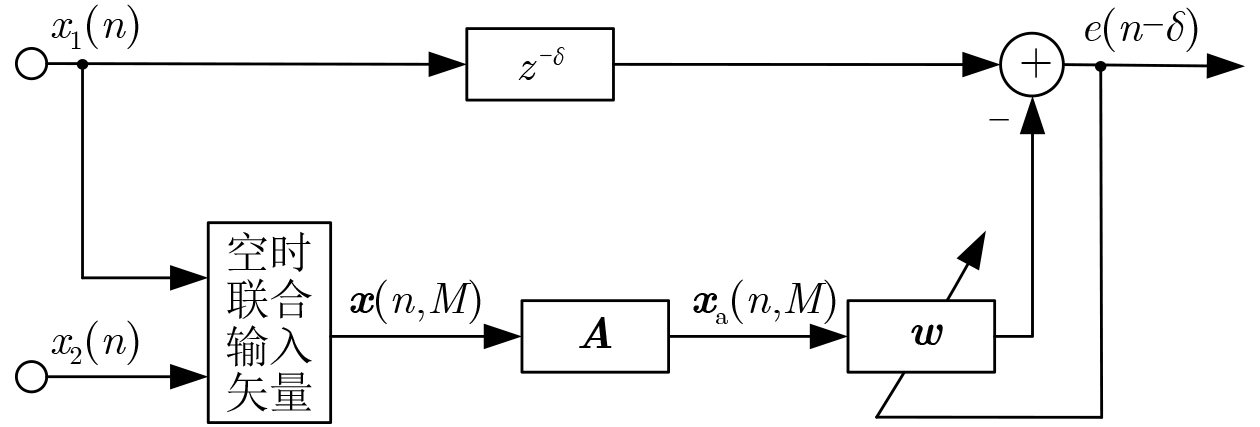
摘要: 针对野外生态监测录音数据中包括人为干扰声在内的背景噪声导致生物多样性声学指数失真问题,利用声学指数典型应用场景中人为干扰声通常具有的空域点声源和时域多线谱特征,结合对麦克风阵列空时二维频响起伏不敏感的依频声学多样性指数,该文提出一种基于间距互质子阵融合的空时自适应降噪方法,进而形成一种新的噪声鲁棒声学指数——自适应干扰对消依频声学多样性指数(AIC-FADI)。该方法采用3个麦克风构建两个间距较宽且互质的双元子阵组成非均匀线阵,两个子阵分别进行空时自适应白化滤波滤除平稳定向干扰,然后利用宽间距阵列的高空间分辨性质及间距互质子阵空时二维频响之间的空域混叠零陷交错特性,通过对两者输出信号的二值化时频谱进行逐点取大互补融合,重构生物声信号在干扰方向二维零陷之外的二值化时频分布结构特征,缓解无约束干扰对消导致的目标自消问题,使所提AIC-FADI的计算结果能在抑制定向干扰及其他背景噪声影响的同时,尽可能完整保留全空域生物声学信息的统计特征,从而推动声学指数的实际应用场景和时空覆盖范围实现实质性拓展。Abstract:
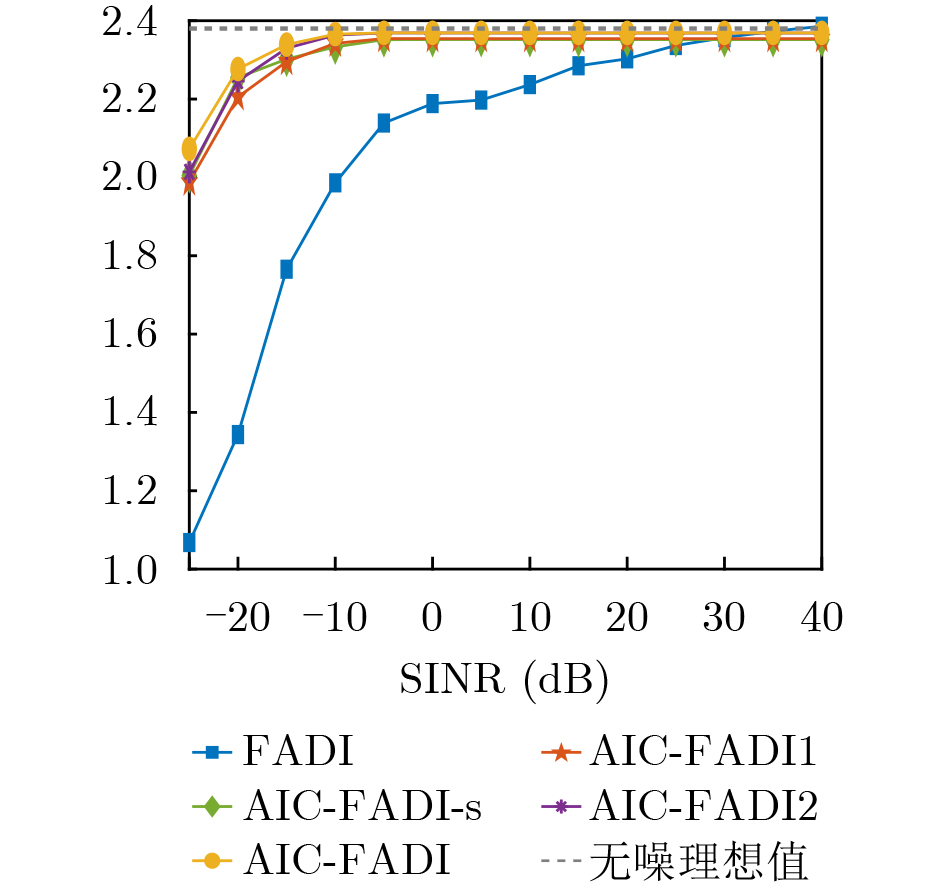
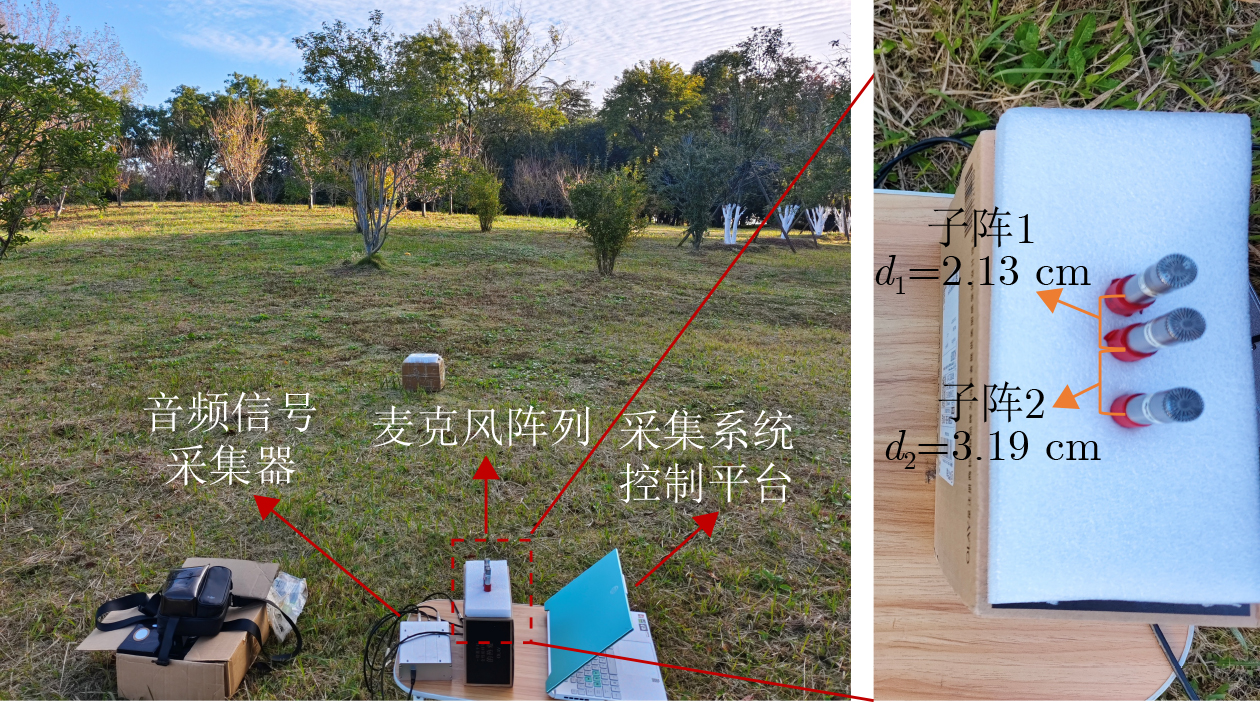
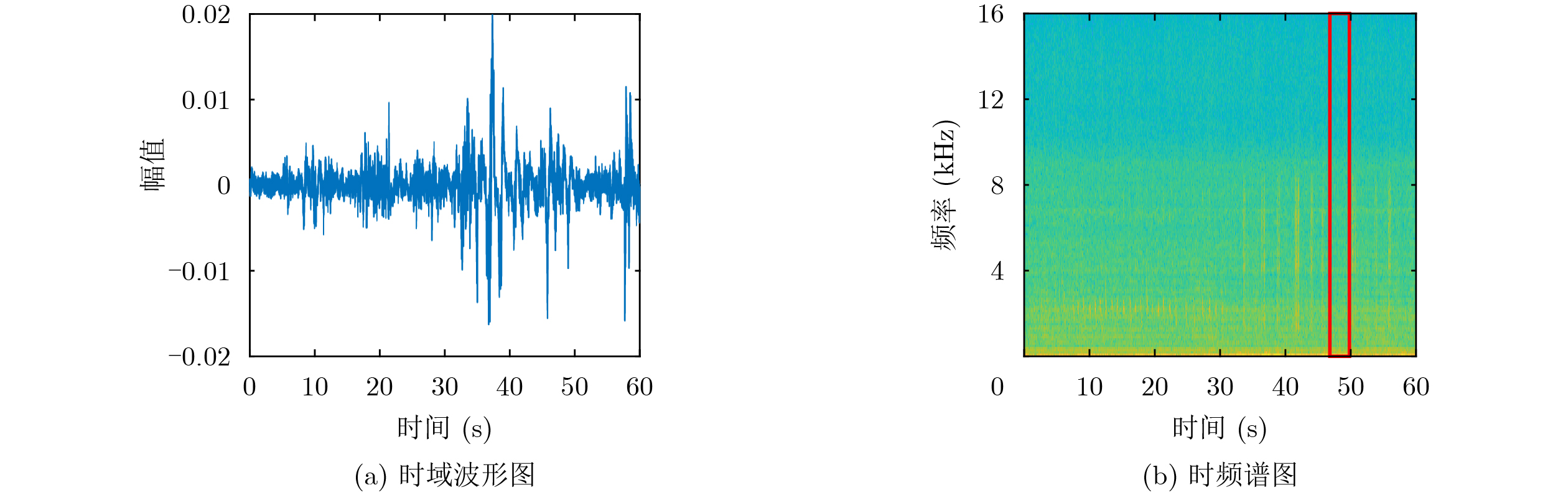
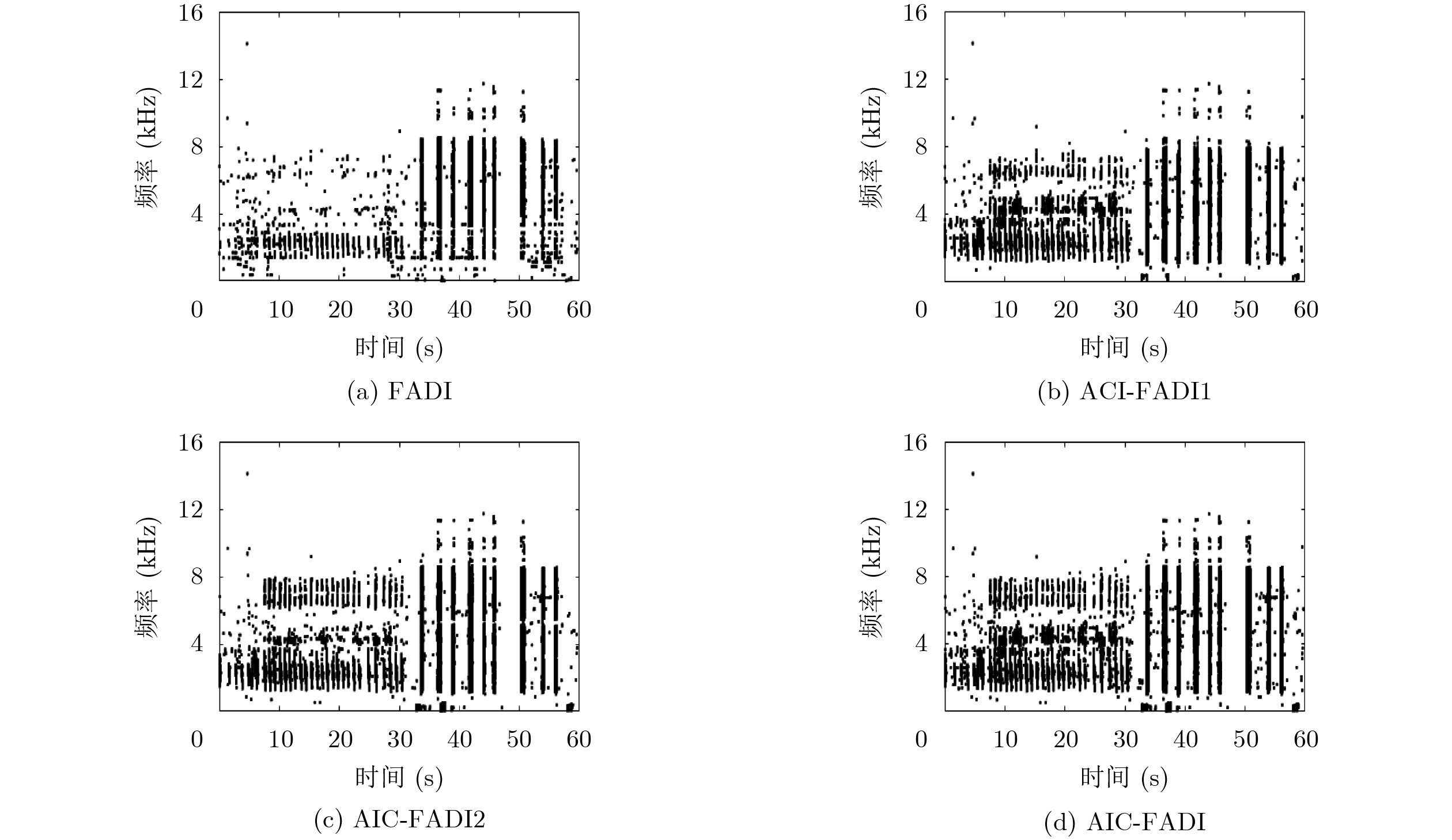
Objective Acoustic indices are widely used for rapid biodiversity assessment and have received increasing attention in soundscape ecology. However, most commonly used acoustic indices are sensitive to background noise. Traditional single-channel noise reduction methods, such as spectral subtraction, high-pass filtering, and threshold detection, are often used as preprocessing steps to improve acoustic index calculation. However, when anthropogenic interference overlaps with biological sound signals in both the time and frequency domains, the denoising performance of these methods decreases sharply. Microphone-array-based spatio-temporal adaptive whitening filtering provides a feasible approach for suppressing directional interference. However, its non-uniform two-dimensional spatio-temporal amplitude response and target self-cancellation during unconstrained interference cancellation can distort the time-frequency distribution of biological sound signals. This distortion causes acoustic index values to deviate from their noise-free ideal values. To address this problem, this study proposes a noise reduction strategy via coprime-spacing subarrays for biodiversity acoustic indices. The proposed method suppresses directional anthropogenic interference while preserving the time-frequency distribution structure of biological sound signals as completely as possible. Methods A microphone-array-based spatio-temporal adaptive whitening filtering strategy is proposed. It is combined with the Frequency-dependent Acoustic Diversity Index (FADI), which is insensitive to fluctuations in the two-dimensional spatio-temporal amplitude response of the array. A noise-robust acoustic index, termed Adaptive Interference Cancellation-FADI (AIC-FADI), is then developed. Specifically, a non-uniform linear array is constructed using three microphones to form two dual-element subarrays with coprime spacing. This design uses the high spatial resolution of wide-spacing arrays to narrow the null width in the interference direction. It also reduces the physical implementation difficulty and mutual coupling effects associated with small-spacing arrays, which arise from the ultra-wideband characteristics of biological sound signals. Spatio-temporal adaptive whitening filtering is then applied separately to each coprime-spacing subarray. Two-dimensional nulls are adaptively formed within the interference support region, thereby suppressing directional anthropogenic interference in the analysis data before index calculation. A frequency-dependent adaptive thresholding scheme is then used to obtain the binary time-frequency spectrum of each subarray output. This scheme reduces the effect of gain differences along the frequency axis for a given direction. The high spatial resolution of wide-spacing arrays and the interleaved spatial aliasing nulls in the spatio-temporal frequency responses of the two coprime-spacing subarrays are then used for pointwise maximum fusion of the two binary time-frequency spectra. This process reconstructs the binary time-frequency distribution structure of biological sound signals outside the interference support region. A single binary time-frequency spectrum is obtained, in which biological sound signals are largely preserved and anthropogenic interference is substantially suppressed. Finally, the proportions of time-frequency bins assigned a value of 1 in each frequency band are calculated and input into the entropy function following the Acoustic Diversity Index (ADI) framework, yielding the final AIC-FADI value. Results and Discussions Simulation results show that AIC-FADI maintains numerical robustness down to –15 dB Signal-to-Interference-plus-Noise Ratio (SINR) (yellow line in Fig. 5 ). It substantially outperforms the single-channel FADI baseline and the ADI-based variants without coprime-subarray fusion evaluated in this paper, including AIC-FADI-s, AIC-FADI1, and AIC-FADI2. Field experiments further confirm that the proposed spatio-temporal adaptive whitening filtering effectively suppresses wideband interference in complex soundscapes and improves the SINR of the analyzed recordings. This improvement allows some weaker biological sound signals to exceed their corresponding frequency-dependent adaptive thresholds, thereby reducing missed detections of target signals. In addition, pointwise maximum fusion of the binary time-frequency spectra from the two coprime-spacing subarray outputs further reduces missed detections in AIC-FADI (Fig. 8 ). However, the field experiments also show that the interference suppression performance of AIC-FADI decreases for highly time-varying interference components.Conclusions This study addresses the reliable calculation of acoustic indices in complex soundscapes where directional anthropogenic interference overlaps with biological sound signals in both the time and frequency domains. A noise reduction strategy via coprime-spacing subarrays is proposed, and the noise-robust AIC-FADI method is developed. Simulation and field recording results show that spatio-temporal adaptive whitening filtering on each coprime-spacing subarray, followed by pointwise maximum fusion, provides both wideband interference suppression and target information fidelity in complex soundscapes with strong interference. AIC-FADI maintains numerical robustness down to –15 dB SINR and outperforms the single-channel FADI baseline and ADI-based variants without coprime-subarray fusion. The proposed method provides a feasible technical solution for extending the practical application scenarios and spatio-temporal coverage of biodiversity acoustic indices in human-dominated areas. However, this study considers only directional interference that is relatively stable or slowly time-varying. Its suppression performance decreases for highly time-varying or uncorrelated noise components. These issues should be addressed in future work using more targeted signal processing techniques to further improve acoustic index robustness in highly complex acoustic environments. -
[1] SONG Ziqi, YANG Zhichao, XIONG Yao, et al. Assessing the drivers of bird diversity in urban parks during winter: Insights from acoustic indices[J]. Ecological Indicators, 2025, 178: 113854. doi: 10.1016/j.ecolind.2025.113854. [2] XU Zhiyong, CHEN Lei, PIJANOWSKI B C, et al. A frequency-dependent acoustic diversity index: A revision to a classic acoustic index for soundscape ecological research[J]. Ecological Indicators, 2023, 155: 110940. doi: 10.1016/j.ecolind.2023.110940. [3] MAMMIDES C, PAN Wuyuan, HUANG Guohualing, et al. The combined effectiveness of acoustic indices in measuring bird species richness in biodiverse sites in Cyprus, China, and Australia[J]. Ecological Indicators, 2025, 170: 113105. doi: 10.1016/j.ecolind.2025.113105. [4] PAN Wuyuan, GOODALE E, JIANG Aiwu, et al. The effect of latitude on the efficacy of acoustic indices to predict biodiversity: A meta-analysis[J]. Ecological Indicators, 2024, 159: 111747. doi: 10.1016/j.ecolind.2024.111747. [5] FAIRBRASS A J, RENNERT P, WILLIAMS C, et al. Biases of acoustic indices measuring biodiversity in urban areas[J]. Ecological Indicators, 2017, 83: 169–177. doi: 10.1016/j.ecolind.2017.07.064. [6] LAI Xiaotian, XU Zhiyong, CHEN Lei, et al. Noise impact suppression for acoustic complexity index[C]. The 4th International Conference on Electronic Information Engineering and Computer, Shenzhen, China, 2024: 32–36. doi: 10.1109/EIECT64462.2024.10867106. [7] 陈蕾, 许志勇, 苏菩坤, 等. 依频声学多样性指数用于人类活动区域的适用能力[J]. 生物多样性, 2024, 32(10): 24286. doi: 10.17520/biods.2024286.CHEN Lei, XU Zhiyong, SU Pukun, et al. Exploring the application of frequency-dependent acoustic diversity index in human-dominated areas[J]. Biodiversity Science, 2024, 32(10): 24286. doi: 10.17520/biods.2024286. [8] OKAMOTO R and OGUMA H. ChirpArray: A low-cost, easy-to-construct microphone array for long-term ecoacoustic monitoring[J]. Methods in Ecology and Evolution, 2025, 16(2): 302–308. doi: 10.1111/2041-210X.14474. [9] HEATH B E, SUZUKI R, LE PENRU N P, et al. Spatial ecosystem monitoring with a multichannel acoustic autonomous recording unit (MAARU)[J]. Methods in Ecology and Evolution, 2024, 15(9): 1568–1579. doi: 10.1111/2041-210X.14390. [10] VILLANUEVA-RIVERA L J, PIJANOWSKI B C, DOUCETTE J, et al. A primer of acoustic analysis for landscape ecologists[J]. Landscape Ecology, 2011, 26(9): 1233–1246. doi: 10.1007/s10980-011-9636-9. [11] PIERETTI N, FARINA A, and MORRI D. A new methodology to infer the singing activity of an avian community: The acoustic complexity index (ACI)[J]. Ecological Indicators, 2011, 11(3): 868–873. doi: 10.1016/j.ecolind.2010.11.005. [12] DMOCHOWSKI J, BENESTY J, and AFFES S. On spatial aliasing in microphone arrays[J]. IEEE Transactions on Signal Processing, 2009, 57(4): 1383–1395. doi: 10.1109/TSP.2008.2010596. [13] 何劲, 唐莽, 舒汀, 等. 阵元位置互质的线性阵列: 互耦分析和角度估计[J]. 电子与信息学报, 2022, 44(8): 2852–2858. doi: 10.11999/JEIT210489.HE Jin, TANG Mang, SHU Ting, et al. Linear coprime sensor location arrays: Mutual coupling effect and angle estimation[J]. Journal of Electronics & Information Technology, 2022, 44(8): 2852–2858. doi: 10.11999/JEIT210489. [14] DU Yuxi, CUI Weijia, BA Bin, et al. Adaptive beamforming algorithm for subarrays based on coprime array[C]. The 3rd International Conference on Electronics and Information Technology, Chengdu, China, 2024: 872–876. doi: 10.1109/EIT63098.2024.10762283. [15] GRAF S, HERBIG T, BUCK M, et al. Features for voice activity detection: A comparative analysis[J]. EURASIP Journal on Advances in Signal Processing, 2015, 2015: 91. doi: 10.1186/s13634-015-0277-z. [16] YANG Jian, TU Yuwei, LU Jian, et al. Robust adaptive beamforming based on subspace decomposition, steering vector estimation and correction[J]. IEEE Sensors Journal, 2022, 22(12): 12260–12268. doi: 10.1109/JSEN.2022.3174848. -

 下载:
下载:

图(8)
计量
- 文章访问数: 419
- HTML全文浏览量: 178
- PDF下载量: 26
- 被引次数: 0
