




Gating Adaptive Repeat Query Framework for Reliable Collaborative Inference with Edge Heterogeneous LLMs
-
摘要: 在网络边缘部署大语言模型(Large Language Models, LLMs)对泛在人工智能(Artificial Intelligence, AI)至关重要。与单一LLM相比,多LLM协同推理可以显著提高系统的稳健性,但严格的资源约束对可靠推理提出了挑战。该文提出了门控自适应重复查询(Gating Adaptive Repeat Query, G-ARQ)框架,将协同推理转化为语义驱动的闭环过程,增强了系统的健壮性。在G-ARQ中,语义空间对齐和错误引导重传(Semantic-Space Alignment and Error-Guided Retransmission, SEMAR)机制将不同类型的LLM输出对齐到一个统一的语义空间,并使用推理错误信息来指导下一次重复查询LLM的选择,而轨迹优化器在不需要显式系统动态的情况下联合优化LLM门控和资源分配。SQuAD和TriviaQA混合数据集上的实验表明,在严格的时延和能耗约束下,G-ARQ相比基线方案的准确率最大提高2.2%。G-ARQ框架建立了一个帕累托边界来表征准确率和时延之间的权衡,为可靠的第6代(Sixth-Generation, 6G)边缘智能提供了一条实用的路径。Abstract:
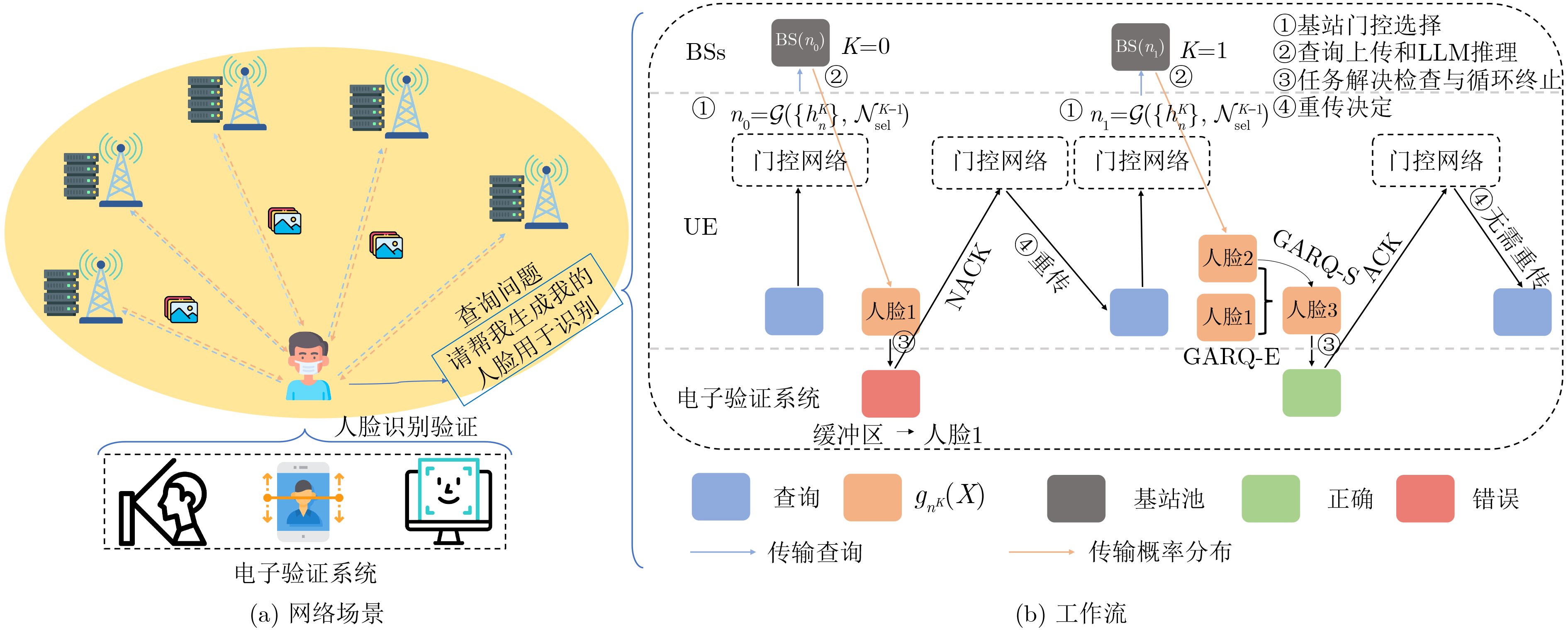
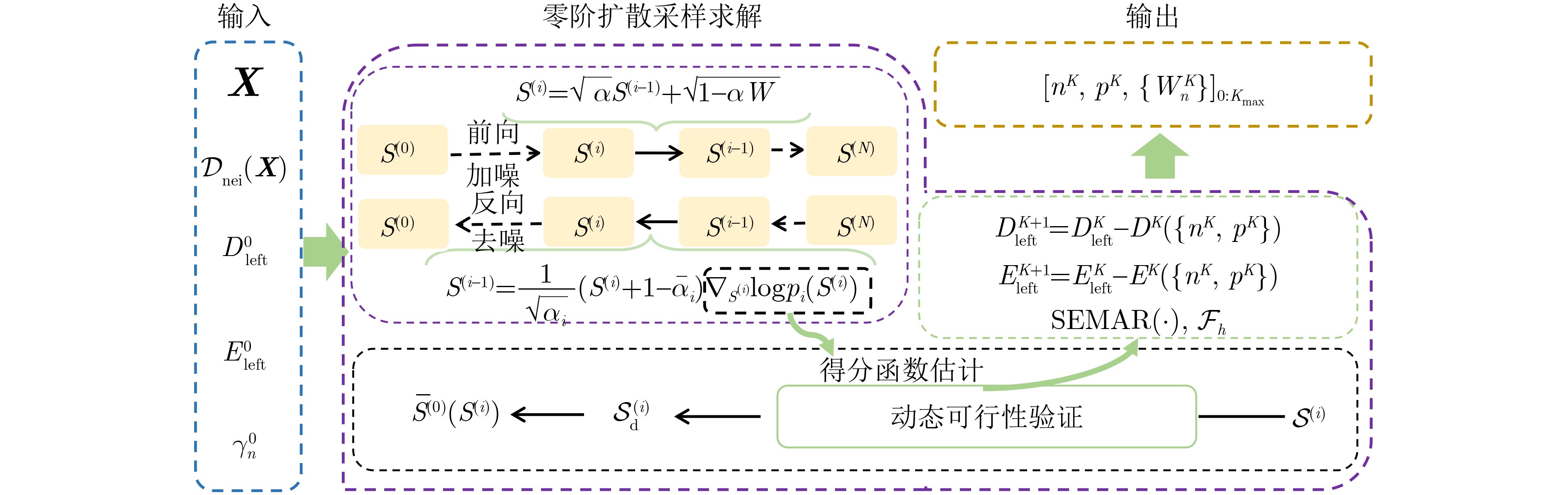
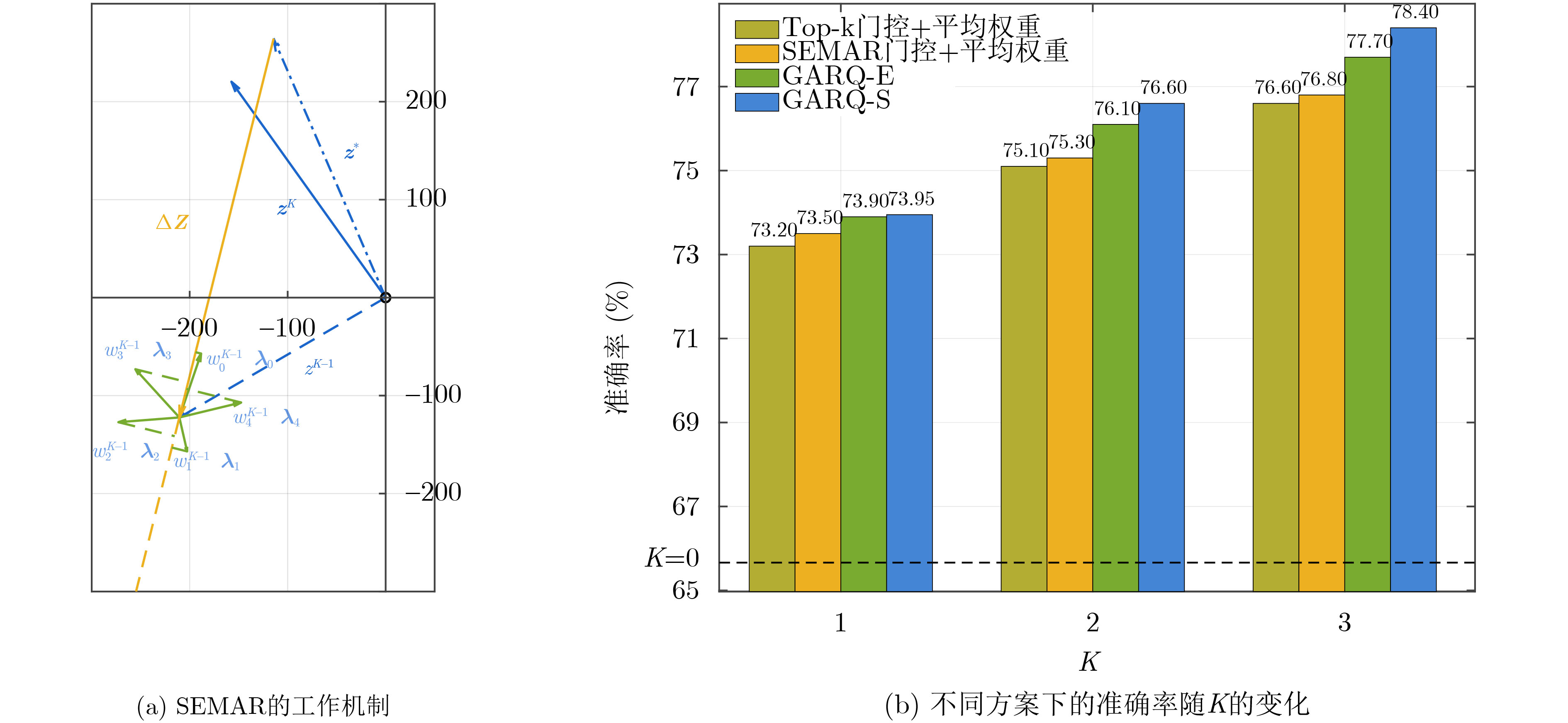
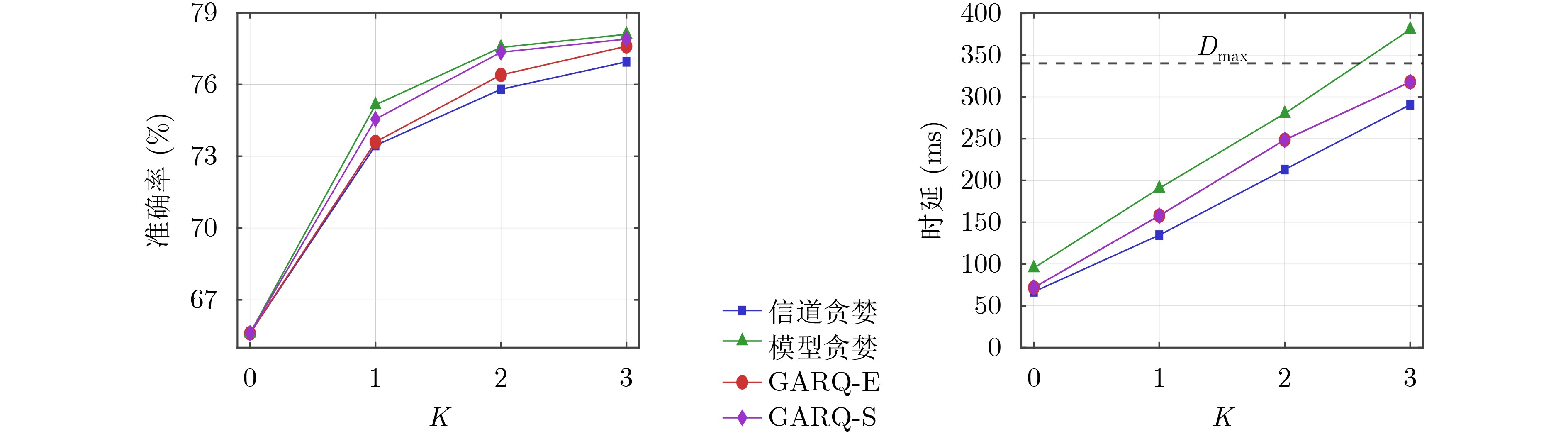
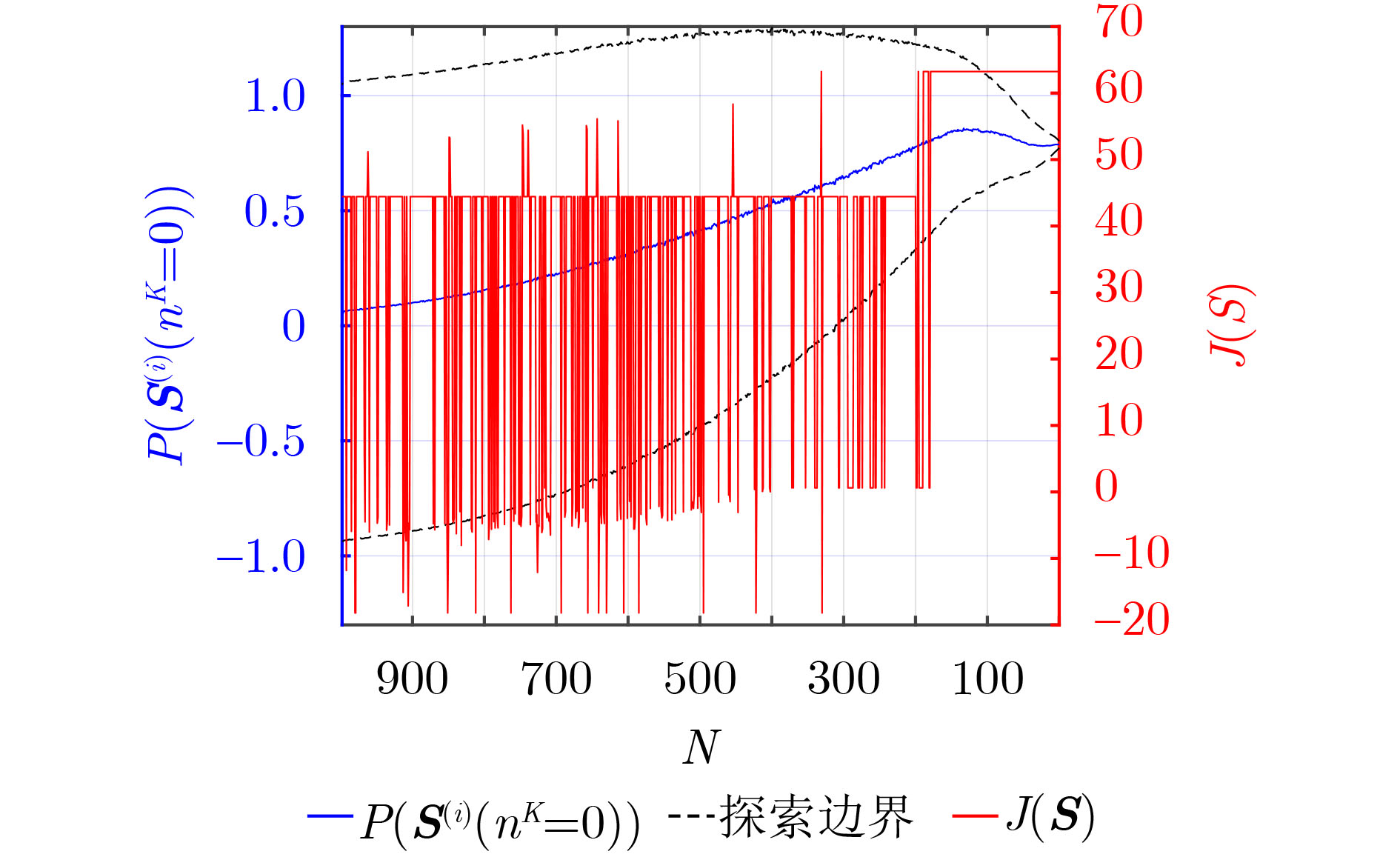
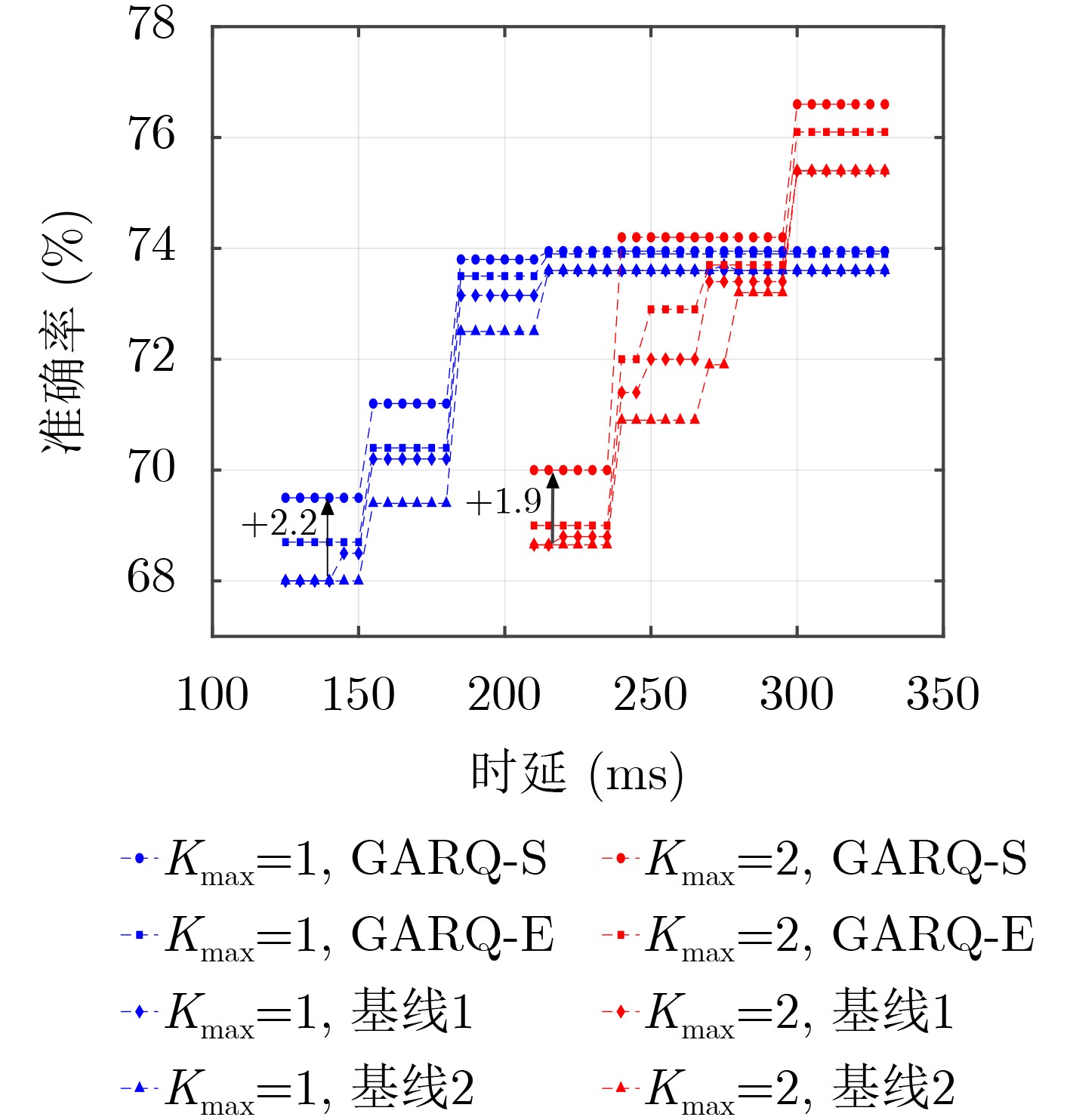
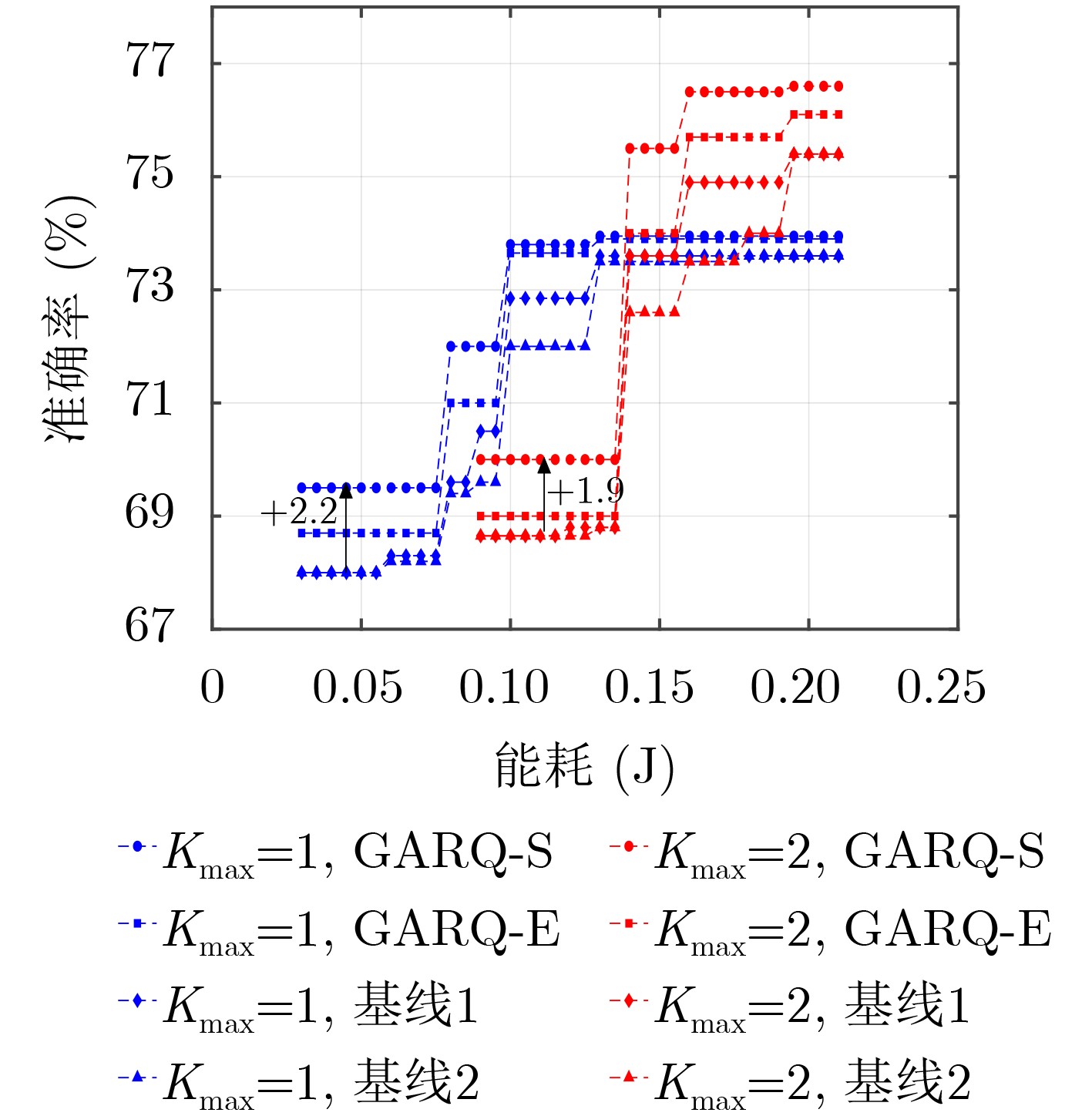
Objective Reliable inference at the network edge is essential for 6G-enabled ubiquitous Artificial Intelligence (AI). However, deploying Large Language Models (LLMs) in resource-constrained edge environments remains challenging. Single-LLM inference often suffers from limited knowledge and inherent bias, reducing inference reliability in practical deployments. Collaborative inference using multiple heterogeneous LLMs improves robustness but introduces major challenges under stringent latency and energy constraints, particularly when wireless channel conditions and query content change dynamically. These challenges include sequential decision-making for LLM selection and resource allocation, the mismatch between bit-level reliability protocols and semantic retransmission, and the absence of adaptive mechanisms for aligning and fusing heterogeneous LLM outputs. To address these issues, the Gating Adaptive Repeat Query (G-ARQ) framework is proposed. The framework reformulates collaborative inference as a semantics-driven closed-loop process, shifting conventional bit-level retransmission to semantic retransmission and providing a practical solution for reliable 6G edge intelligence. Methods The proposed G-ARQ framework incorporates the Semantic-Space Alignment and Error-Guided Retransmission (SEMAR) mechanism. SEMAR first aligns token-level probability distributions generated by heterogeneous LLMs into a unified semantic space through relative representation, enabling direct comparison of model outputs. It then formulates the collaborative inference process as a probabilistic model that captures error dependencies among LLMs. An Expectation-Maximization (EM) algorithm estimates a latent error direction, which guides selection of the next LLM for query retransmission toward outputs orthogonal to previous errors. To jointly optimize LLM gating and uplink power allocation under communication constraints without requiring explicit system dynamics, a black-box trajectory optimizer is developed. The optimizer formulates sequential decision-making as sampling from a target distribution that encodes dynamic feasibility, optimality, and resource constraints. A diffusion-based sampling process guided by a model-guided prior and Monte Carlo estimation is employed to generate near-optimal policy trajectories that satisfy strict latency and energy constraints. Results and Discussions The proposed framework is evaluated in a realistic edge computing scenario with five base stations hosting five heterogeneous 7B-parameter LLMs (Mistral-7B, Vicuna-7B, Nous-Capybara-7B, Gemma-7B, and Llama-2-7B). User Equipment (UE) performs question-answering tasks on a mixed SQuAD and TriviaQA dataset. Component-level evaluations validate the contribution of each major module. Compared with the Top-k gating baseline, the SEMAR error-guided gating strategy improves average accuracy by 0.23%, while dynamic ensemble weighting provides an additional 0.7% improvement ( Fig. 3 ). Without requiring an explicit channel model, the proposed black-box trajectory optimizer achieves accuracy close to that of the unconstrained model-greedy strategy while satisfying strict latency constraints (Fig. 4 ). Its convergence is verified by the evolution of the objective function $ J(\boldsymbol{S}) $ and the selection probability during diffusion sampling (Fig. 5 ). System-level evaluations under varying latency and energy constraints show that G-ARQ consistently outperforms two baseline methods: one combining model-greedy selection with Proximal Policy Optimization (PPO)-based power optimization and the other combining model-greedy selection with Simulated Annealing-based power optimization, both using average ensemble weights. The largest accuracy improvement is achieved under the strictest resource constraints, reaching 2.2% for $ {K}_{\max }=1 $ and 1.9 % for $ {K}_{\max }=2 $ (Figs. 6 and7 ). The proposed framework establishes a Pareto boundary between inference accuracy and communication latency, providing practical guidance for reliable collaborative inference in resource-constrained edge systems. Furthermore, the G-ARQ-S configuration achieves higher accuracy than G-ARQ-E by avoiding direct integration of outputs generated by previously erroneous models.Conclusions The G-ARQ framework is proposed to transform collaborative edge inference into a semantics-guided retransmission process. By integrating the SEMAR mechanism for adaptive semantic alignment and error-guided LLM selection with a black-box trajectory optimizer for joint model selection and power allocation, the proposed framework improves inference accuracy by up to 2.2% under stringent resource constraints. Experimental results demonstrate that G-ARQ provides an effective and practical solution for reliable collaborative inference in future 6G edge intelligence systems. -
表 1 HARQ与GARQ的区别
对比维度 HARQ GARQ 可靠性目标 关注比特级可靠性,通过冗余比特重传保证数据正确解码 关注任务级语义可靠性,通过重新查询合适的LLM提升
最终任务完成质量错误判定单元 以传输块为判定单元,ACK/NACK通常由CRC校验产生,
NACK表示解码失败以LLM语义输出为判定单元,ACK/NACK表示输出是否
满足任务需求,NACK表示语义失败资源优化对象 单次链路或有限重传中的编码率、功率、
重传次数等链路资源联合优化多轮查询中的LLM选择、通信资源分配和
语义融合权重 下载: 导出CSV
表 2 仿真参数设置
参数名称 参数值 基站个数$ {N}_{\text{BS}} $ 5 带宽$ B $ 20 MHz 最大发射功率$ {p}_{\max } $ 27 dBm 路径损耗 35+35lg($ d $) 噪声功率谱密度$ {\sigma }^{2} $ –174 dBm/Hz 扩散步数$ N $ 1000 蒙特卡罗采样样本数$ M $ 8192 最大重查询次数$ {K}_{\max } $ 2
下载: 导出CSV
表 3 在不同数据集下的准确率比较
方案 数据集 GSM8K TriviaQA ARC-C SquAD 基线1 48.65 70.20 72.10 80.70 基线2 48.05 69.80 71.90 80.30 GARQ-E 51.20 71.30 72.35 80.90 GARQ-S 50.30 71.40 74.32 81.80 注:加粗数值为最优值。
下载: 导出CSV
-
[1] CUI Yuanhao, CAO Xiaowen, ZHU Guangxu, et al. Edge perception: Intelligent wireless sensing at network edge[J]. IEEE Communications Magazine, 2025, 63(3): 166–173. doi: 10.1109/MCOM.001.2300660. [2] LIU Chang and ZHAO Jun. Resource allocation in large language model integrated 6G vehicular networks[C]. 2024 IEEE 99th Vehicular Technology Conference, Singapore, Singapore, 2024: 1–6. doi: 10.1109/VTC2024-Spring62846.2024.10683673. [3] LIN Zheng, QU Guanqiao, CHEN Qiyuan, et al. Pushing large language models to the 6G edge: Vision, challenges, and opportunities[J]. IEEE Communications Magazine, 2025, 63(9): 52–59. doi: 10.1109/MCOM.001.2400764. [4] LUO Haoxiang, LIU Yingqiu, ZHANG Ruichen, et al. Toward edge general intelligence with multiple-large language model (Multi-LLM): Architecture, trust, and orchestration[J]. IEEE Transactions on Cognitive Communications and Networking, 2025, 11(6): 3563–3585. doi: 10.1109/TCCN.2025.3612760. [5] WANG Lijing, GHOSH D, GONZALEZ DIAZ M T, et al. Wisdom of the ensemble: Improving consistency of deep learning models[C]. The 34th Conference on Neural Information Processing Systems, Vancouver, Canada, 2020: 19750–19761. [6] MAZHAR N, ULLAH S A, CHAUHDARY S H, et al. Optimizing age of information in energy-constrained IIoT networks: A reinforcement learning framework[J]. IEEE Internet of Things Journal, 2025, 12(20): 42813–42828. doi: 10.1109/JIOT.2025.3594665. [7] AHMED A, AL-DWEIK A, IRAQI Y, et al. Hybrid automatic repeat request (HARQ) in wireless communications systems and standards: A contemporary survey[J]. IEEE Communications Surveys & Tutorials, 2021, 23(4): 2711–2752. doi: 10.1109/COMST.2021.3094401. [8] LONG Hang, XIANG Wei, SHEN Shanshan, et al. Analysis of conditional error rate and combining schemes in HARQ[J]. IEEE Transactions on Signal Processing, 2012, 60(5): 2677–2682. doi: 10.1109/TSP.2012.2184100. [9] SHLEZINGER N, FARHAN E, MORGENSTERN H, et al. Collaborative inference via ensembles on the edge[C]. ICASSP 2021 - 2021 IEEE International Conference on Acoustics, Speech and Signal Processing, Toronto, Canada, 2021: 8478–8482. doi: 10.1109/ICASSP39728.2021.9414740. [10] 丁男, 王佳佳, 冀承慧, 等. 边-端协作下基于早期退出机制的深度神经网络动态自适应分区[J]. 电子与信息学报, 2025, 47(10): 4005–4017. doi: 10.11999/JEIT250291.DING Nan, WANG Jiajia, JI Chenghui, et al. Dynamic adaptive partitioning of deep neural networks based on early exit mechanism under edge-end collaboration[J]. Journal of Electronics & Information Technology, 2025, 47(10): 4005–4017. doi: 10.11999/JEIT250291. [11] 陈阳, 马欢, 姬智, 等. 面向图像恢复任务的语义通信网络能耗优化[J]. 电子与信息学报, 2026, 48(1): 183–190. doi: 10.11999/JEIT250915.CHEN Yang, MA Huan, JI Zhi, et al. Optimization of energy consumption in semantic communication networks for image recovery tasks[J]. Journal of Electronics & Information Technology, 2026, 48(1): 183–190. doi: 10.11999/JEIT250915. [12] ZHENG Guhan, NI Qiang, NAVAIE K, et al. Semantic communication in satellite-borne edge cloud network for computation offloading[J]. IEEE Journal on Selected Areas in Communications, 2024, 42(5): 1145–1158. doi: 10.1109/JSAC.2024.3365879. [13] 林艳, 夏开元, 张一晋. 基于生成对抗网络辅助多智能体强化学习的边缘计算网络联邦切片资源管理[J]. 电子与信息学报, 2025, 47(3): 666–677. doi: 10.11999/JEIT240773.LIN Yan, XIA Kaiyuan, and ZHANG Yijin. Federated slicing resource management in edge computing networks based on GAN-assisted multi-agent reinforcement learning[J]. Journal of Electronics & Information Technology, 2025, 47(3): 666–677. doi: 10.11999/JEIT240773. [14] HU Chenbo, YANG Hongjuan, LI Bo, et al. HARQ-aided RSMA for integrated satellite-terrestrial networks[J]. IEEE Transactions on Wireless Communications, 2026, 25: 14987–15003. doi: 10.1109/TWC.2026.3681284. [15] HUANG Yichong, FENG Xiaocheng, LI Baohang, et al. Ensemble learning for heterogeneous large language models with deep parallel collaboration[C]. 38th Conference on Neural Information Processing Systems, Vancouver, Canada, 2024: 119838–119860. doi: 10.52202/079017-3808. [16] PAN Chaoyi, YI Zeji, SHI Guanya, et al. Model-based diffusion for trajectory optimization[C]. The 38th International Conference on Neural Information Processing Systems, Vancouver, Canada, 2024: 57914–57943. -

 下载:


图(7) / 表(4)
计量
- 文章访问数: 662
- HTML全文浏览量: 319
- PDF下载量: 29
- 被引次数: 0
